From gamer graphics to god-tier compute — how Jensen Huang turned GPUs into the engines of a new intelligence empire.
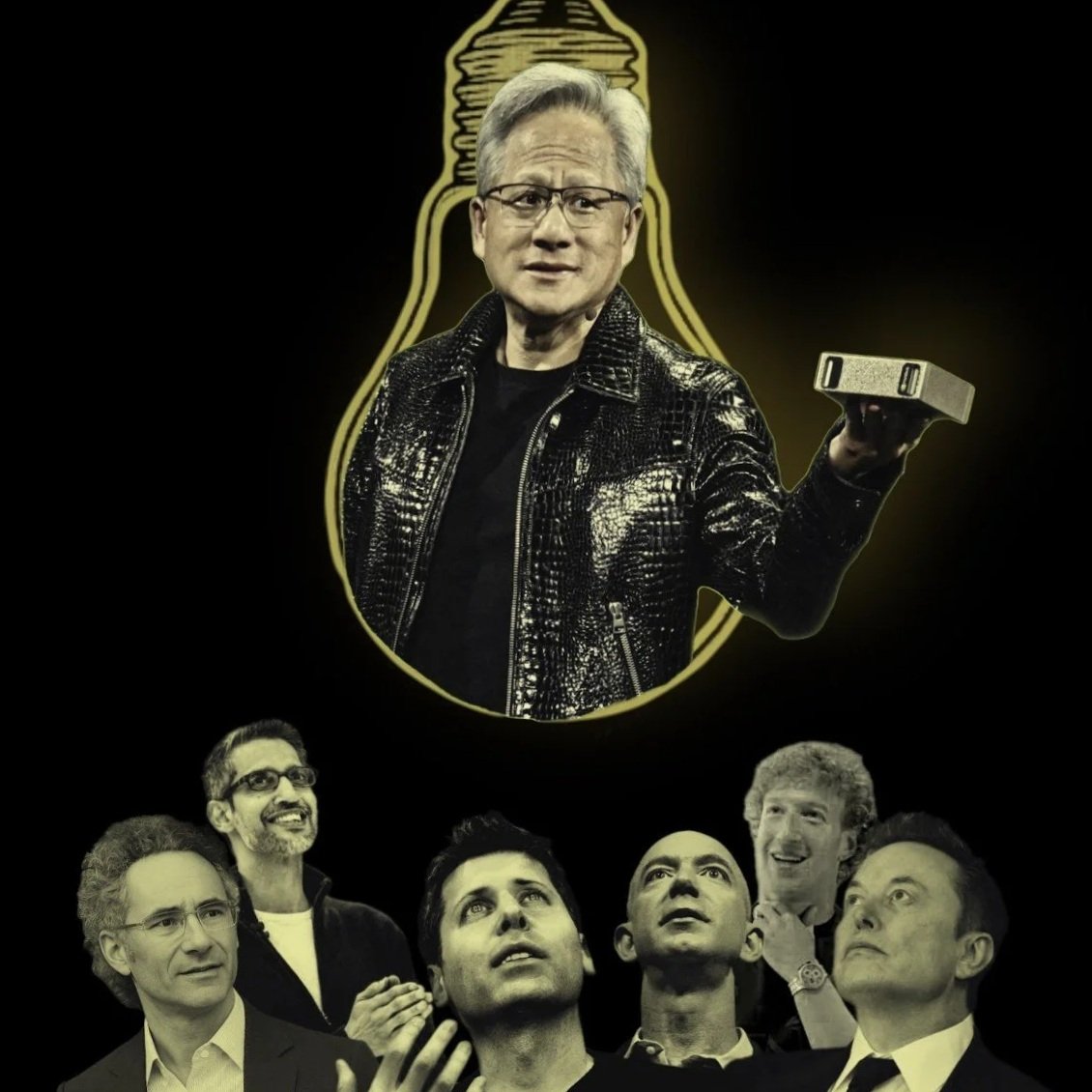
All the tech gods heavily dependent on Jensen’s technology.
There was a time when Silicon Valley bros wore hoodies. Now they wear leather jackets. Jensen Huang, the 61-year-old founder and CEO of Nvidia, doesn’t walk into a room — he prowls, laptop in hand, black biker jacket gleaming like a liquid-cooled GPU. He’s the new high priest of silicon, the man who turned the humble graphics card into the world’s most powerful engine of intelligence — and, as of this month, into the first $5 trillion company in history.
That’s five trillion with a T — or, if you prefer cultural context, more than the GDP of Japan and France combined. For a chipmaker once known mainly to gamers, it’s an absurd, operatic twist worthy of Kubrick.

Ultimate celebrity: Jensen Huang signing a female fan's chest during the Computex 2024 trade show in Taipei. Proof that in 2025, the hottest influencer isn’t an actor or athlete, but a chipmaker in a leather jacket.
From Pixels to Power
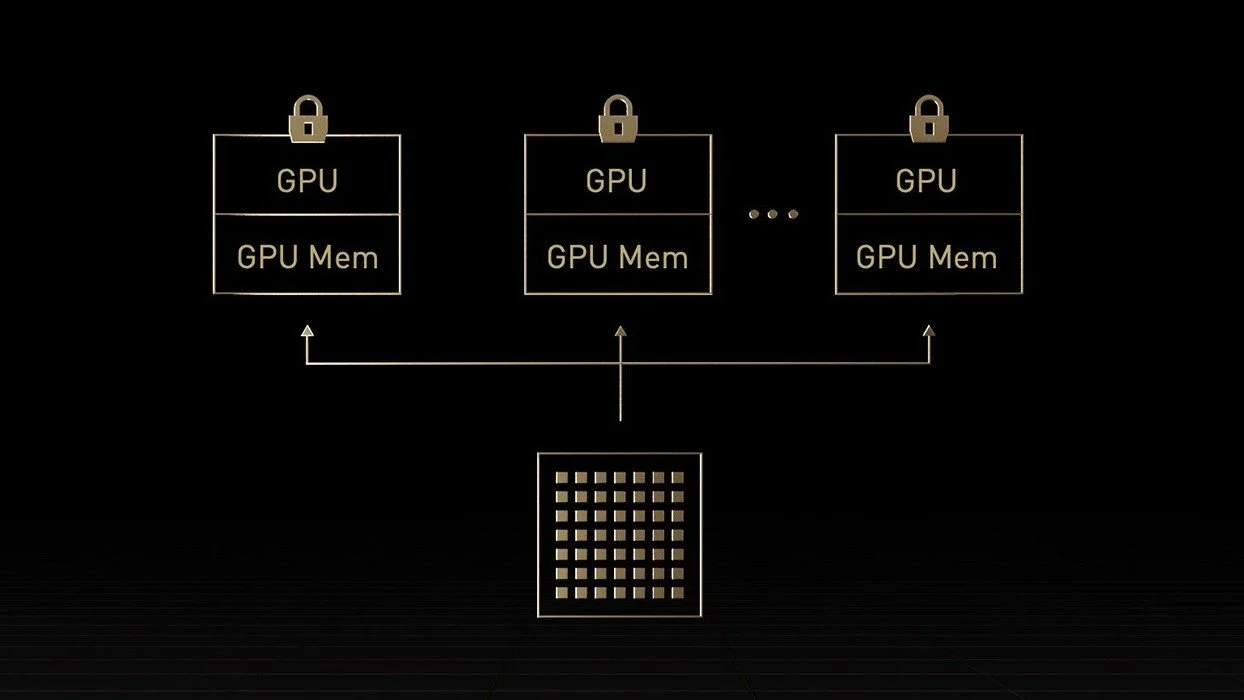
Nvidia began in 1993 making GPUs (graphics processing units) for video games. Then Jensen realized that what made a GPU so good at rendering dragons and explosions could also train neural networks to think. While everyone else was selling computers for the digital age, Nvidia was quietly building the infrastructure for the synthetic one.
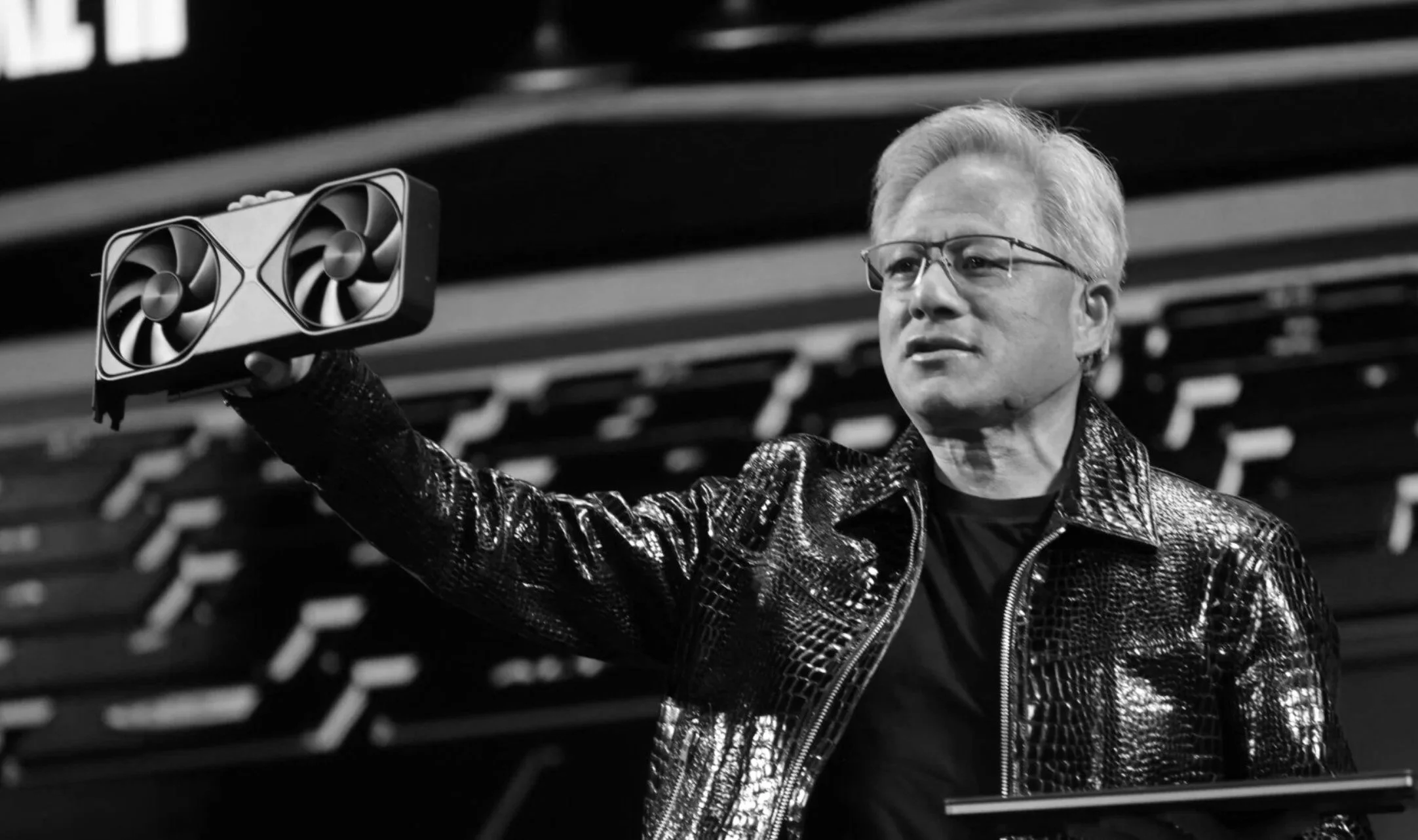
Jensen Huang: The Power Broker Behind Nvidia’s $5 Trillion AI Empire.
Now, its chips — the shimmering gold slabs of silicon called H100s and soon Blackwell — are the beating hearts of artificial intelligence. They run the models that write poetry, design proteins, and maybe one day, replace the poets entirely.
But this isn’t just about the chips. The secret sauce is Nvidia’s software ecosystem — the CUDA stack, a kind of programming Esperanto that lets developers everywhere bend GPU power to their will. Then there’s the newer buzzword: TPUs (tensor processing units), a rival tech from Google. But in practice, Nvidia’s GPUs are the ones running the show. If data is the new oil, Jensen owns the refineries.
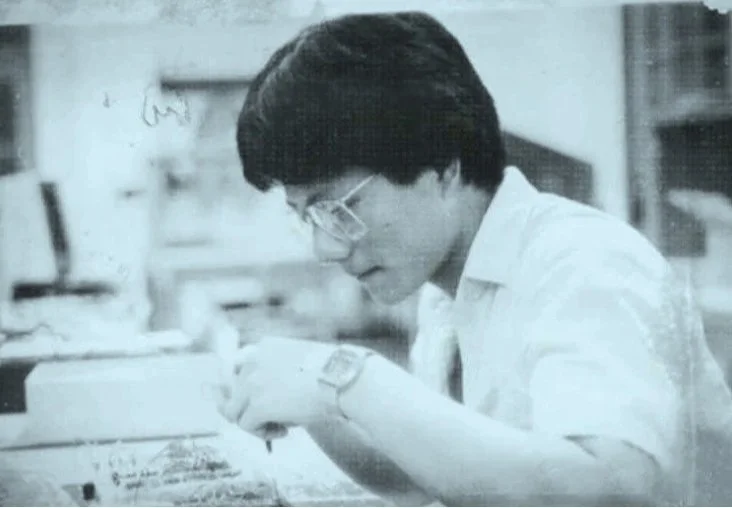
Jensen Huang in the early days — before the leather jackets and stadium keynotes, just a hungry engineer with a wild idea that the future would run on graphics cards.
The New Tech Aristocracy
The company’s rise is both thrilling and slightly terrifying. On one hand, we’re witnessing the industrialization of intelligence, an entirely new resource, mined not from the earth but from the algorithmic ether. On the other, Nvidia’s dominance means one man and one company now sit at the crossroads of everything: AI, defense, biotech, even art. The next Renaissance, it turns out, might be running on CUDA.

Mark Zuckeberg and META are heavily dependent on Nvidia’s GPUs.
Everyone’s plugged into Jensen’s machine. Sam Altman trains his gods on Nvidia silicon; Elon Musk hoards H100s like Teslas; Zuck’s metaverse hums on Huang’s chips. Even Alex Karp’s Palantir runs its defense-grade AI on Nvidia infrastructure. Microsoft, Amazon, and Google all rent his power by the minute — meaning the world’s biggest CEOs are, effectively, Jensen’s best customers.

Sam Altman and Tim Cook attended a White House dinner hosted by Donald Trump.
Inside Silicon Valley, rivals oscillate between envy and reverence. Elon Musk calls Huang “the smartest man in tech.” Wall Street calls him “the $180 billion man.” His company’s quarterly reports read like stadium setlists: new record, new supercomputer, new paradigm. And his keynote speeches, delivered with preacherly flair in black leather, are streamed on loop.

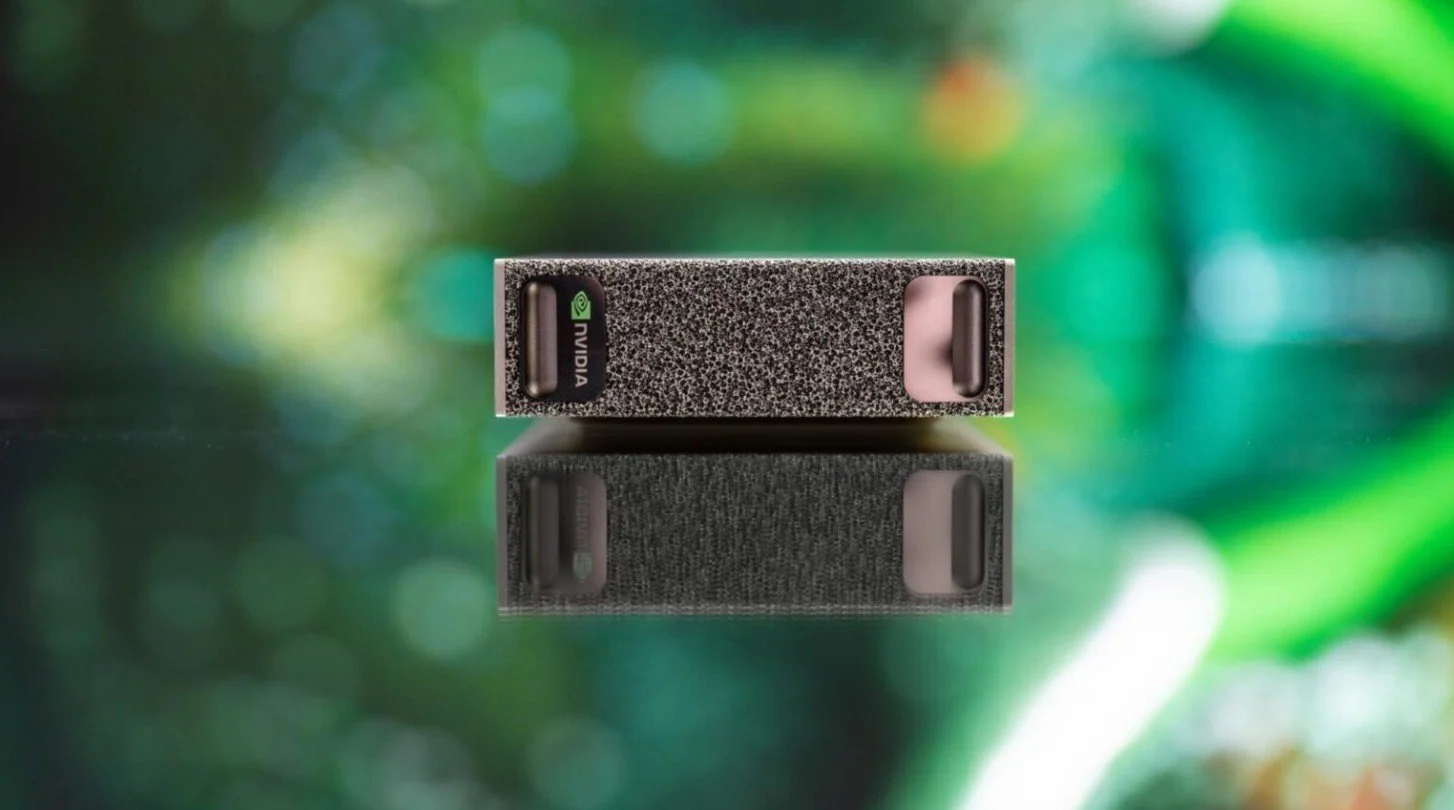
Jensen Huang personally delivers DGX Spark Mini PCs to Elon Musk.
The Culture of Compute
Still, Nvidia’s rise isn’t just economic; it’s aesthetic. In an age obsessed with dematerialization — from cloud to metaverse to crypto — Jensen brought back the physical. He made the chip sexy again. The GPU became the new Birkin: scarce, desirable, and status-defining. Owning racks of H100s is the new owning a G5 jet.
And while the rest of tech scrambles to explain itself in moral terms, Huang simply sells compute — the raw, uncut energy that makes everything else possible. “The more you buy, the more you save,” he once quipped to investors. It sounded like a joke until it wasn’t.
The Age of Acceleration
So what does Nvidia’s $5 trillion coronation mean for humanity?
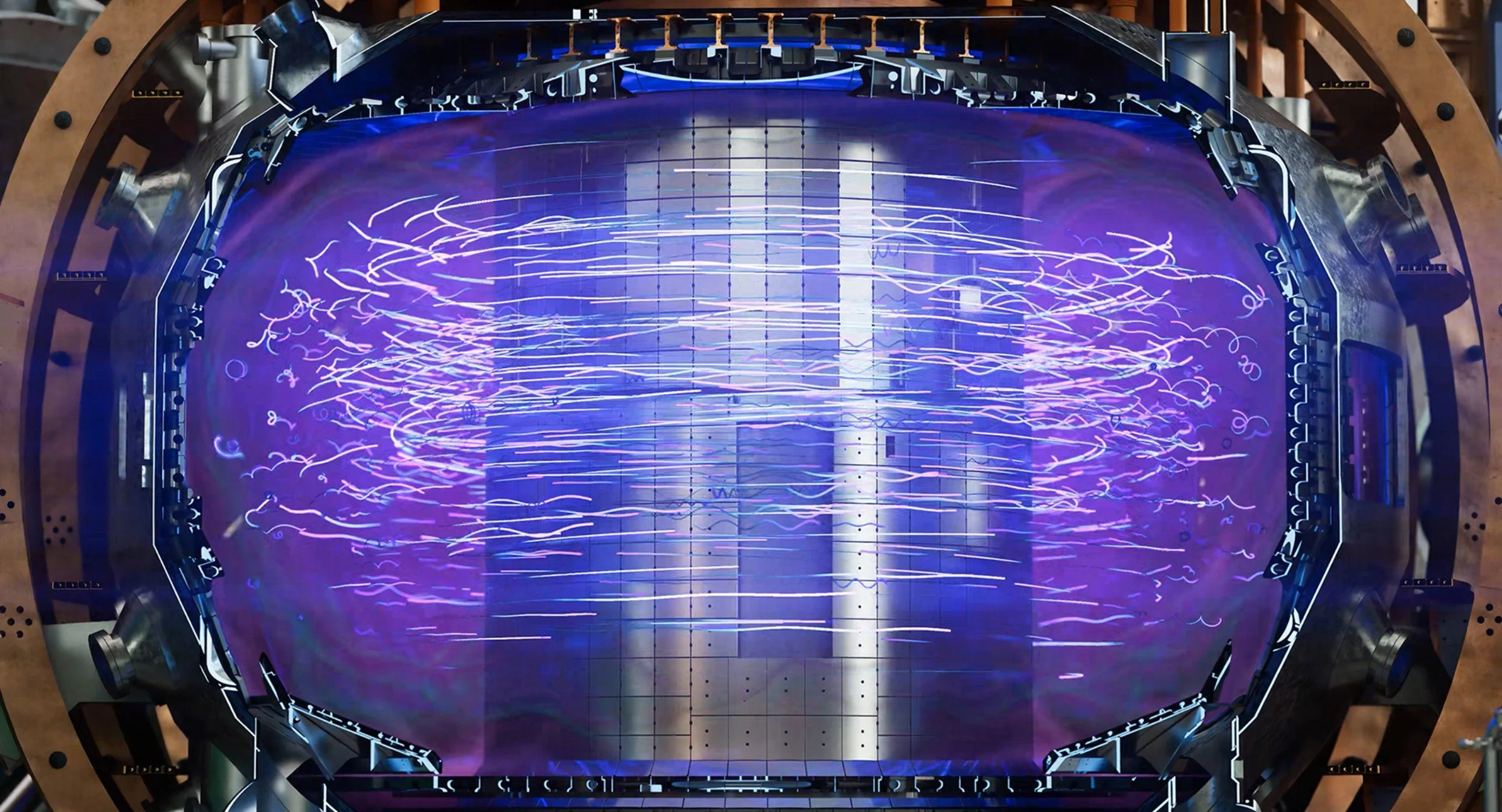
On a poetic level, it means we’ve chosen our new gods — and they don’t speak ancient Greek, they speak in code. On a practical one, it means AI isn’t an experiment anymore. It’s infrastructure, running beneath our lives like electricity.

The danger isn’t that machines will replace us. It’s that we’ll mistake acceleration for destiny.
Nvidia’s GPUs are tools, very exquisite ones, but the question of what we do with all that power still belongs to us. Or that’s what we like to think.
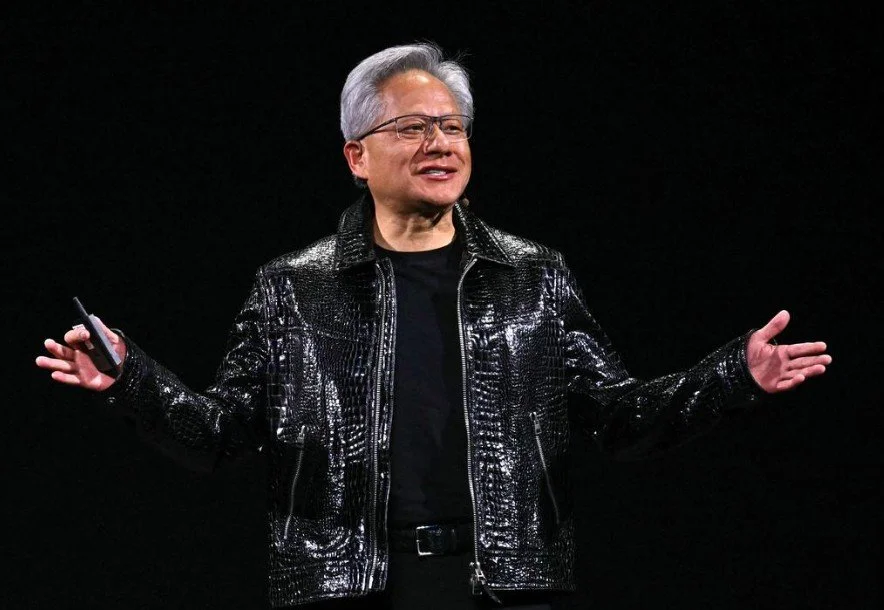
Until then, Jensen Huang stands at the pulpit of progress, jacket zipped, eyes bright, smiling that half-knowing grin of someone who’s already read the next decade — and compiled it in CUDA.