In the final week of her fall show at the Mayfair Townhouse, artist Claire Luxton reflects on authorship, myth what it means to be a woman.
by Vaughan Ollier
Just a Squeeze
As night settled over the luminous The Mayfair Townhouse, beneath its aptly named restaurant Cabinet of Curiosities, artist Claire Luxton redefined what it meant to be seen. Her exhibition “Modern Muse” unfolds as a world of self-portraiture, mythology, and reclamation. A bold, literal and figurative mirror maze where beauty and discomfort meet.
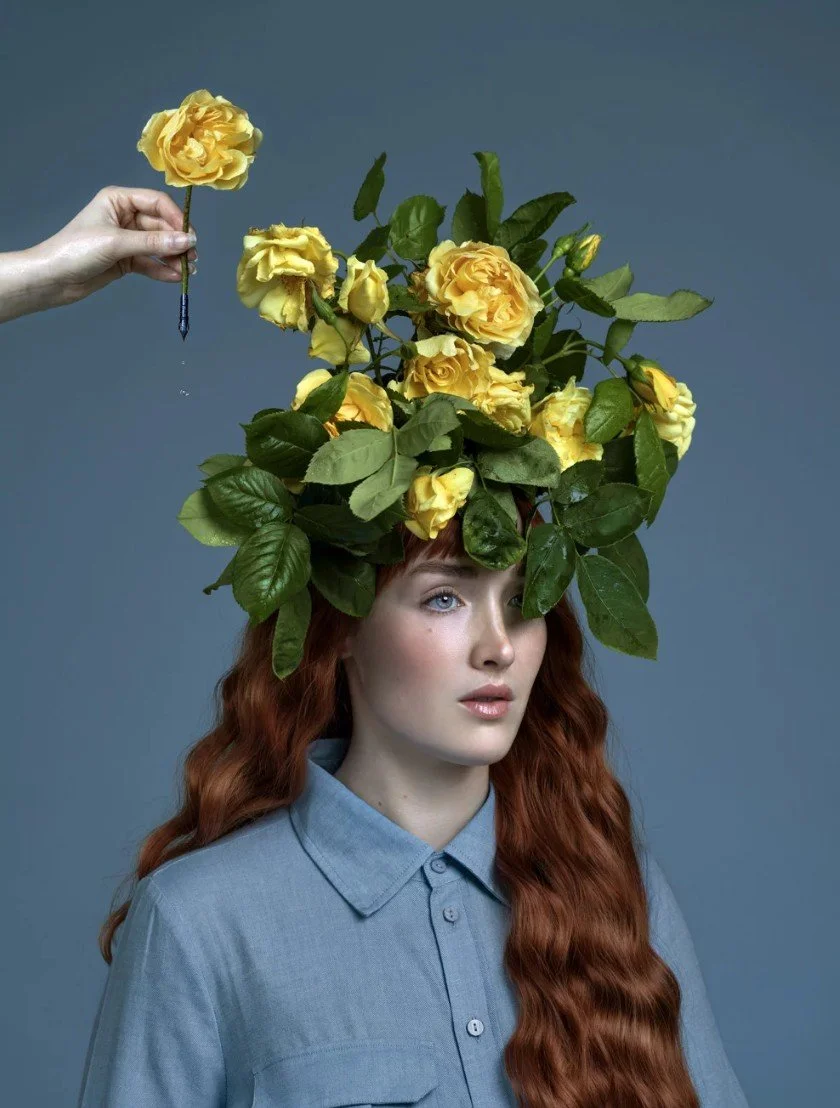
The Poet’s Wife - Claire Luxton (2024)
It’s fitting that the show takes place in a space once devoted to the collections of men. Now, it has been reclaimed by women; visionary curator Marine Tanguy and Luxton herself, two forces reshaping the mythology of art, beauty, and power.
The Siren, the Muse, the Wife, the Madonna, the Medusa. Luxton inhabits these myths not to imitate but to modify them. She crafts each persona on her own face before photographing herself, then paints digitally over the image, layering her skin tones to echo Renaissance technique while retaining photographic texture. Through her ambassadorship with Adobe, the process becomes alchemical: time-consuming yet tactile, ethereal yet real.
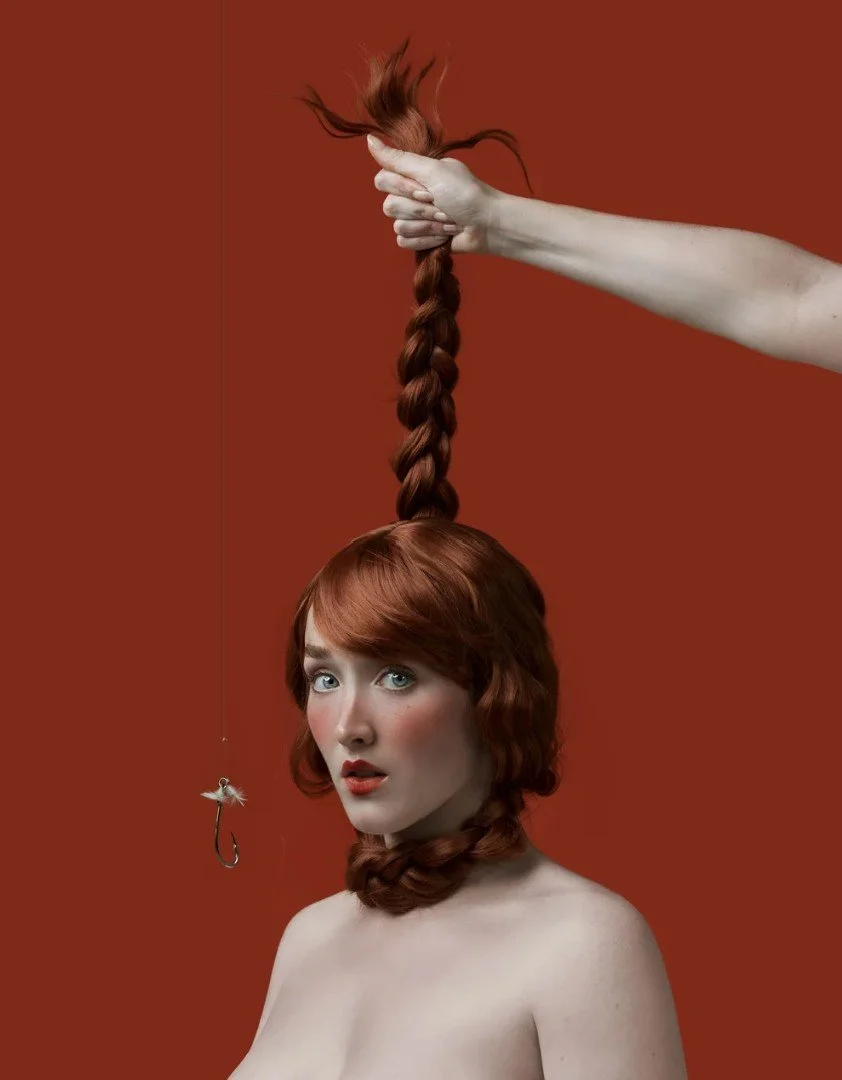
Red Herring - Claire Luxton (2023)
Her digital remastering pushes each figure beyond the frame, inviting the question: what’s real, and what’s myth? It’s an act of complete self-authorship. “Modern Muse” becomes a dialogue with myth itself; a reclamation long lost to social pressure and the male gaze.
Within the townhouse, Luxton transforms the Cabinet of Curiosities into something more intimate. Each portrait comes alive with poetry; for every image, she writes a verse, her inner and outer worlds inseparable. Together, they form a living mythology of womanhood: powerful, performative and painfully human.
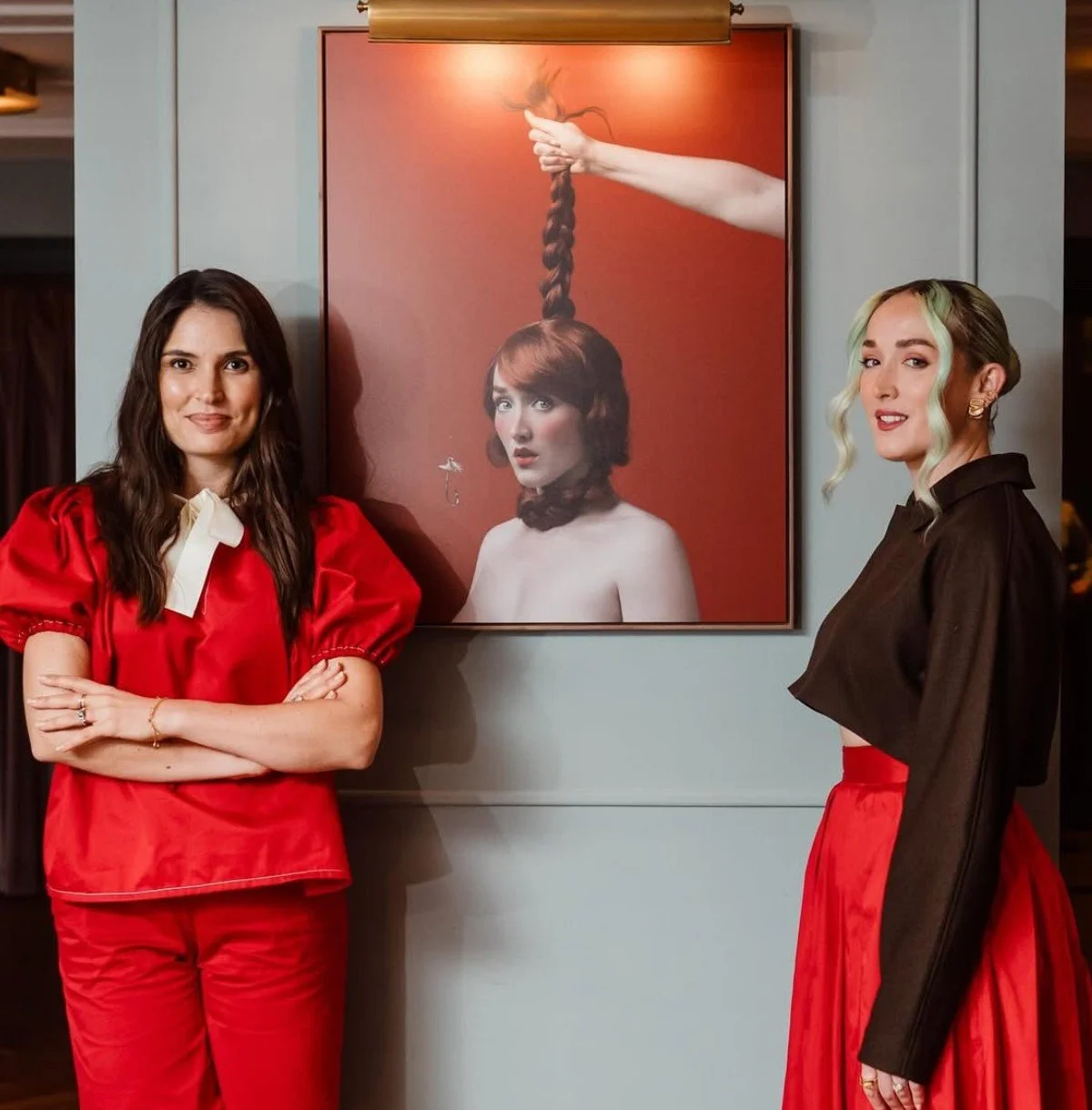
Creative force: Marine Tanguy and Claire Luxton.
“Trad Wives reinforce an aesthetic expected of feminine beauty,” observes curator and cultural tastemaker Marine Tanguy, “yet Claire challenges us to think beyond the surface of what is aesthetically pleasing for our gender.”
Tanguy recalls first encountering Luxton’s work as “stepping into her world,” instantly recognizing her as “the next Cindy Sherman.” Captivated, she acquired Luxton’s Hope in 2020, now hanging in her home and featured in her book “The Visual Detox.”
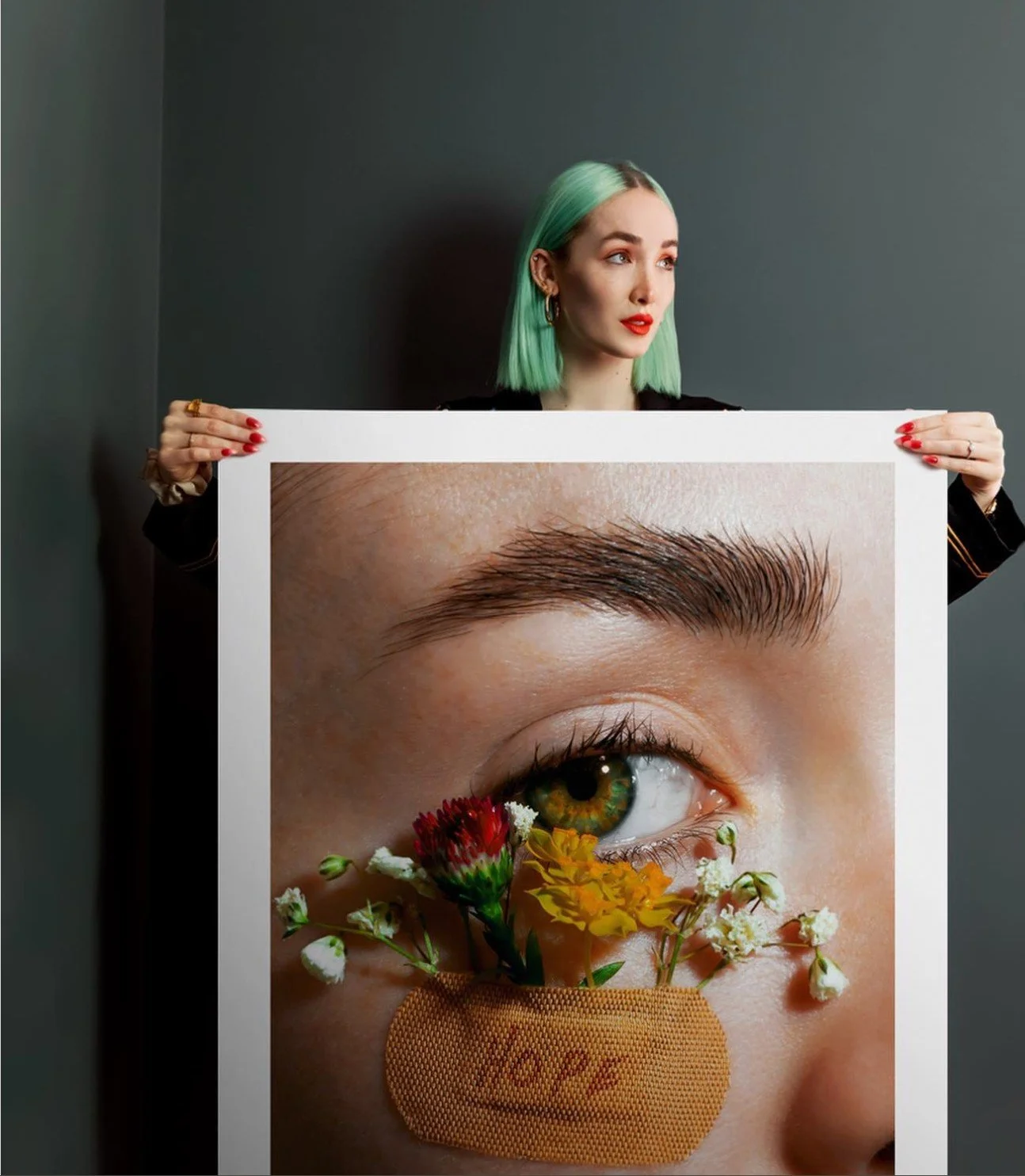
HOPE - Claire Luxton
Through beauty, danger, vulnerability, and wit, Luxton’s images seduce and provoke, inviting viewers into the ongoing negotiation between myth and womanhood. Modern Muse transforms the Mayfair Townhouse into a cabinet of women’s inner world: fierce, flawed and divine. We met Claire at The Dandy Bar at Mayfair’s Townhouse, where she guided us through her vivid, striking, and unmistakably singular world.
Why did you choose to craft your self-portraits alone? Was it an act of self-authorship?
Yes, absolutely. It is also very performative.
Creating alone allows me to maintain a sense of authorship that’s both intimate and honest. Every decision, from lighting to expression, becomes part of a dialogue with myself. It’s not about control, but about truth.
Working alone lets me explore the female image without mediation. This way I can reclaim the gaze and define what it means to look and to be seen.
Why do you write poems for each piece?
The poems come from the same place as the images; they’re often born together. Photography captures the surface of emotion, while poetry gives language to what can’t be seen. Together, they create a fuller emotional and intellectual narrative—a merging of image and language that feels essential to how I experience the world.

Unravel
What is the dialogue between How Does Your Garden Grow and The Poet’s Wife?
Both works explore the intersection of beauty and control and how femininity has historically been cultivated, contained, or performed. How Does Your Garden Grow questions growth through the lens of constructed perfection, while The Poet’s Wife examines romance, authorship, and the tension between muse and maker. Together, they trace a movement from being observed to becoming the observer.
Why do you believe women must rewrite their own stories?
For too long, women have been written into narratives that don’t belong to them. Rewriting is an act of reclamation of space, authorship, and complexity. It’s about shifting from being a symbol to a storyteller, from being interpreted to interpreting.
Is Unravel your favorite piece, or simply the most poignant today?
Unravel has always felt like both, a marker in time for me. It’s about dismantling perfection and allowing the raw, imperfect self to surface. Whether it’s my favorite changes with time, but it remains a reminder that strength often lies in undoing rather than in holding together.
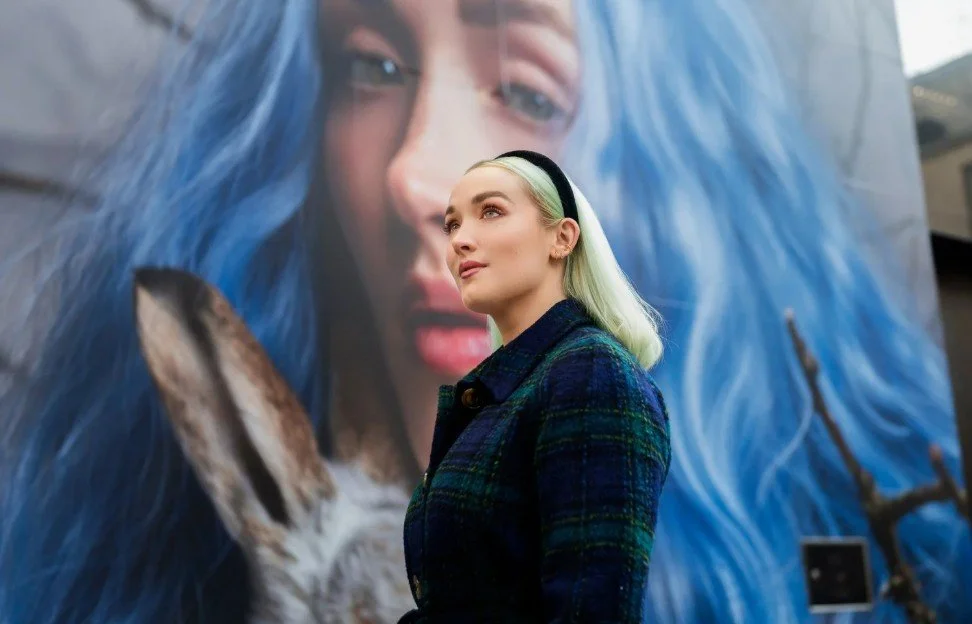
Claire Luxton, a leading voice in contemporary public art.
What inspired your reworking of female myth?
Much of my work is about unlearning inherited narratives. The myths of beauty, devotion, and purity have shaped how women are represented—and still are. I wanted to pull at those threads and reveal the spaces in between, where contradiction and power coexist. It’s less about rewriting mythology than revealing what was always there, waiting to be seen differently.
If you missed it, Claire Luxton’s work shows next in Paris, 12–23 November, at the 10th edition of Objectif Femmes, supported by France’s Ministry of Culture.recent