Brutal yet soft, Lucia Neamtu’s sculptural forms whisper power in stillness.
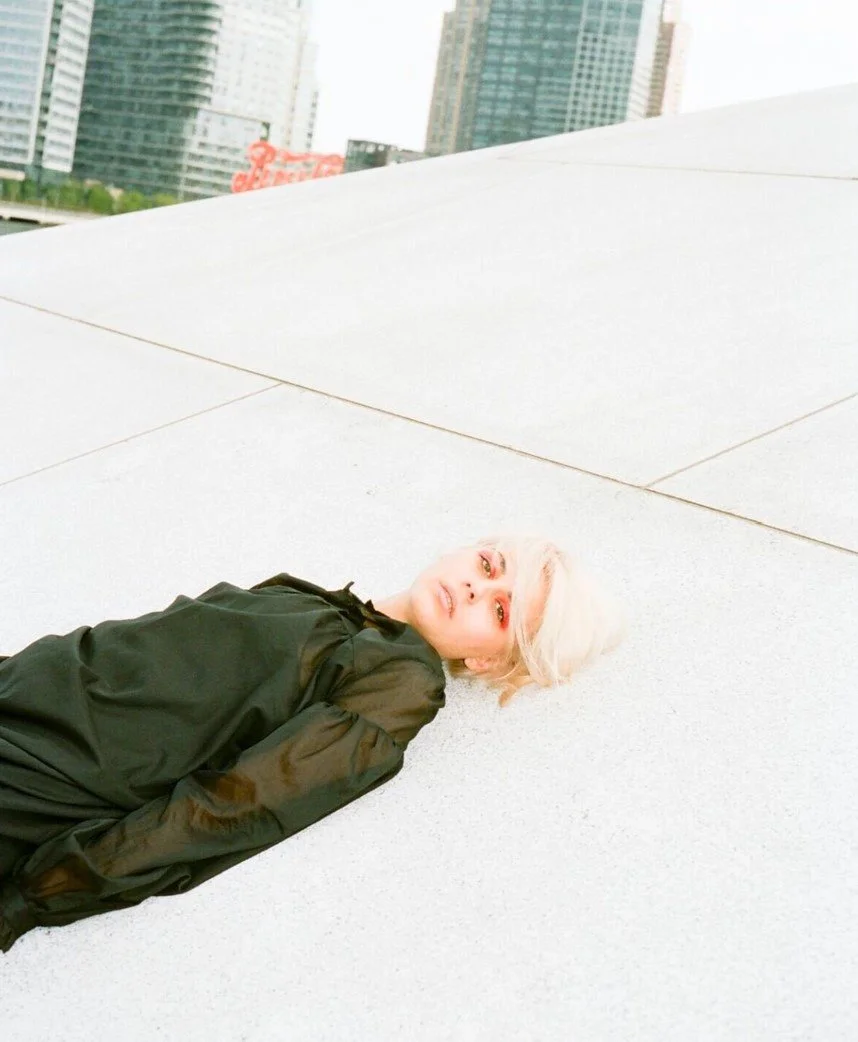
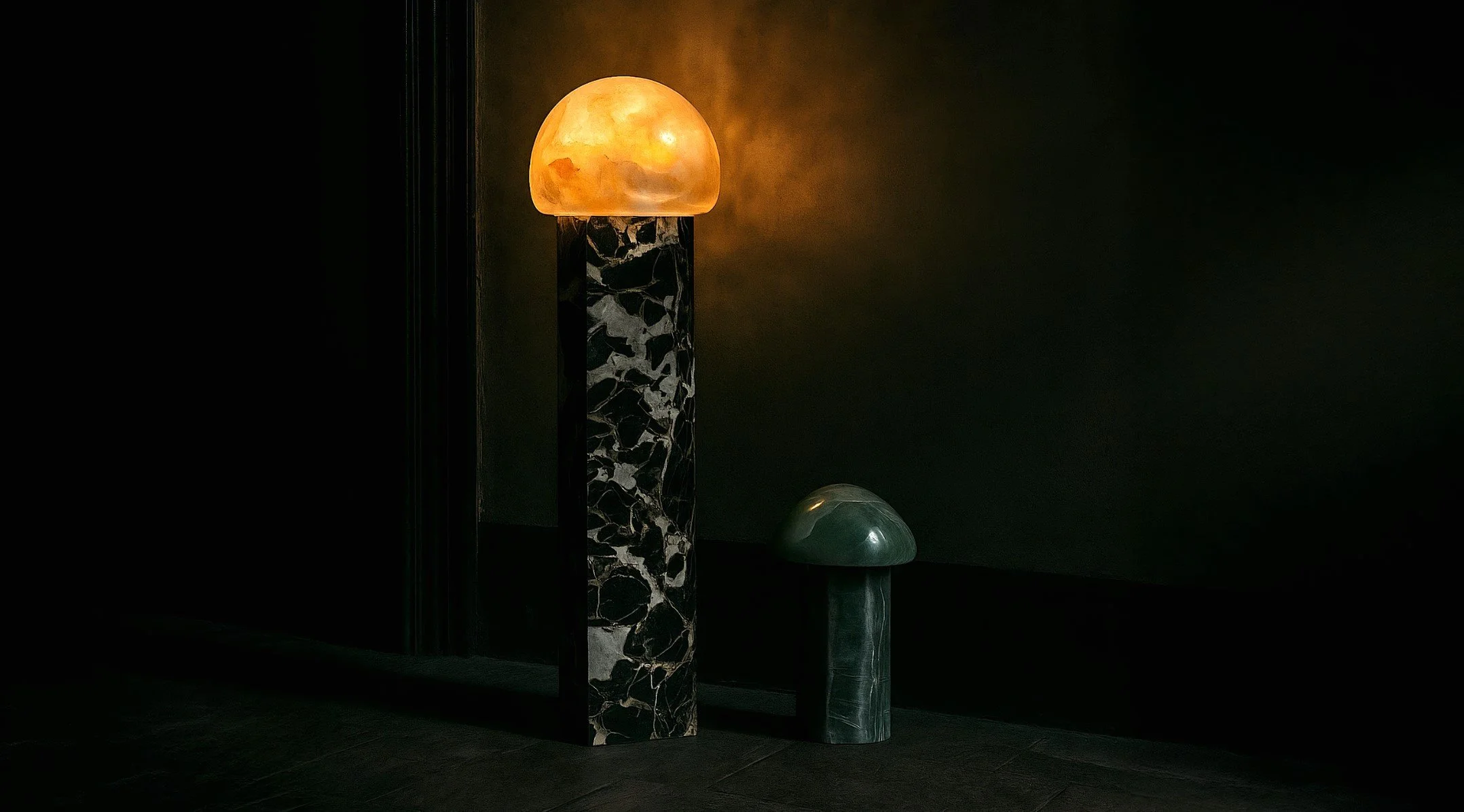
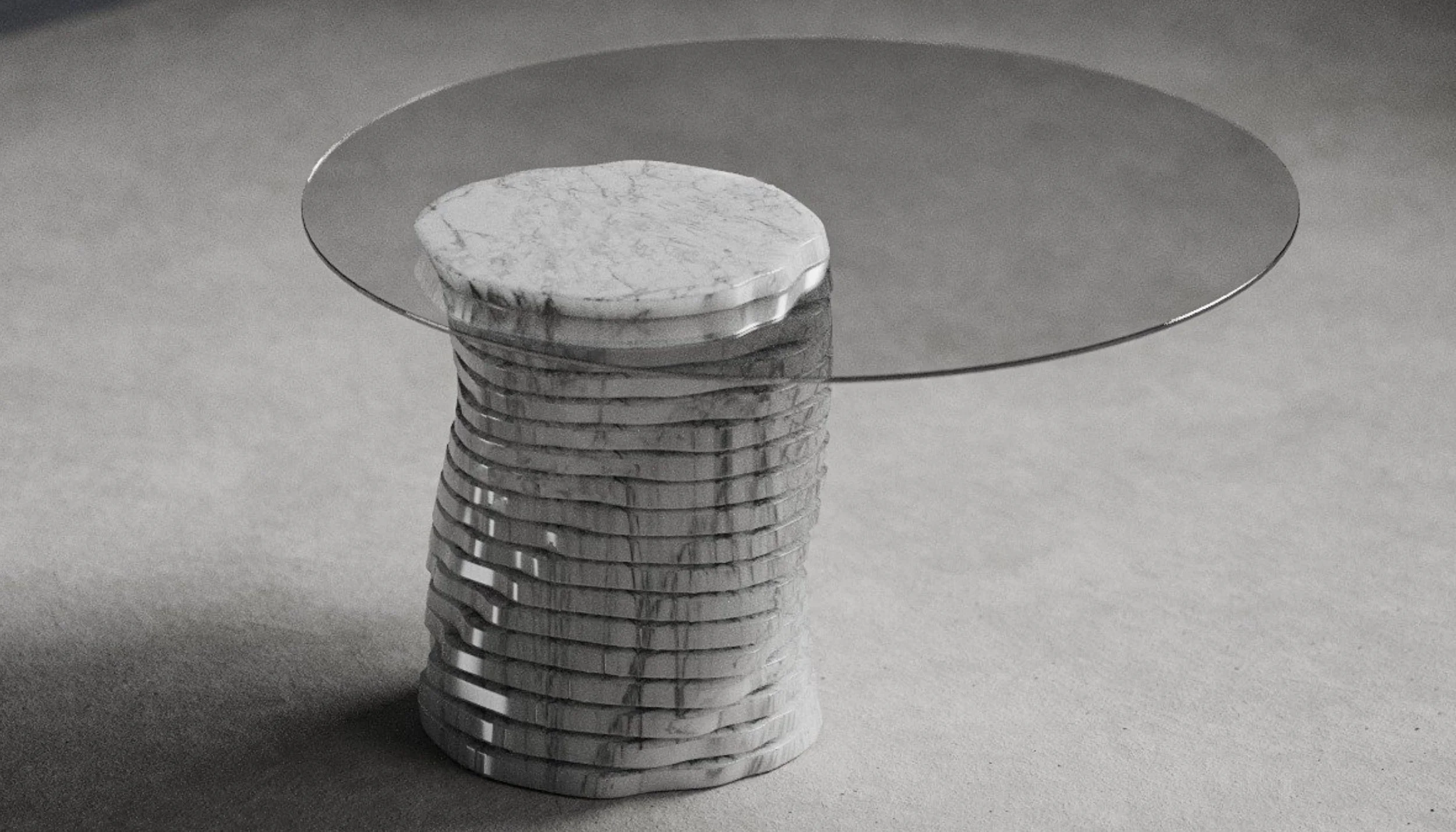
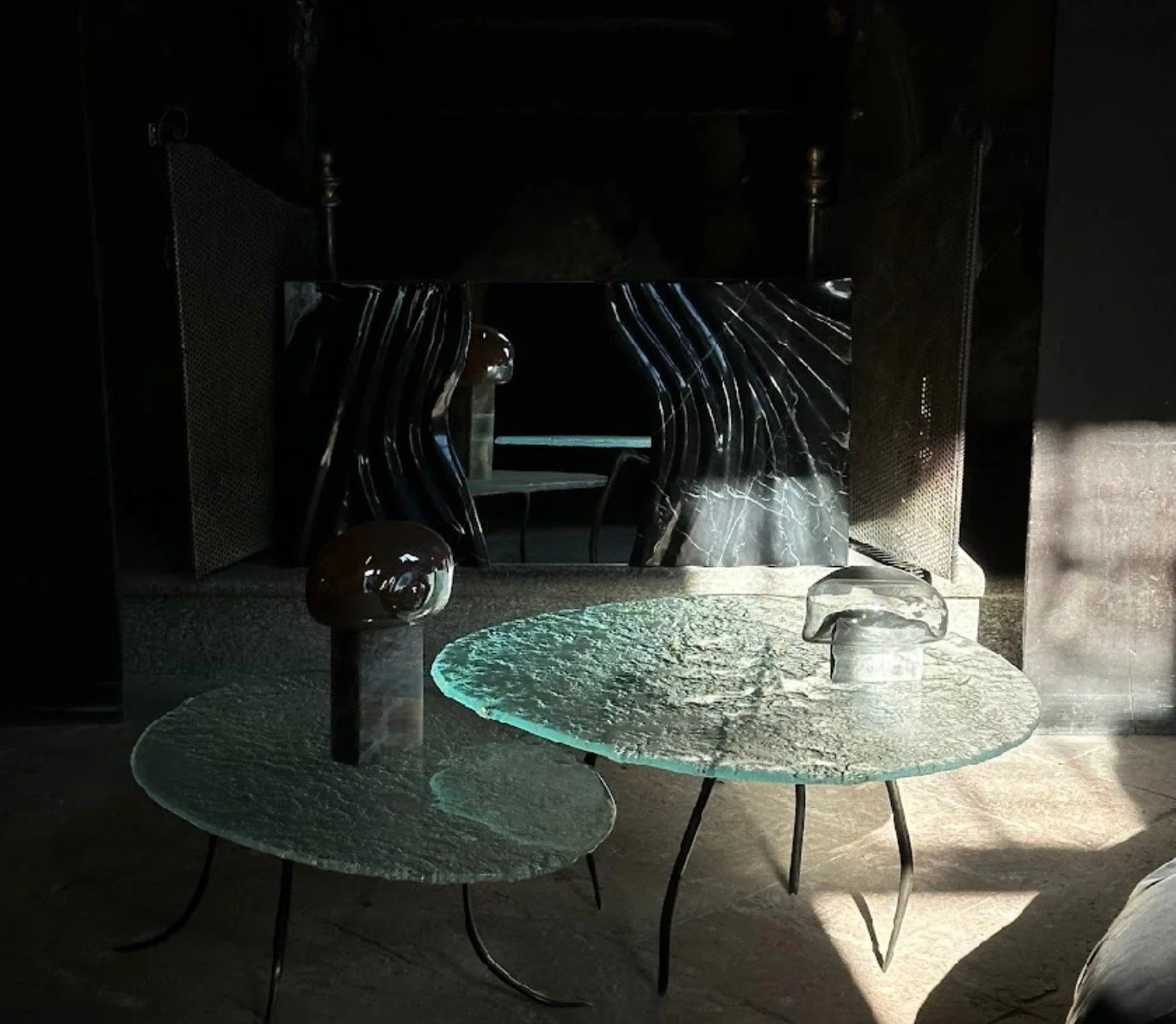
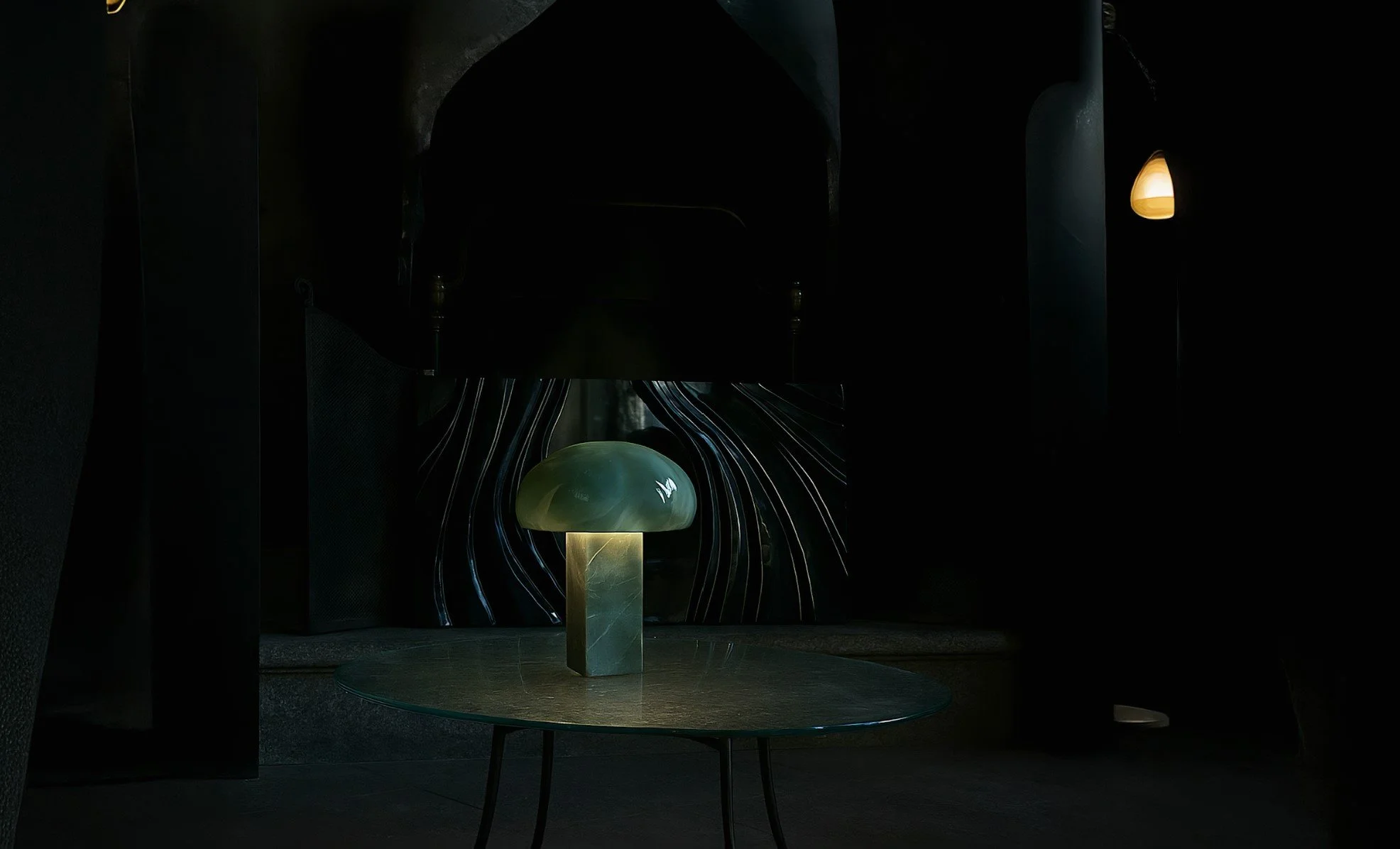
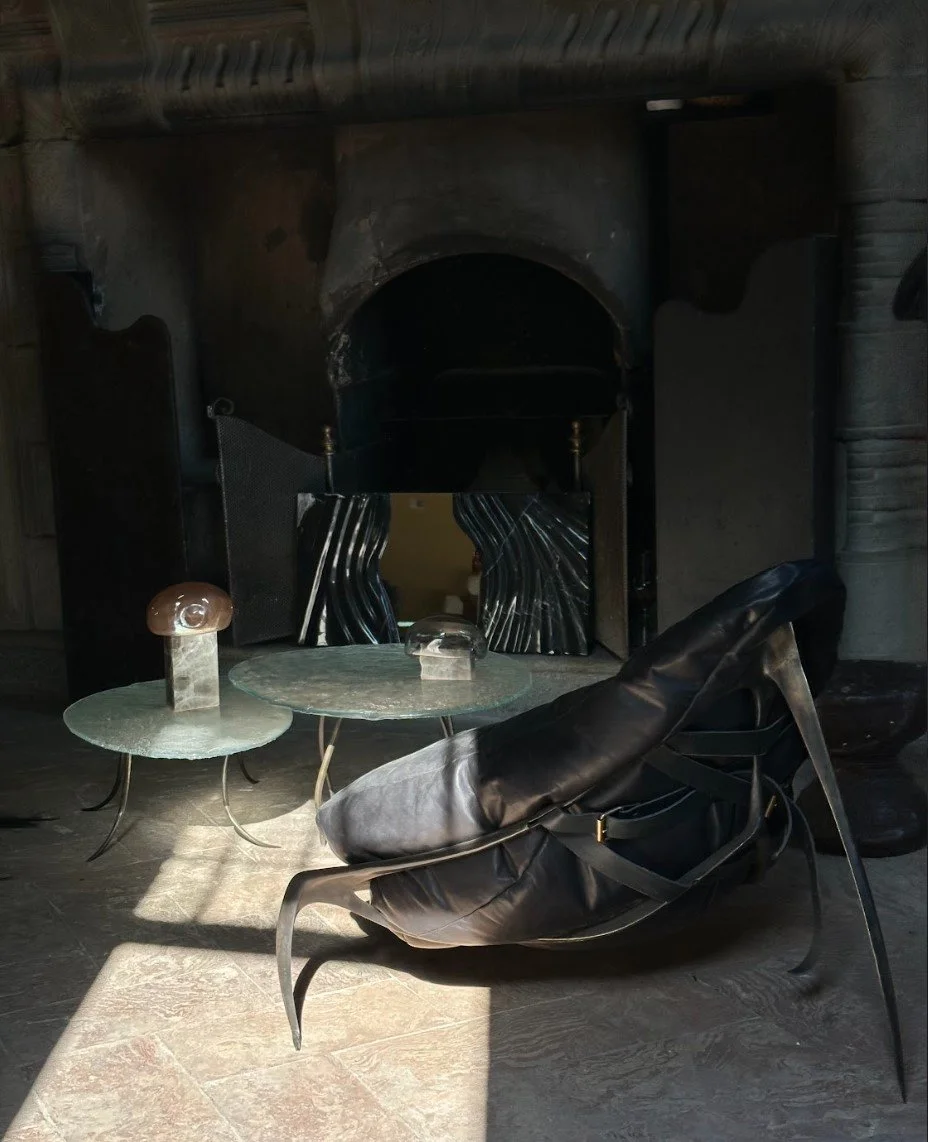
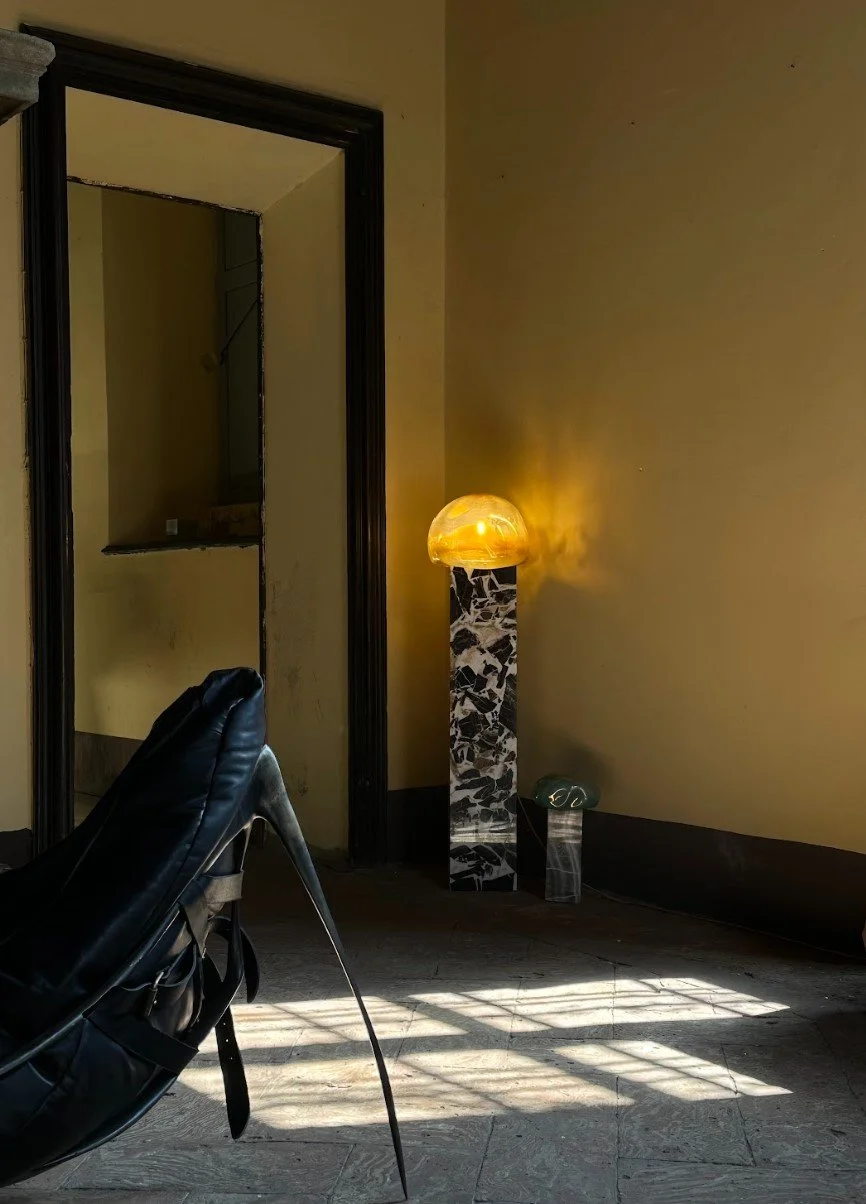
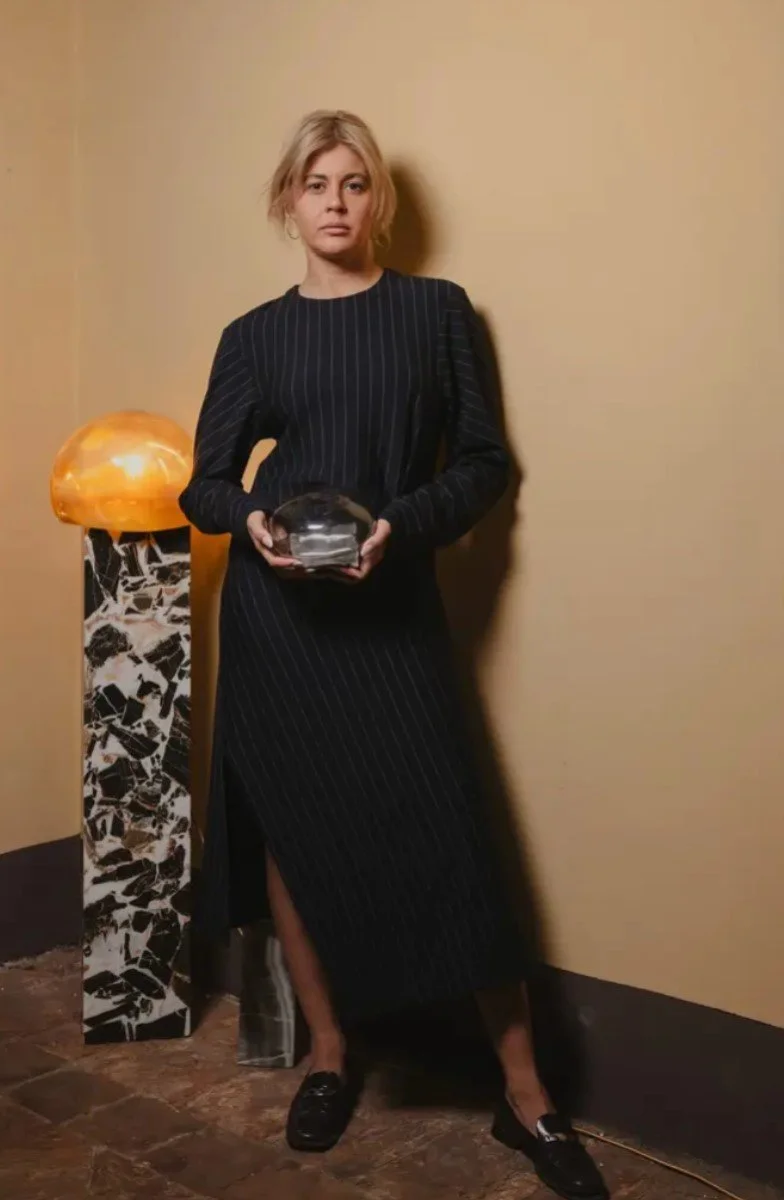
At the edge of design and ritual, Lucia Neamtu reshapes what stone can do—and feel. Her new collection, Soft Reflections, unveiled at Milan Design Week, turns marble and Murano glass into pieces that seduce quietly and haunt gently.
Neamtu brings a curator’s eye and a poet’s hunger to the world of sculptural furniture. The Moldovan-born, New York–based sculptor channels brutal motion into frozen softness and cosmic geometry carved into ancient material. Her tables, mirrors, and lamps don’t just decorate; they ask you to stop, breathe, and feel.
Crafted with legendary Murano glassmakers and Bufalini’s 300-year-old marble studio, each piece hums with emotional gravity. Neamtu isn’t chasing trends—she’s building altars to stillness and permanence. In a city that never stops, her work invites you to.
Here at AD, we’re totally awe-struck by her otherworldly work.
Has your relationship to marble and stone changed since your first collection?
Absolutely. In the beginning, I approached stone with a kind of reverence—almost hesitation. I was drawn to its permanence and raw beauty, but I treated it like a monument: rigid, untouchable.
Over time, that changed. I started seeing marble not as cold or immovable, but as expressive and alive. I’ve grown more confident pushing its limits—playing with contrast, form, and subtle gestures that let the material breathe.
Now, I don’t just think of stone as surface or weight, but as a medium for tension, softness, and movement. There’s poetry in its fractures, in the way light slips across a polished edge or clings to a raw cut.
Have your collaborations and debuts changed the way you see your art? Are your pieces becoming softer, more radical, or something else entirely?
Yes. Not just conceptually, but emotionally. I also wouldn’t say the work is softer or more radical, it’s more open. I’m more drawn now to emotional texture and subtle narrative. I still love bold structures, but I’m thinking more about presence, space, silence. Some pieces may look quieter, but they’re just as intense, just more refined.
So maybe the right word is evolved. Collaborations taught me furniture doesn’t have to be just object—it can be a provocation, a gesture, a character. I design with more curiosity than control now, and that changes everything.

Is there a material that scares you?
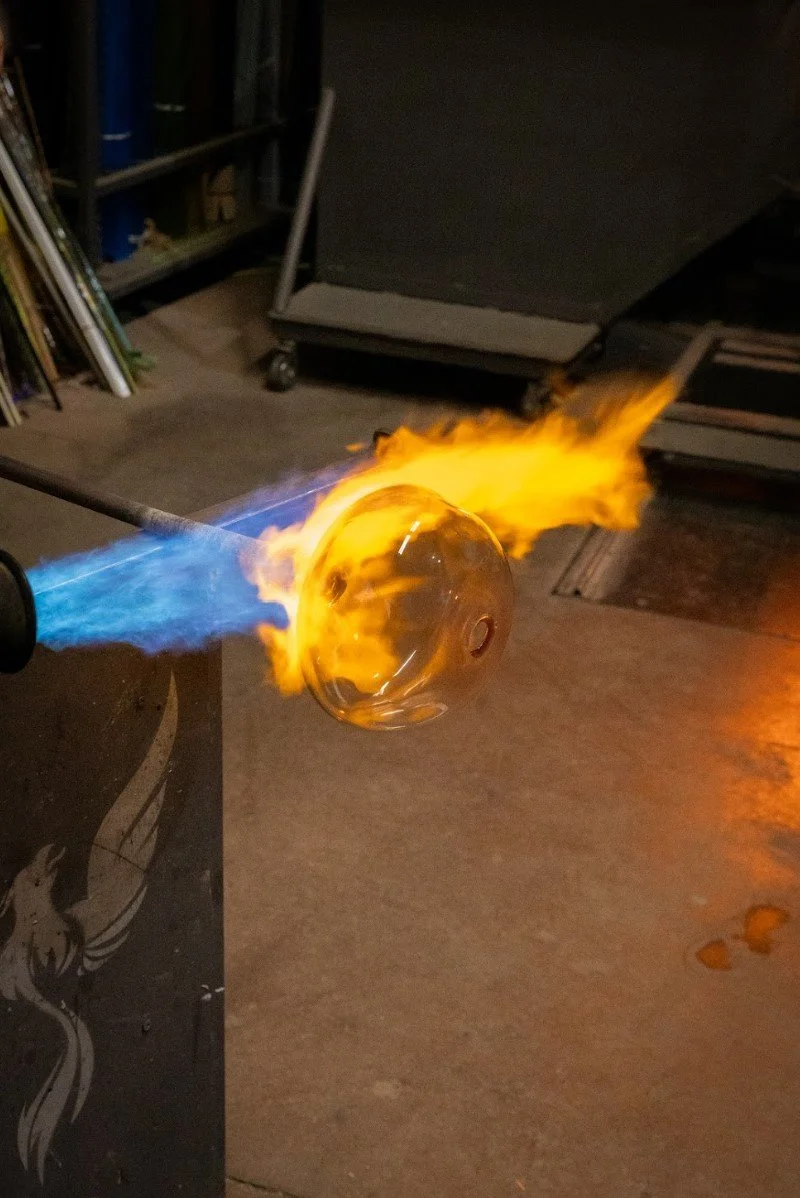
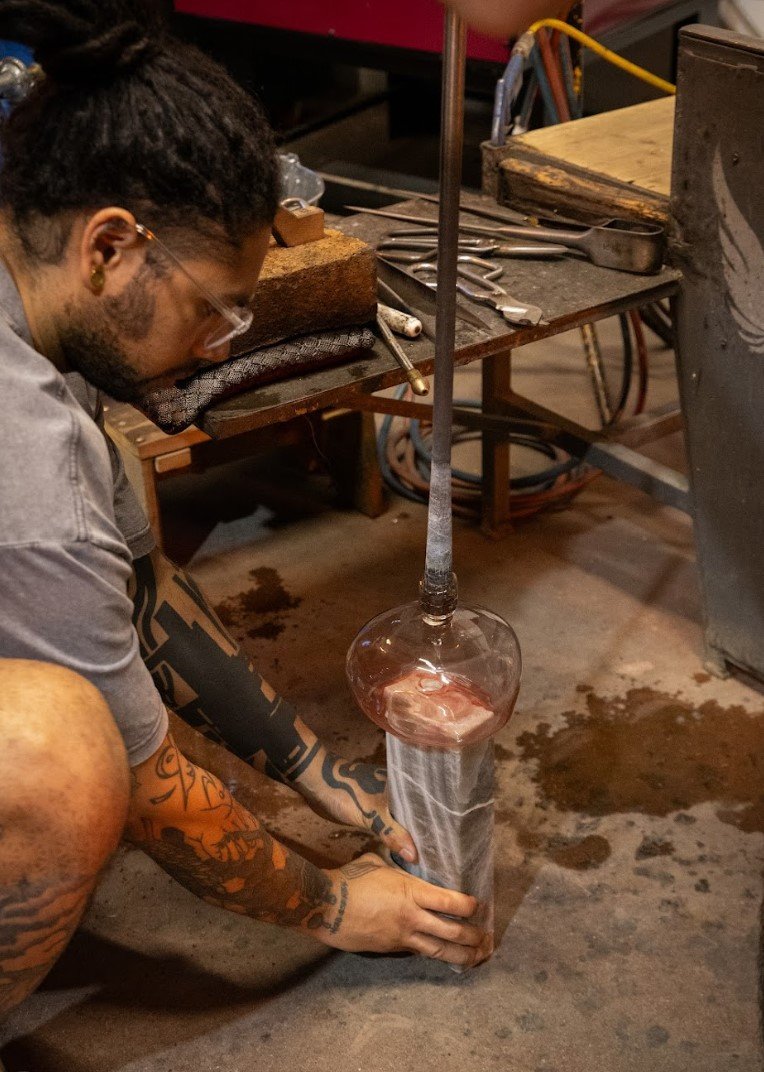
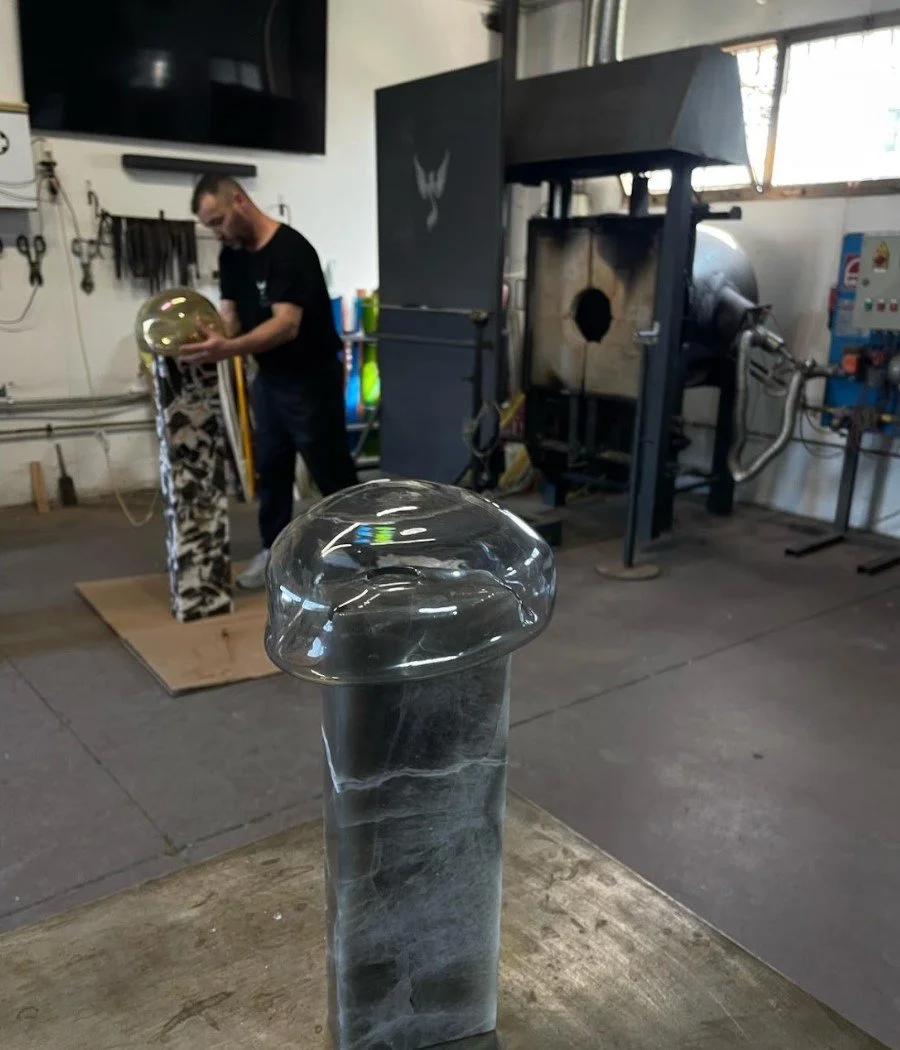
Glass. Specifically, Murano glass.
Yet you’ve worked with Murano glass. Did the experience deepen your practice?
It did. At first, I was intimidated—not out of fear, but respect. You’re stepping into a tradition where craftsmanship is sacred.
Even now, I’m still in awe. Watching a Murano master at work is like witnessing ritual precision, grace, and soul. It reminds you that design isn’t just about form or trend—it’s about discipline, time, and heart. It’s art at its purest.
Do you believe design can slow people down?
Yes, if it’s intentional, and if we let it.
Working with these materials forced me to slow down, listen, and embrace imperfection. That shift made me grow—not just as a designer, but emotionally.
Design can be a form of resistance in a speed-obsessed world. Not in a loud way—but through quiet cues: a curve that invites stillness, a material that asks to be felt, a space that holds silence.
I think about slowness not just as function, but as presence. Can a piece anchor someone, even briefly? Can it interrupt their momentum, offer a pause, a breath, a moment of emotion? If so, it’s done something powerful.
How do you balance creating objects of desire with restraint or sustainability?
I think about that constantly. The trick is redefining desire.
It’s not about excess or novelty—it’s about connection. A piece with depth, made from thoughtful materials, grounded in story—that’s desire. That’s sustainability.
I work with materials that age beautifully, forms that resist trends, and construction that lasts. Restraint isn’t a limit—it’s a design principle.

As your work gains recognition, how do you protect the intimacy of your process?
Recognition is a gift, but it comes with noise.
I’ve learned to be intentional with what I share. Some ideas need to live in silence before they’re ready to be seen. To me, intimacy isn’t secrecy—it’s connection. If I stay close to why I started, the recognition doesn’t dilute the process, it deepens it.
Do you think the noise cheapens artists’ work?
It can. Sometimes noise leads to growth, but it can also distract—pull focus away from the original impulse.
If you start chasing attention, the work risks becoming shallow. I try to let the material lead. That filters out the noise and keeps the work honest.
But every artist negotiates that differently.
Is there a material, place, or idea haunting you right now? What’s next?
So many new ideas are in motion. My next show will be this September in New York during Collectible—and then at Art Basel in Paris.
Stay tuned.