Armory Show 2026 preview
At the westernmost fringe of Manhattan, where the city’s entropic grid gives way to the Hudson, the glass doors of the Javits Center opened wide to welcome the art world’s glitterati. Thirty-two editions in, The Armory Show platform still packs a punch: 230 galleries from more than 30 countries, running September 24–27 — a late-September breather now that Fashion Week has finally crashed out. The preview was upbeat as usual: loud visuals, electrifying installations, and the usual carnival of curious art critters — curators, creators, monied up collectors, uppity editors, dealers, hustlers and diehards in hot pursuit of that always thrilling intersection art and commerce.
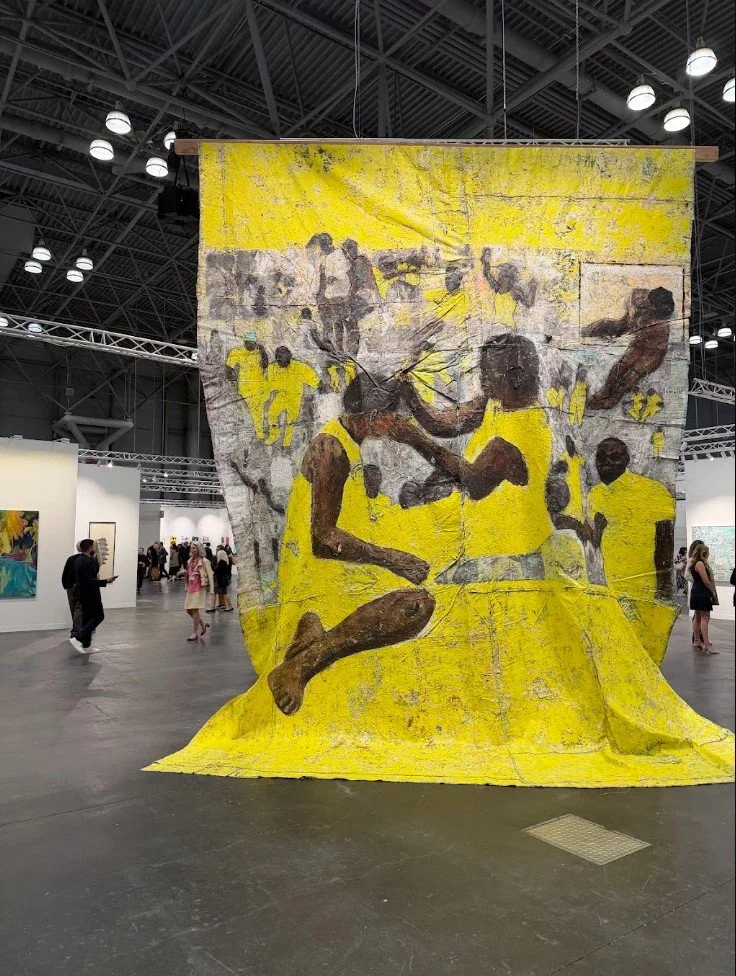
Kaloki Nyamai
Far west, past the last decent coffee, there’s Javits. Thirty-two editions in, The Armory Show still throws a similar party: 230 galleries from more than 30 countries, running September 24–27—a late-September breather now that Fashion Week has finally cleared out. The preview was upbeat as always: loud visuals, electrifying installations, and the usual carnival of curious creatures—artists, glossy editors, preppy dealers, fat-cat collectors, fashionistas wandering through for content, A-listers, B-listers, and diehards still chasing that spot where magic meets madness.
The same weekend, the city splits the difference. Independent 20th Century takes over Sotheby’s at the Breuer on Madison: 20th-century work in a building that used to be a museum and now belongs to an auction house. Across the river, Printed Matter’s NY Art Book Fair lands at MoMA PS1, September 24–27, with an opening night on Thursday—undeniably the coolest ticket of the week and a much-needed antidote to our brain-dead tech occupation. Funny enough, Printed Matter and PS1 both turn 50. Add Taryn Simon at the Guggenheim and Arthur Jafa, opening at the New Museum on September 25, and the week is already a dreadful commute. Finding anything worth the trip in a city on edge takes strategic planning, an OMNY tap, and an eye you sharpen on purpose. Overall, there is a lot of crap in the showcase, and you do not want to get sidetracked.
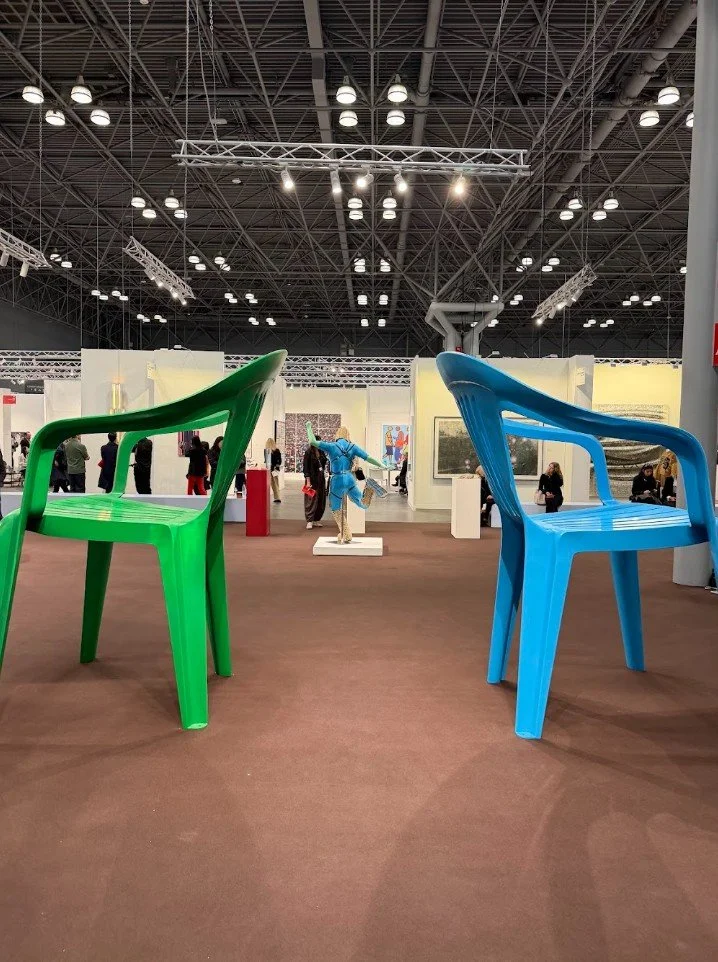
Lucia Hierro
This year, The Armory brought in more young galleries and devoted two curated sections to the Caribbean and its diasporas. The floor is built around the Javits entrances and its sections—Galleries, Solo, Presents, Focus, Platform, Armory Sculpture, and Not-for-Profit—so the theme hits you before you even open a map, which no one knows how to read anyway. New York holds the middle: 303 Gallery, Sean Kelly, Albertz Benda, Yossi Milo, and Dimin. The West Coast and elsewhere: Anat Ebgi, Berggruen, and Nazarian / Curcio. From outside the U.S.: Victoria Miro, Templon, and Mennour. Presents and Solo, home to the newer galleries and single-artist presentations, grew by around 20 percent. Several majors from the 2025 edition are missing, including White Cube, Skarstedt, Tanya Bonakdar Gallery, and Andrew Kreps Gallery. Don’t do Presents last. The Presents section specifically spotlights galleries younger than 12 years old, with solo and dual-artist presentations.
The VIP Café was packed for two reasons, neither of them the usual shmoozing, dealmaking, or editorializing. There was a long line for coffee—which I would advise skipping, especially the cappuccino—and a tiny, almost claustrophobic space with very limited seating.
Even though nobody really comes here for the lounge—or maybe some do—if you are calling it VIP, at least bring in good coffee from one of the many great local places. Oh well.
Early-bird dealers and gallerists still exchanged contracts. “Madeline Peckenpaugh is my new addition, and there was already a waiting list for many of the pieces,” one well-known local collector shared with me, pointing to a fresh acquisition.
We swapped some gossip while the halls pulsed with painterly theatre, extravagant sculpture, and the colorful Platform section, where Caribbean energy radiated from the center of the fair.
Standouts
This year, The Armory Show featured a larger roster of young, emerging galleries and a thematic emphasis on art from the Caribbean and its diasporas. It was refreshing—a different perspective from the predictable cavalcade of usual suspects brought in by the bluechip reps.
I began this year’s walkthrough with Kaloki Nyamai’s bright, larger-than-life work, which completely sliced through my brain. We caught the Kenyan-born artist chatting with gallerists and collectors just after the doors opened. He told usus his central piece took about six months to complete, with intense and emotional revisions along the way. When asked what art would be relevant in 2050, he admitted he is afraid of the unknown, then answered confidently: “My art will be relevant in the future. And I would like to have a Mark Bradford piece.”
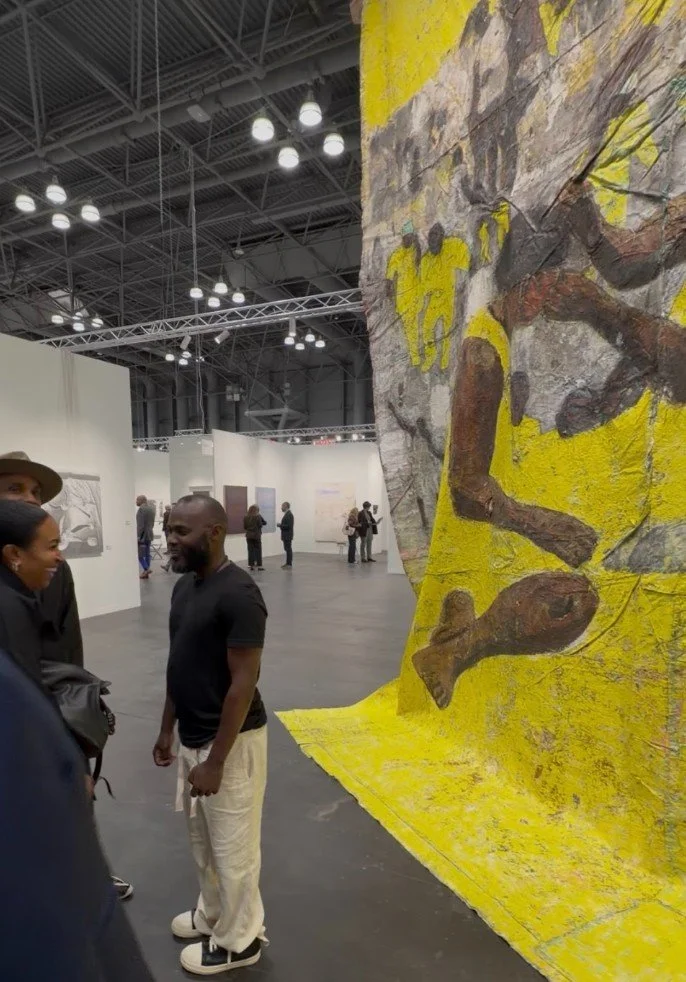
Kaloki Nyamai chatting with gallerists and collectors just after the doors opened
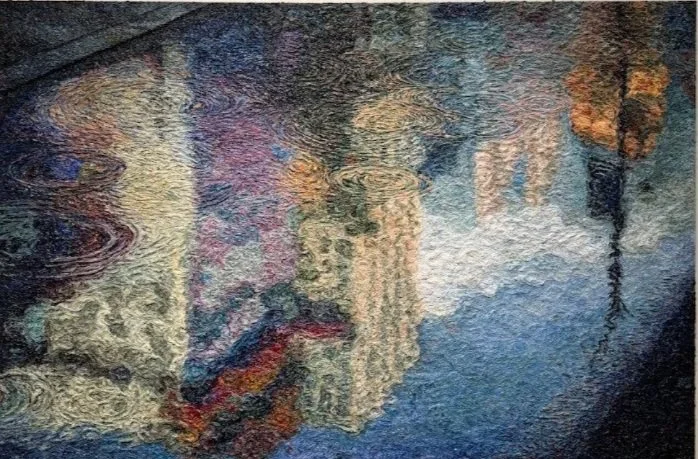
Cooper Cox
Presents spotlighted solo and dual-artist presentations: Cooper Cox’s gut-punching, upside-down landscape and labor-intensive reflections on what goes unseen and passes by at Ochi; Johanna Bath’s diaristic portraits, pulsing with elegance, intimacy, and feminine power, at Enari; and Norwegian artist Morten Slettemeås astonishing seven-panel work, reflecting the seven days of the week, presented by JOHS. Alexander Berggruen offered a moving presentation of Madeline Peckenpaugh’s labor-intensive, wiped canvases and uncanny deconstructed worlds alongside Raúl de Lara’s wooden sculptures. Enari Gallery’s solo presentation of Bath centers on layered oil paintings of hands, knees, flora, and fragmented figures that explore memory, time, and human connection.
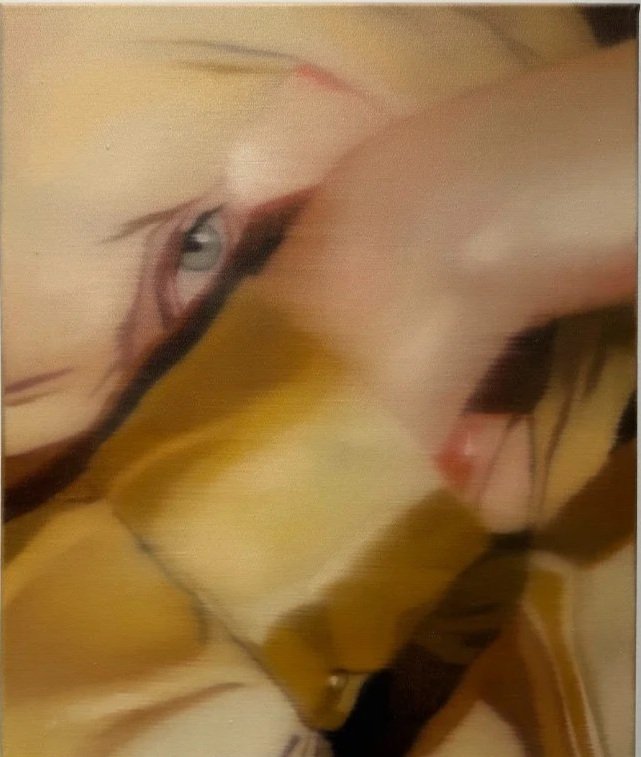
Johanna Bath
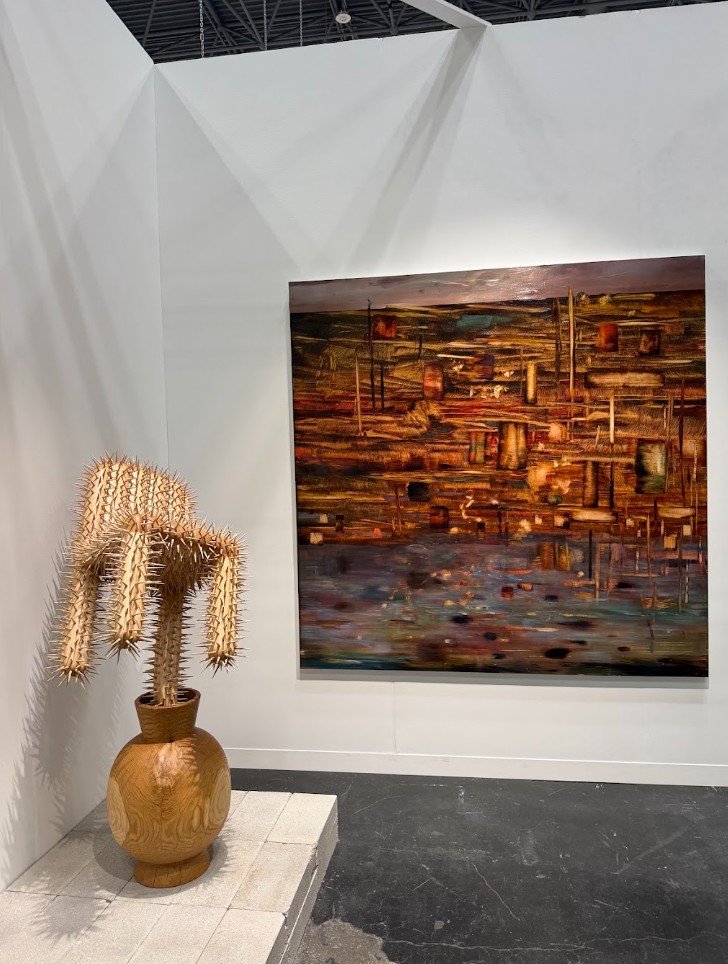
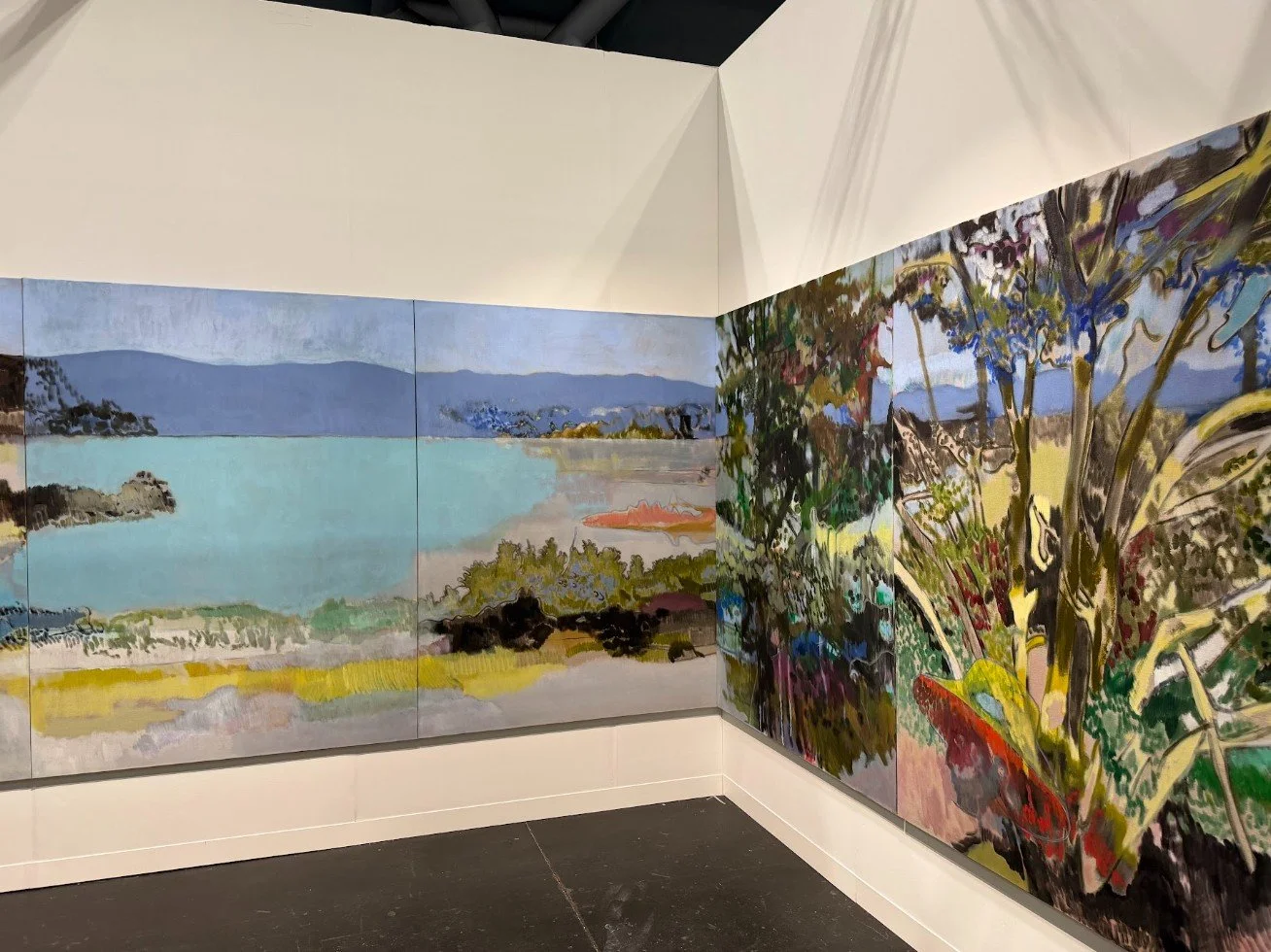
Morten Slettemeås
Perrotin featured Kathia St. Hilaire’s richly layered paintings, prints, and collages, where Haitian history, migration, Vodou traditions, and Spiralism meet in surfaces that are scratched back, rebuilt, and made to carry chaos as transformation.
Yossi Milo brought together Linus Borgo’s striking portraits, Pierre Knop’s interior landscapes, Markus Brunetti’s monumental architectural photographs, and Yonathan Moore’s precise aluminum forms—a booth quietly connecting identity, memory, material, and time.
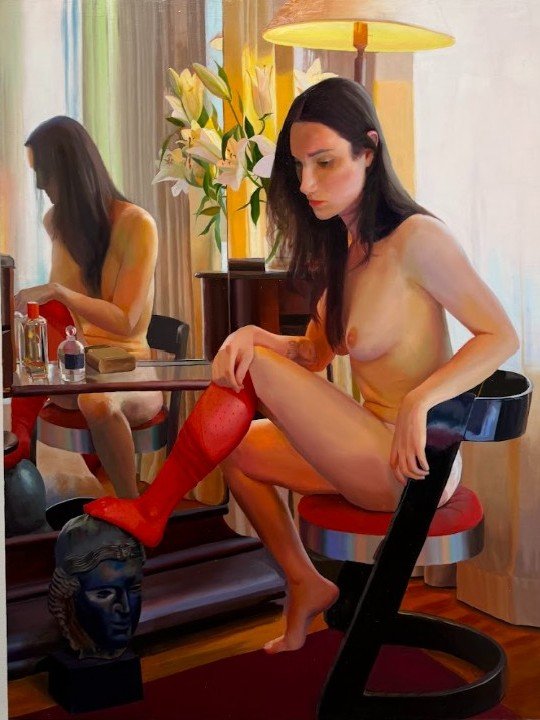
Linus Borgo
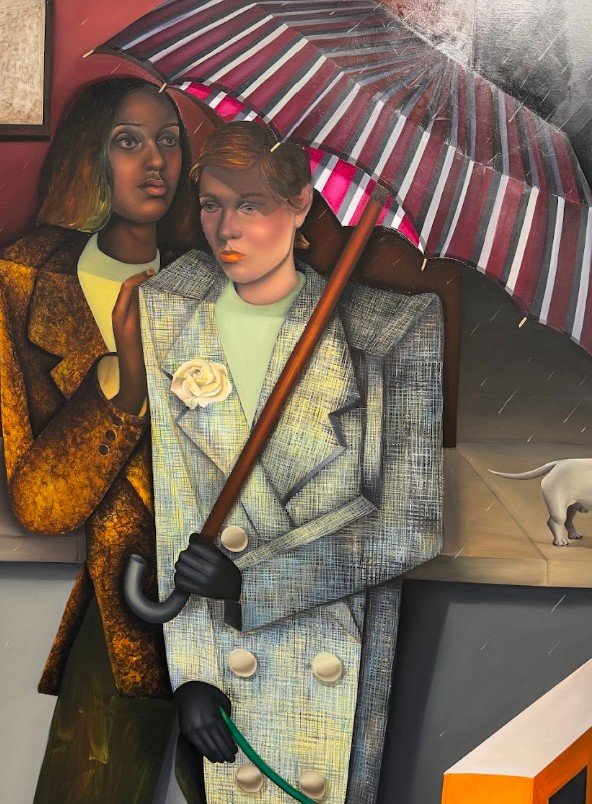
Nazarian / Curcio presented Coady Brown’s surreal, psychologically charged paintings of couples and groups, examining the strange performances of intimacy, self-presentation, and the space between private and public life.
Across the aisle, Ena Swansea’s detailed Central Park scene gleamed at Ben Brown Fine Arts—the kind of work that makes you slow down after a full day of visual overload.
Maruani Mercier’s curatorial instinct made you stop every time, whether for Ross Bleckner’s painting, Francesco Clemente’s striking portraits, or a pair of sculptures that quietly pulled you in. Maruani Mercier showed paintings and sculptures from its roster.
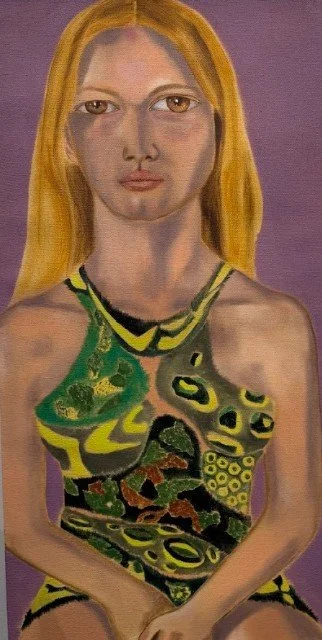
Francesco Clemente
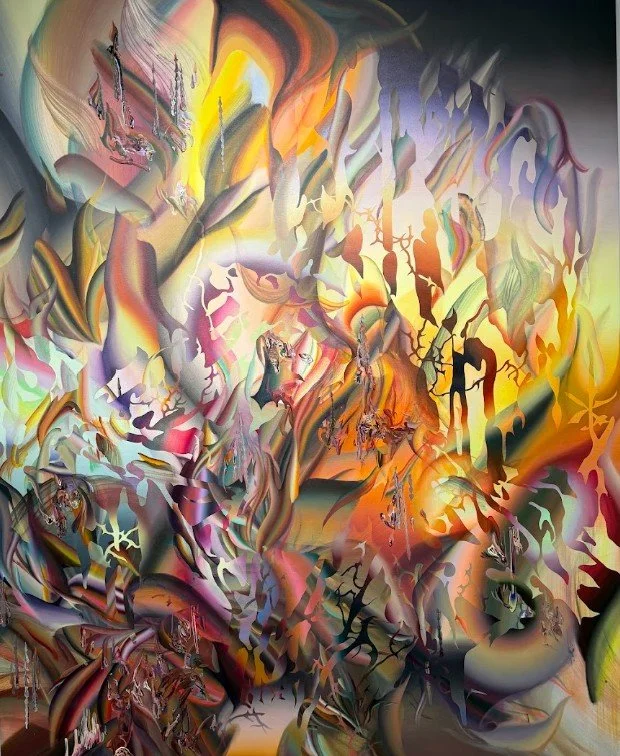
Sarah Tompkins
At Montreal’s Patrick Mikhail Gallery, Sarah Tompkins’s enormous canvas radiated strange, vivid vibrations—part holy hallucination, part sensory reset. The lively presentation found an unexpected, seamless synergy between Tompkins, Antonietta Grassi, and Claudia Hart, making it one of the fair’s must-stop booths.
Darvish Fakhr’s playful yet deeply provocative portraits hovered between whimsy and reflection, charged with his own meditative presence in the booth. In State of Suspension, the Iranian-American artist paired more than 30 new gravity-defying paintings with slow, tai chi- and mime-inflected performance, turning stillness, levity, and movement into a moving meditation.
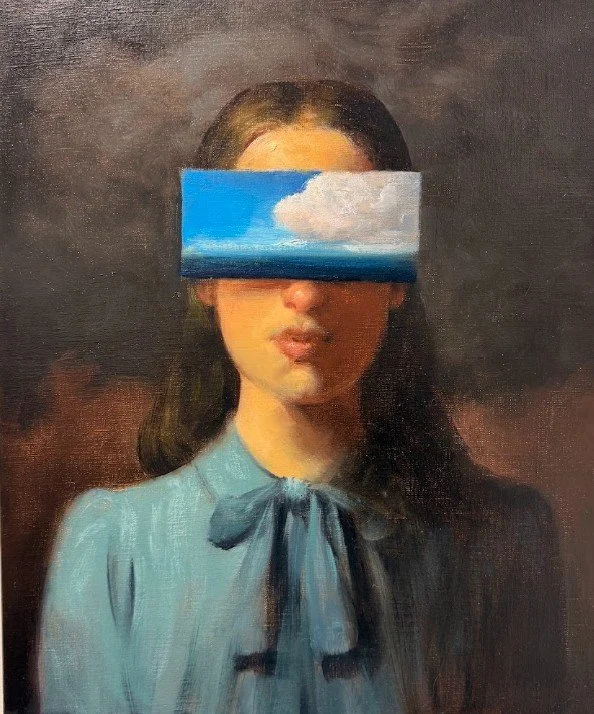
Darvish Fakhr
By the time you emerge from Javits—overcaffeinated, overstimulated, and vaguely questioning the state of contemporary culture—you will have seen enough good work to remember why the whole spectacle still matters. Skip the lounge, wear shoes you can survive in, and do not save Presents for last. Go for Kaloki Nyamai’s force, stay for the Caribbean current running through the fair, and give yourself permission to get pulled off course by the booths that make you stop. Go see it before the magic, madness, and sales sheets disappear on Sunday.