History, anxiety and glamour collide, as Adam Curtis sets the stage for Anderson’s first womenswear show at Dior.
Before the clothes, Dior gave us a set piece. The audience sat in a circle, facing each other and a giant inverted pyramid suspended from the ceiling—a reminder that the house has always been both mirror and monument. Then the lights dropped.
British documentary icon Adam Curtis took over with one of his signature collages: horror films spliced year by year since 1947, cut against Dior’s dazzling archive and flashes of the familiar—celebrities, muses, and the masterminds behind the house. A moving soundtrack swelled as bold lettering flashed across the screen: “DO YOU DARE ENTER / THE HOUSE OF DIOR.” History and dread, glamour and anxiety, an unsettling overture that set the stage for Jonathan Anderson’s debut.
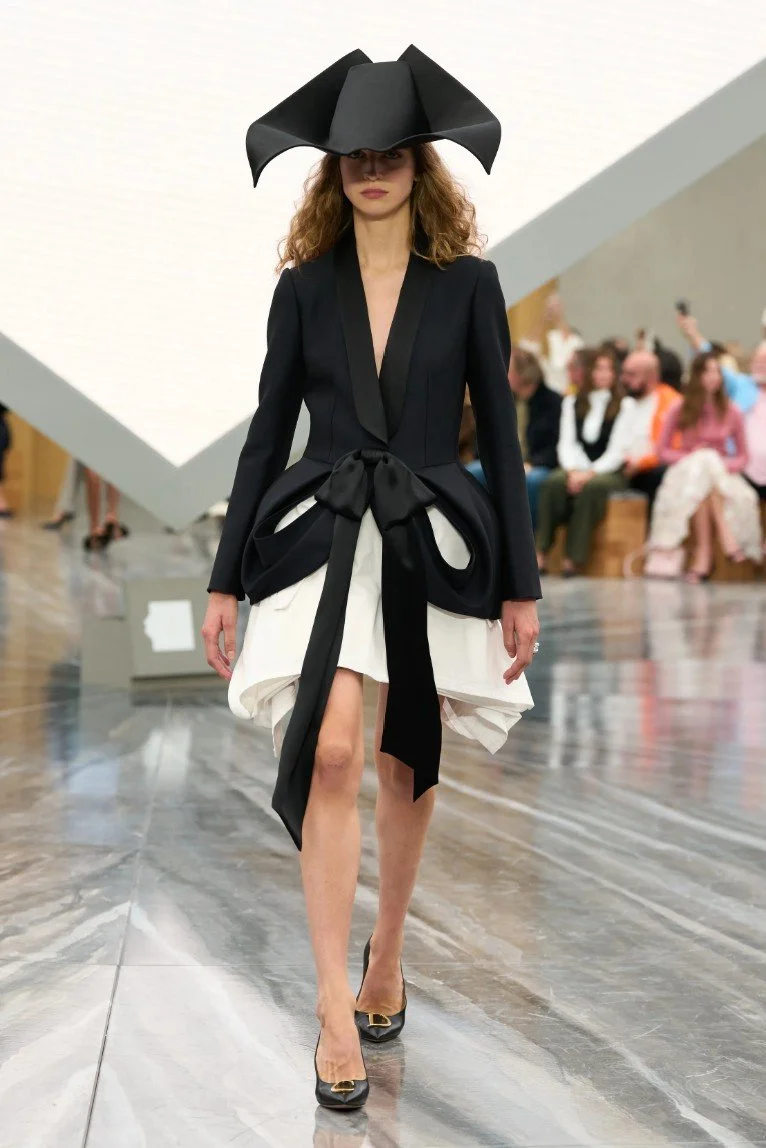
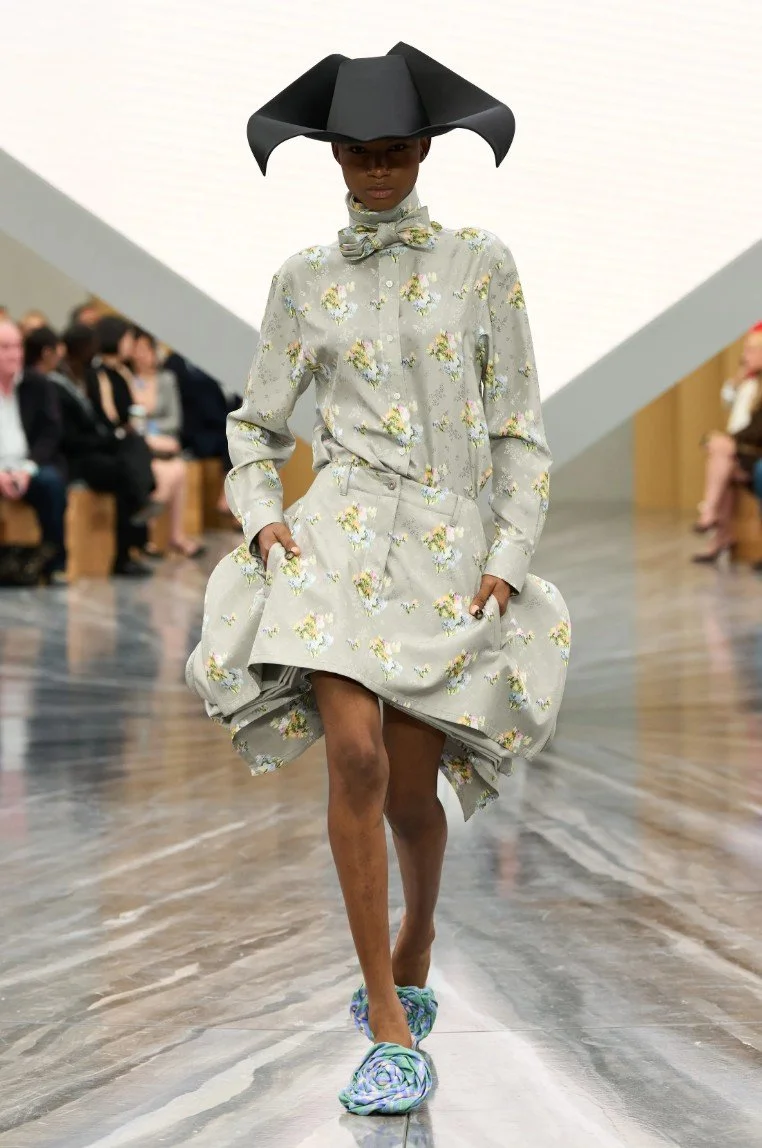
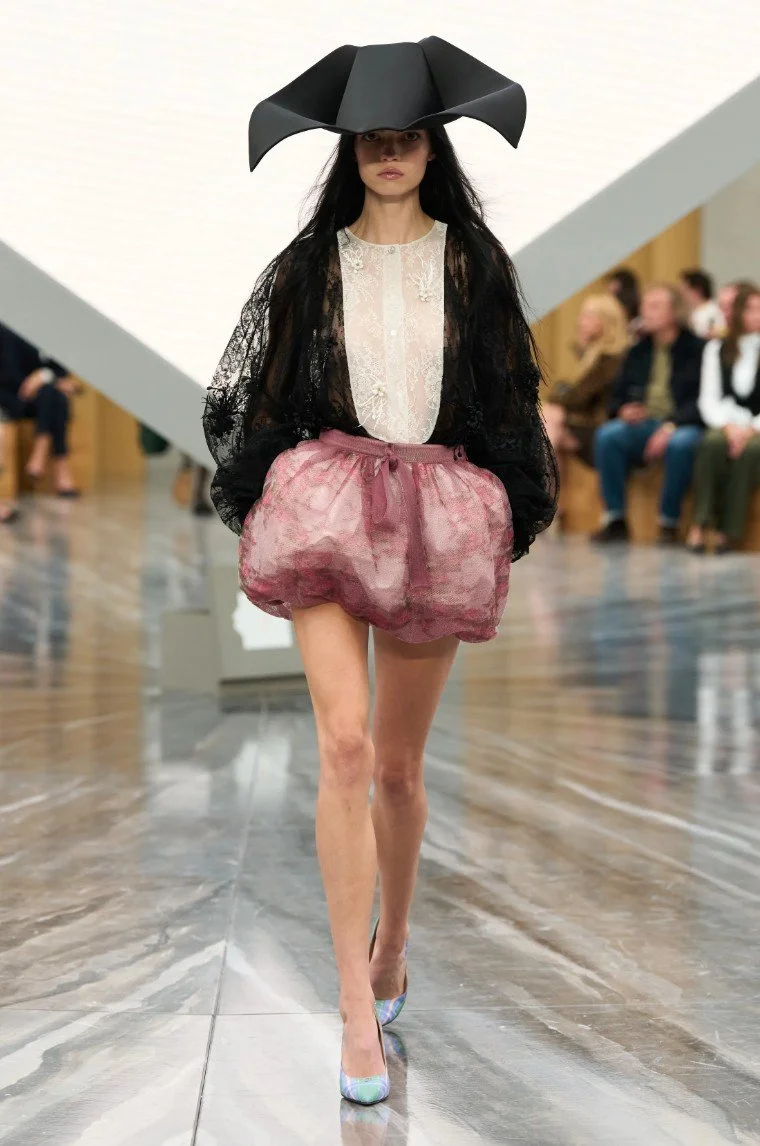
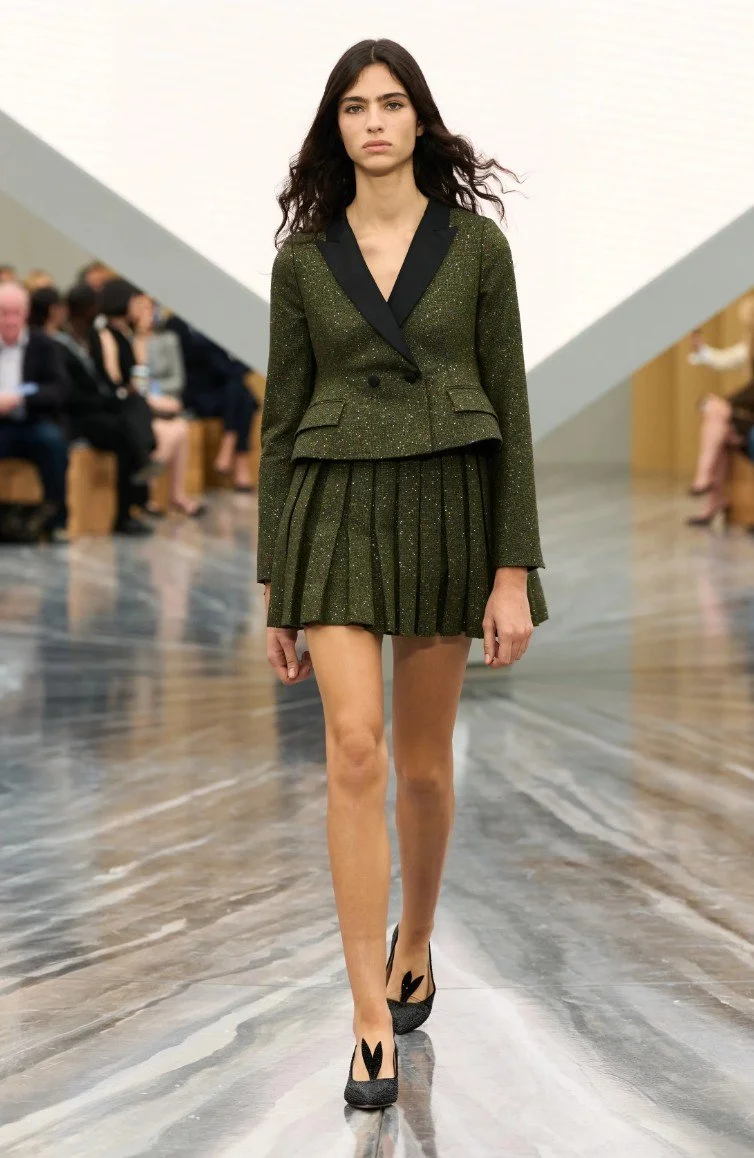
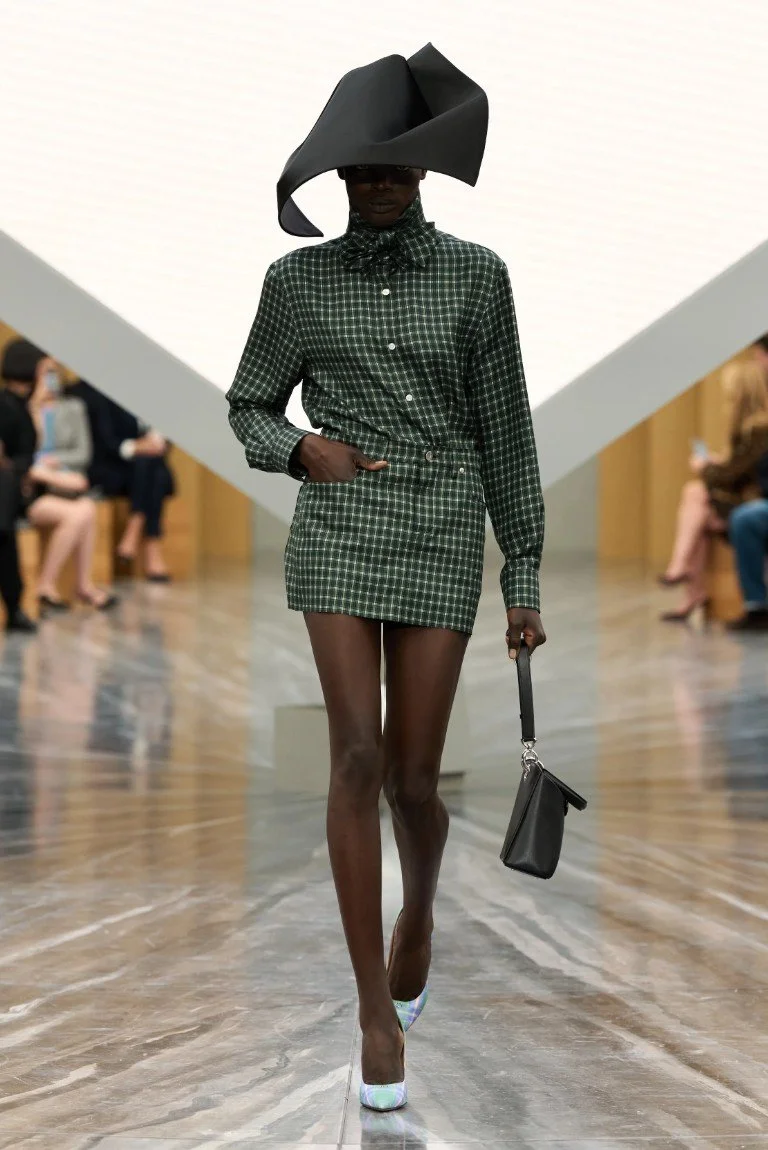
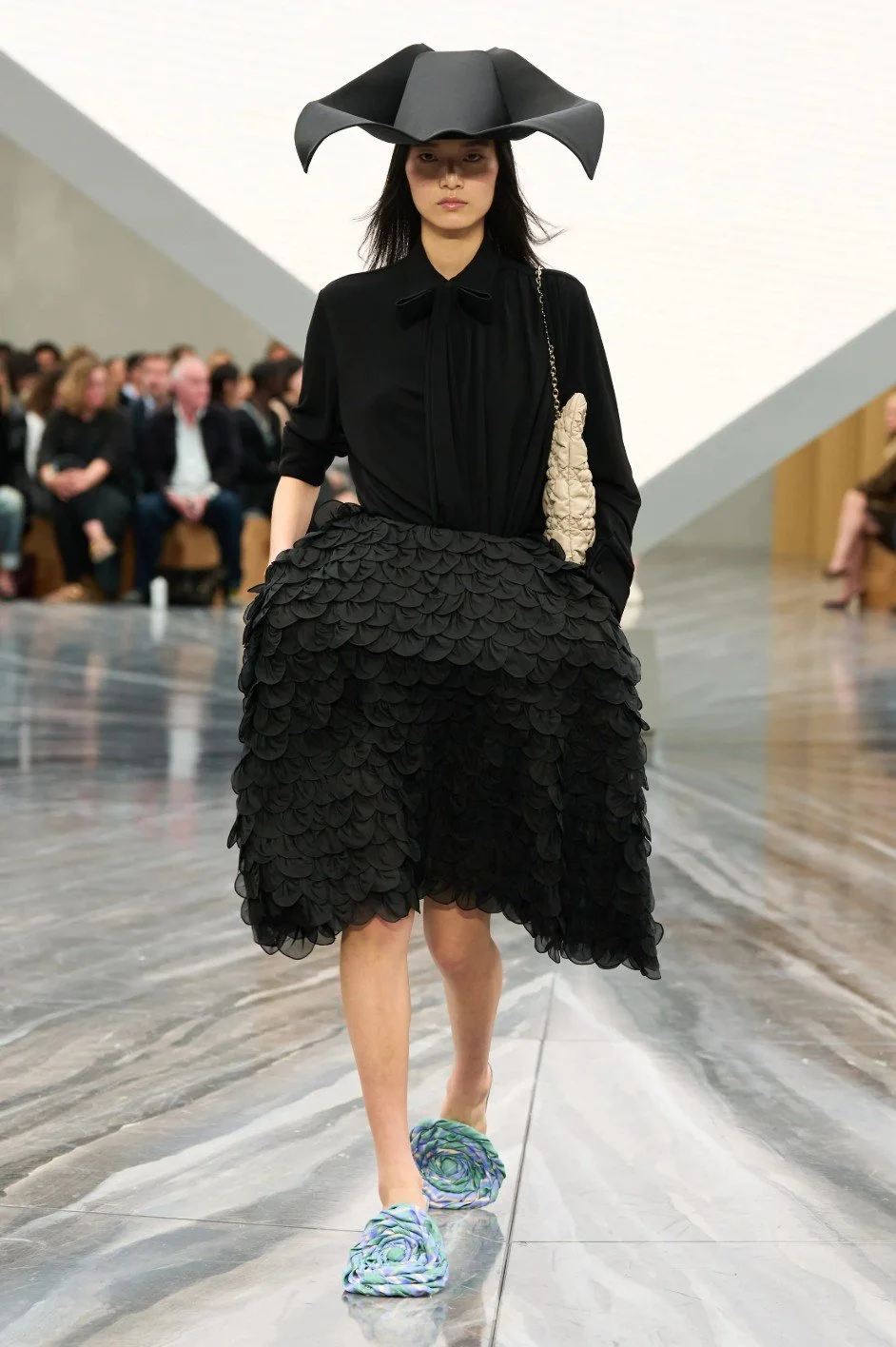

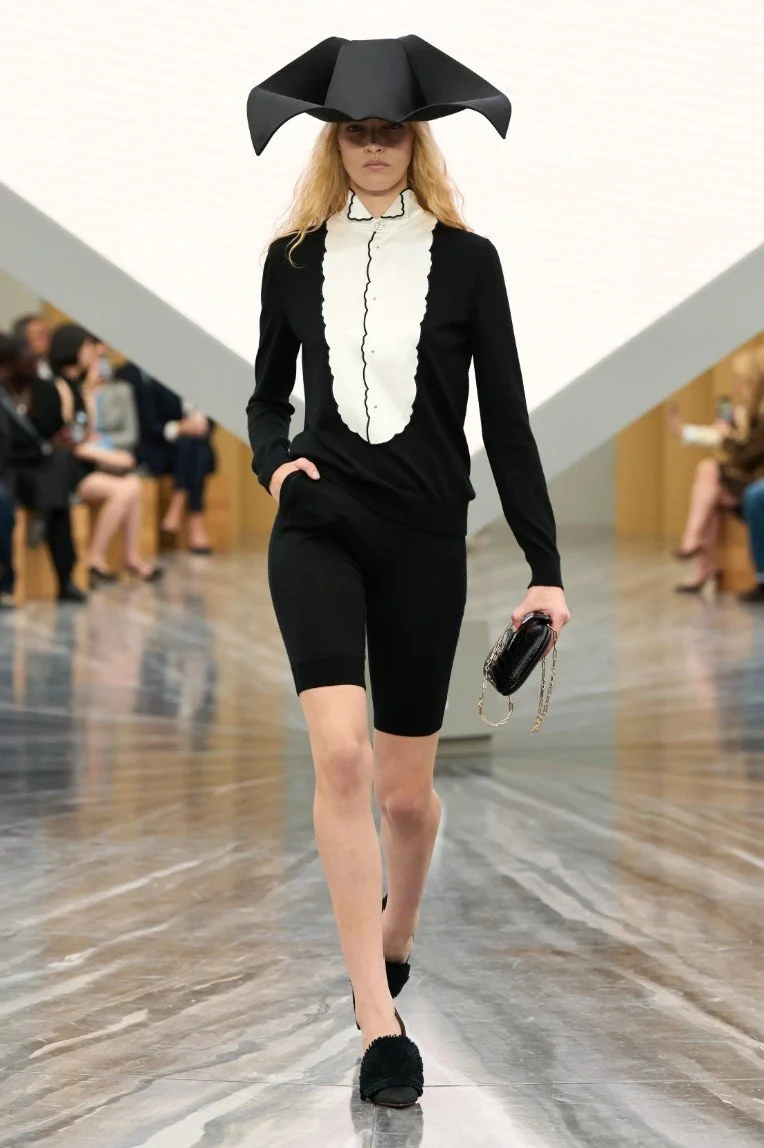
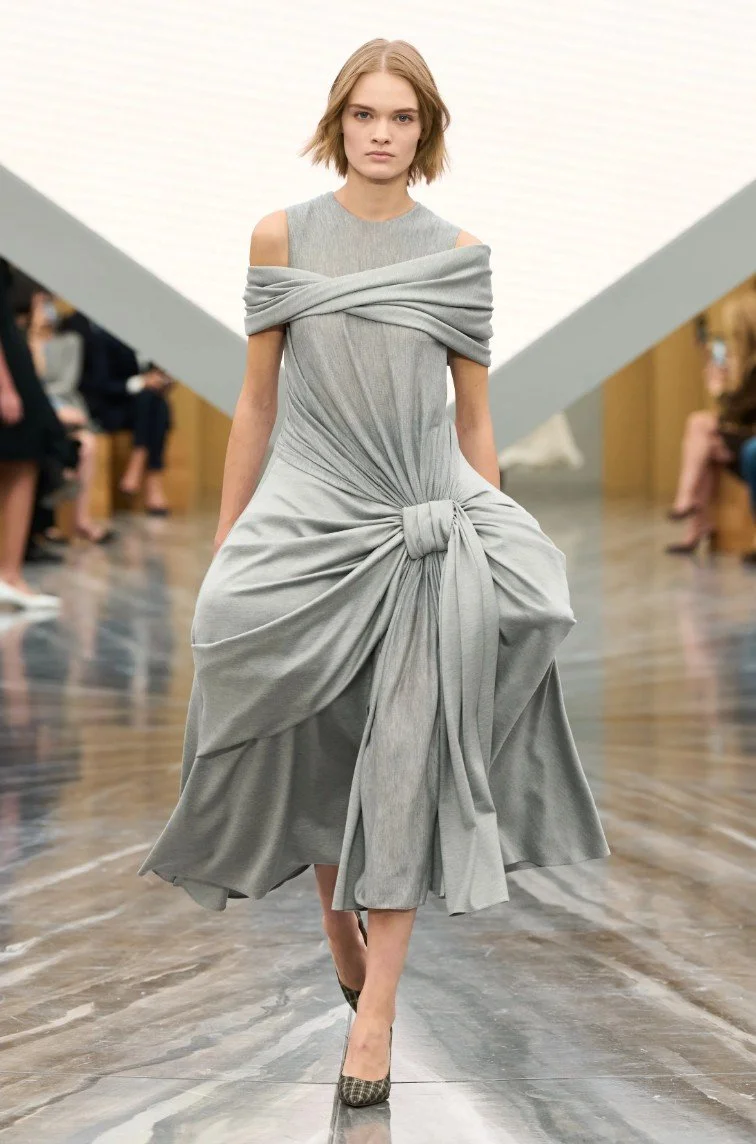
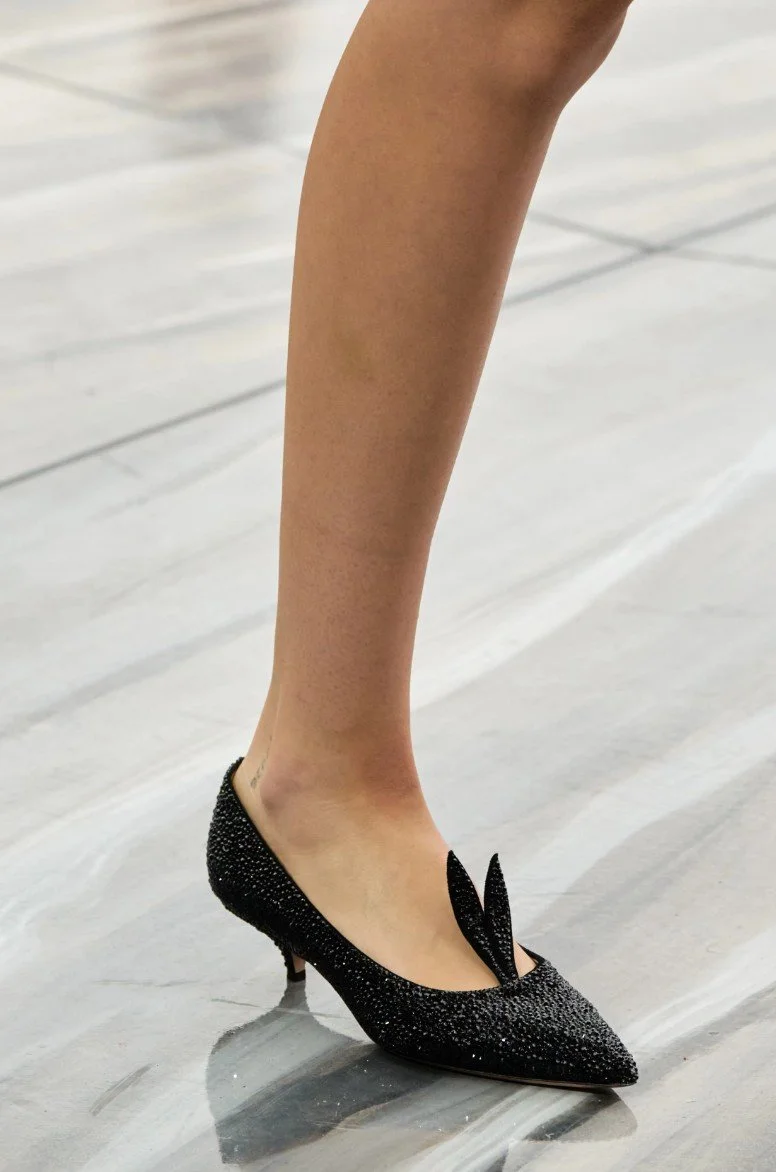
Wisely, Anderson resurrected long-forgotten elements of Dior’s heritage, spinning them into his contemporary vision with wit, shock, and poetic flair. Hats, once central to Dior’s silhouette, returned in black bicorne-like visors—sharp, cinematic, recalling both couture history. A chic reminder of what happens when you try to put history in a box: “Putting history into a box creates an implosion—hats implode into themselves.” In Anderson’s world, history is never contained; it’s free to mingle, morph, and intertwine with the now.

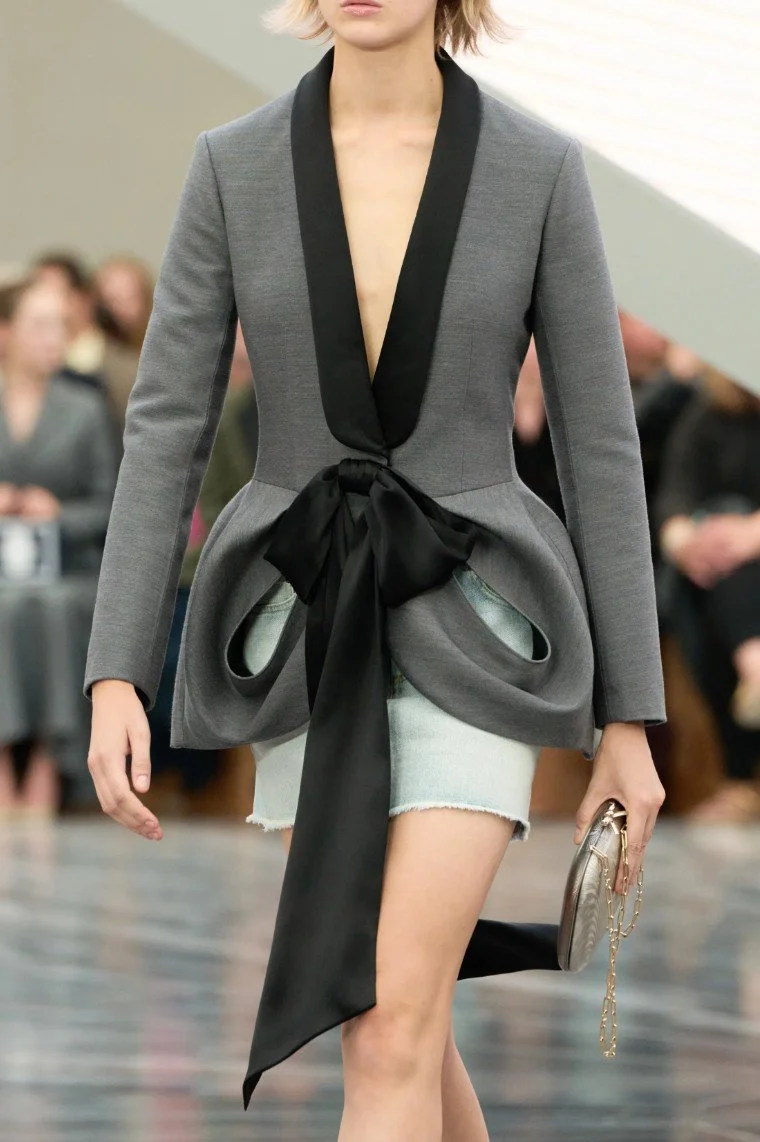
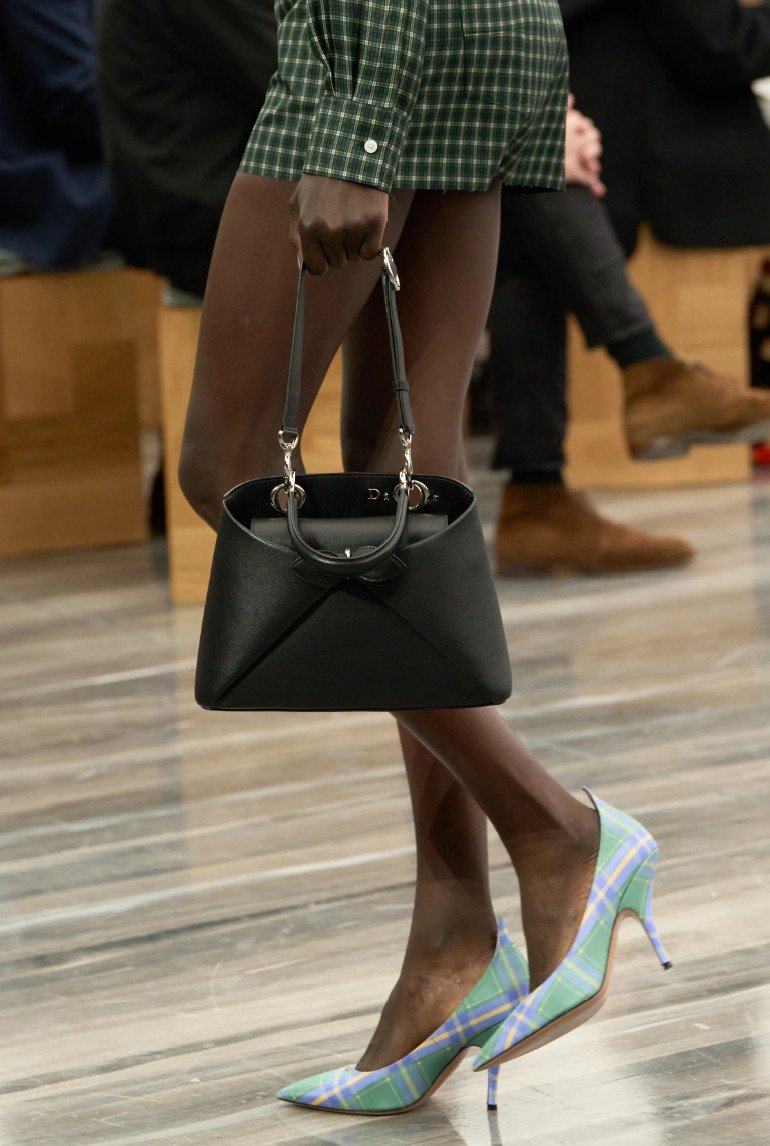
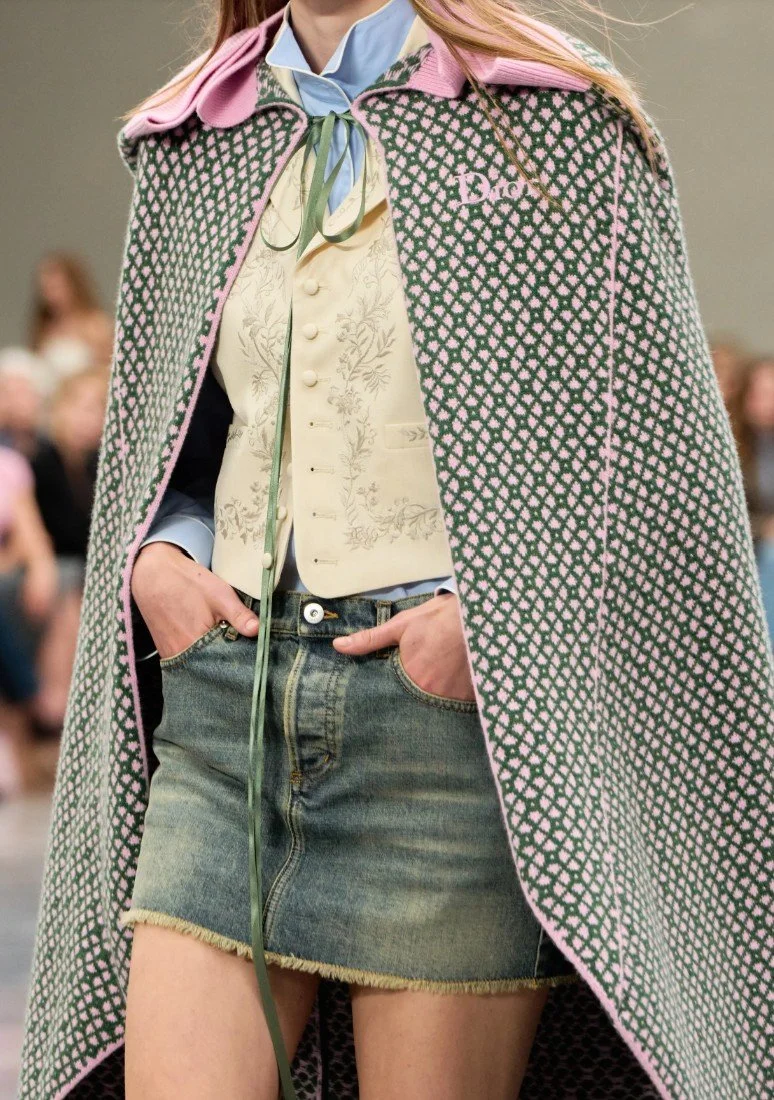
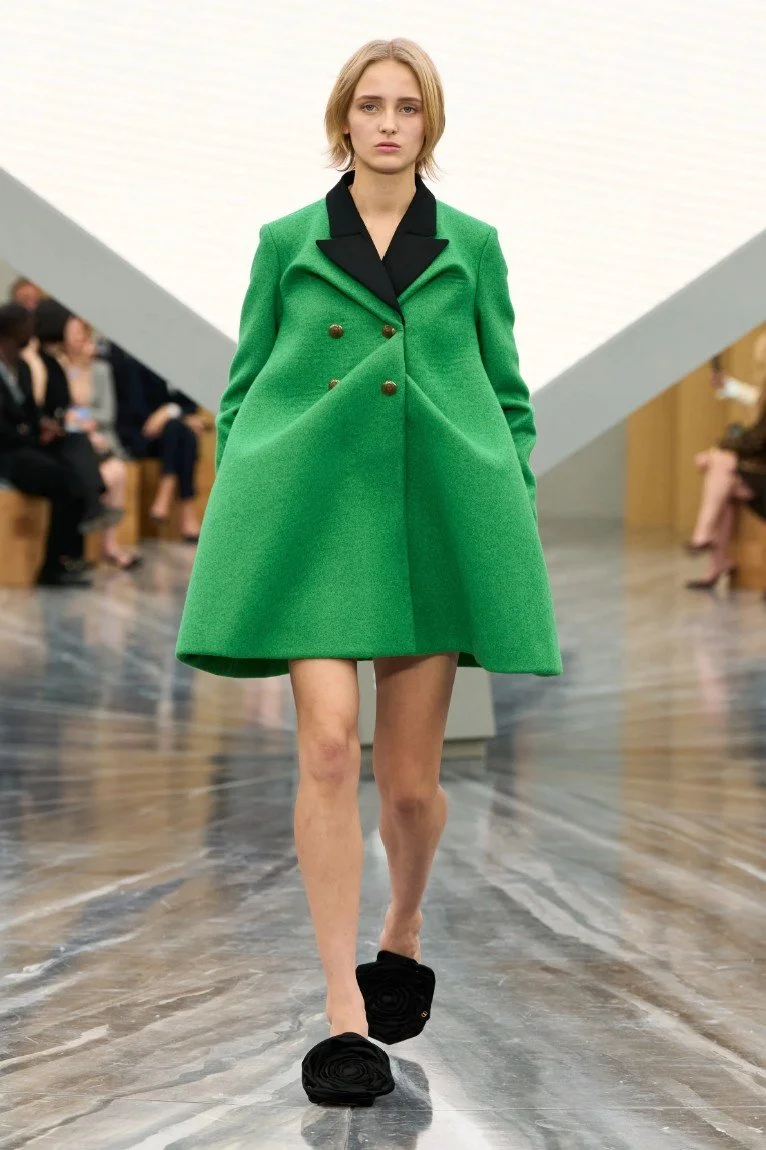
The New Look, slashed down to size, reemerged with shorter pleats and tighter jackets, a near-literal revival fused with the A-line blazers of 1955. The look crystallized in a striking green coat—a collision of eras, precise yet unafraid of drama. The Bar suit, endlessly reinterpreted by Dior’s heirs, now found its surrealist rebirth, stamped unmistakably with Anderson’s name.
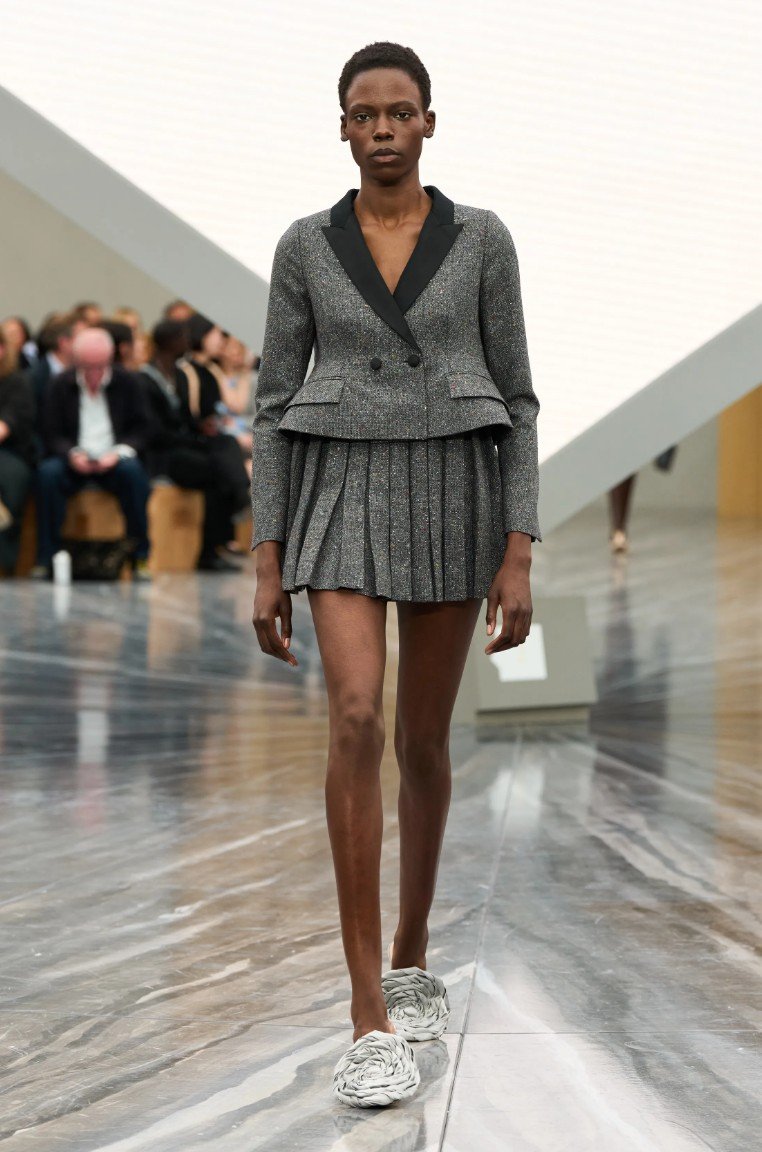
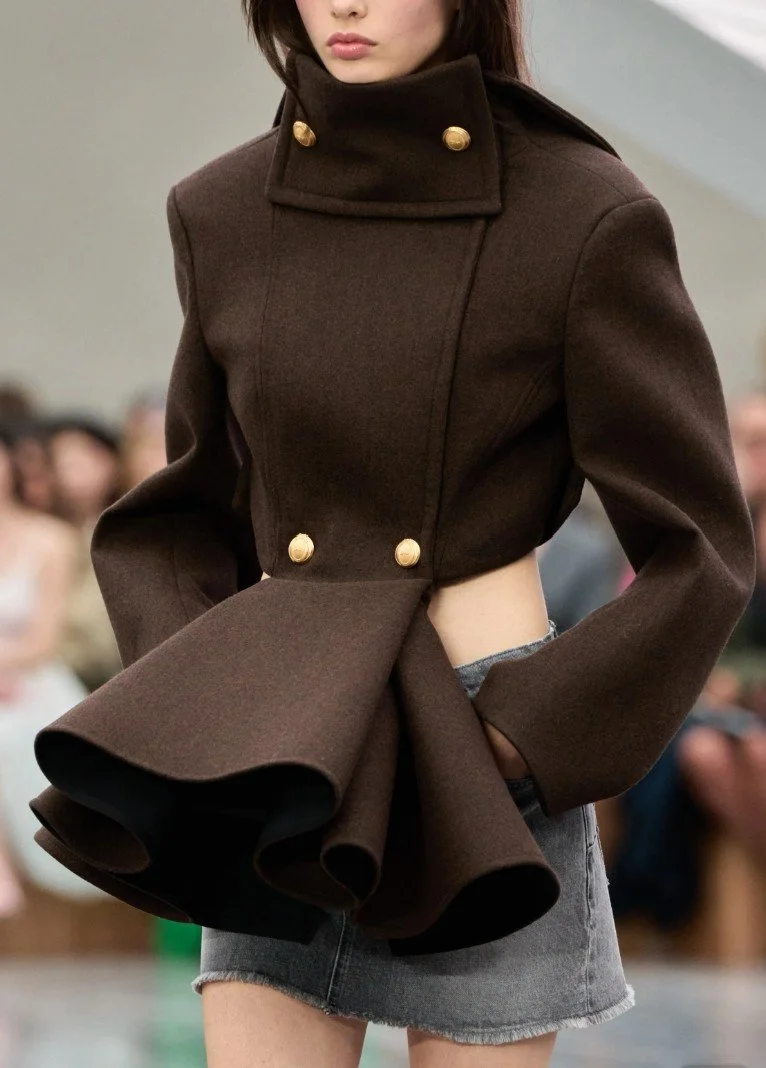
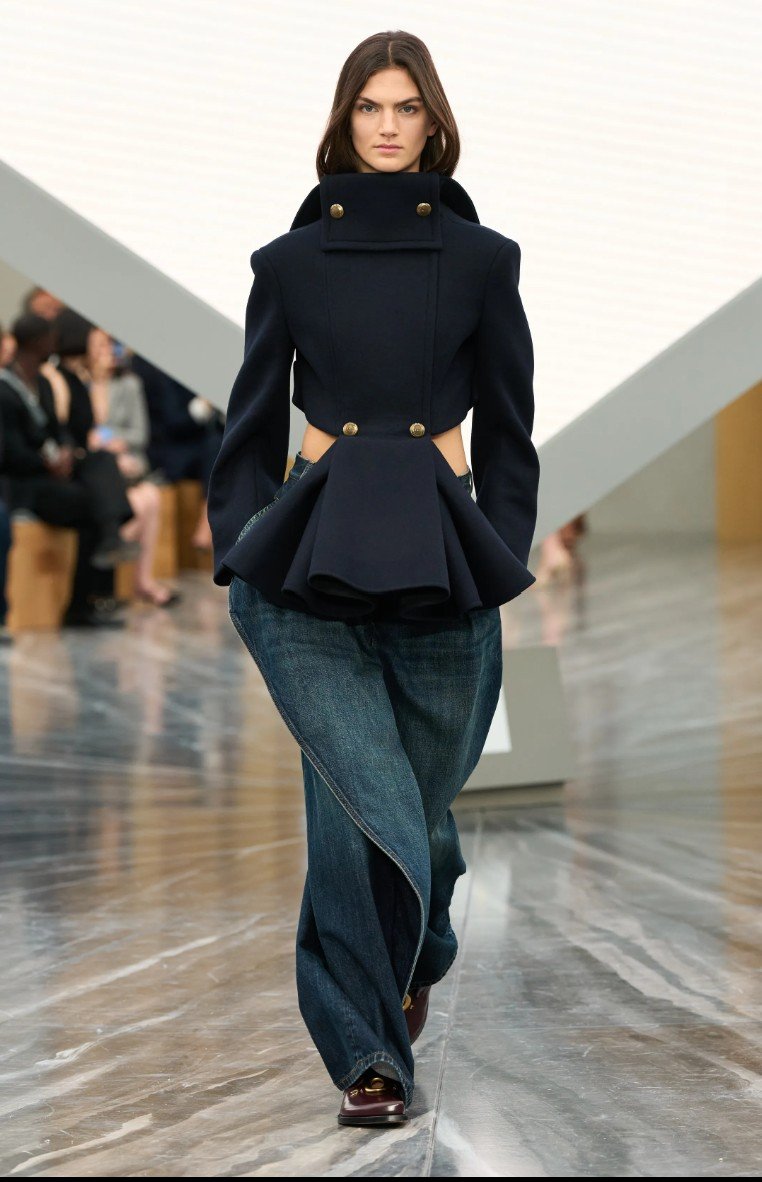
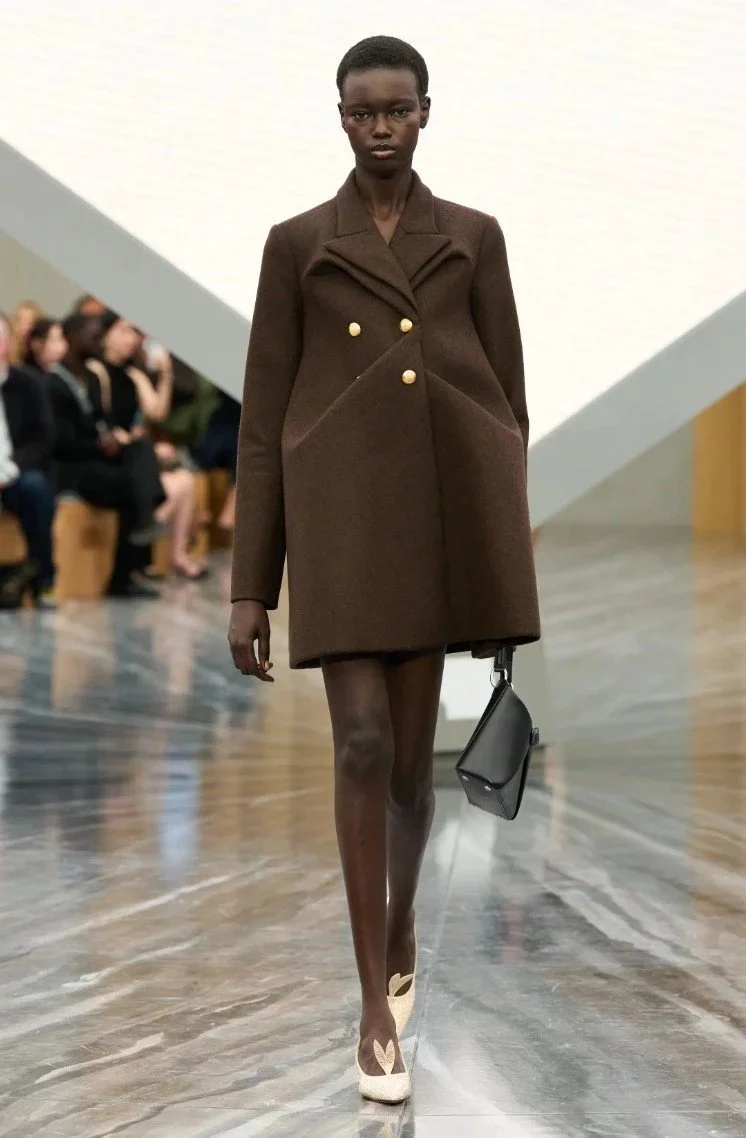
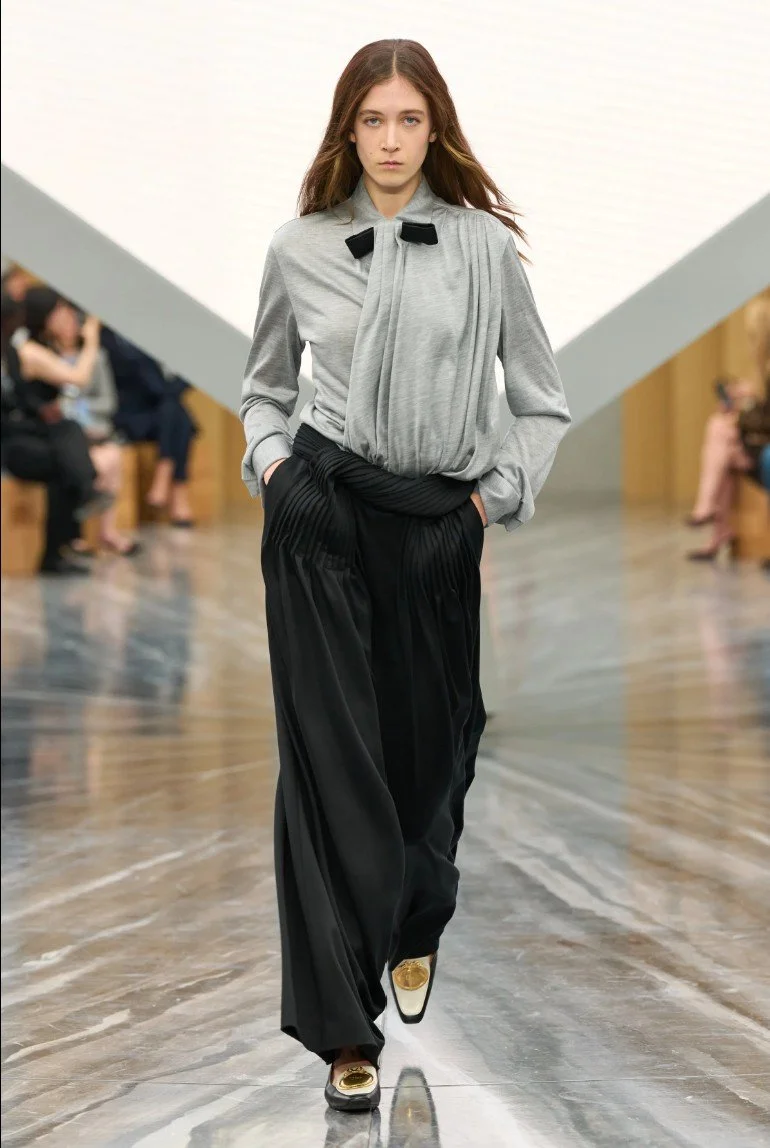
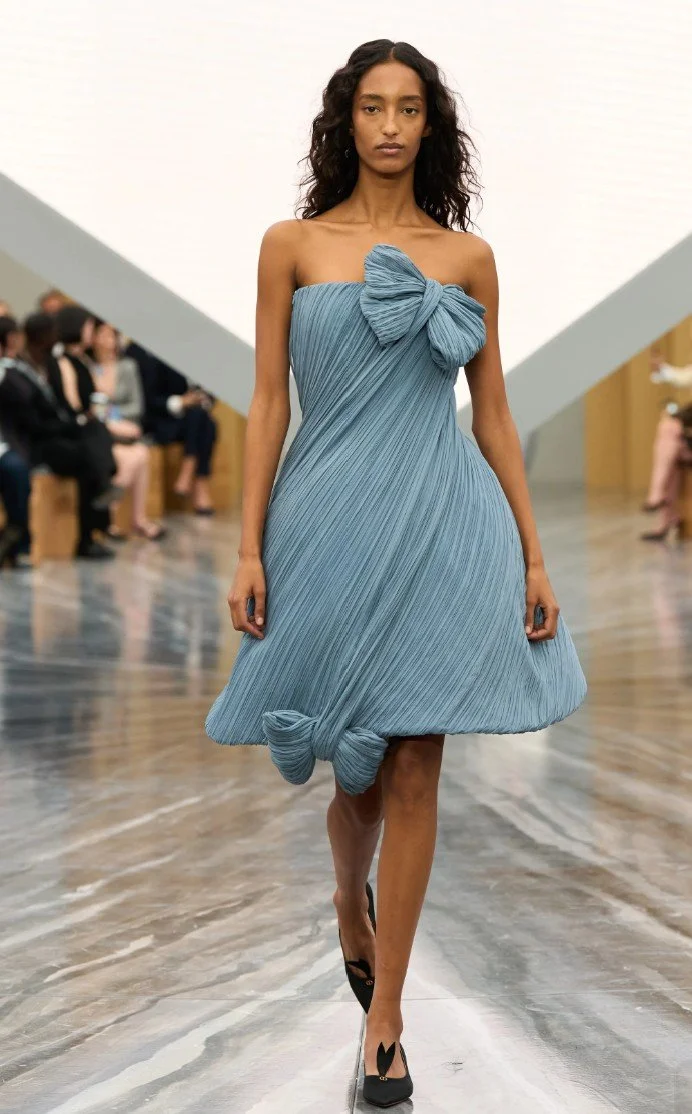
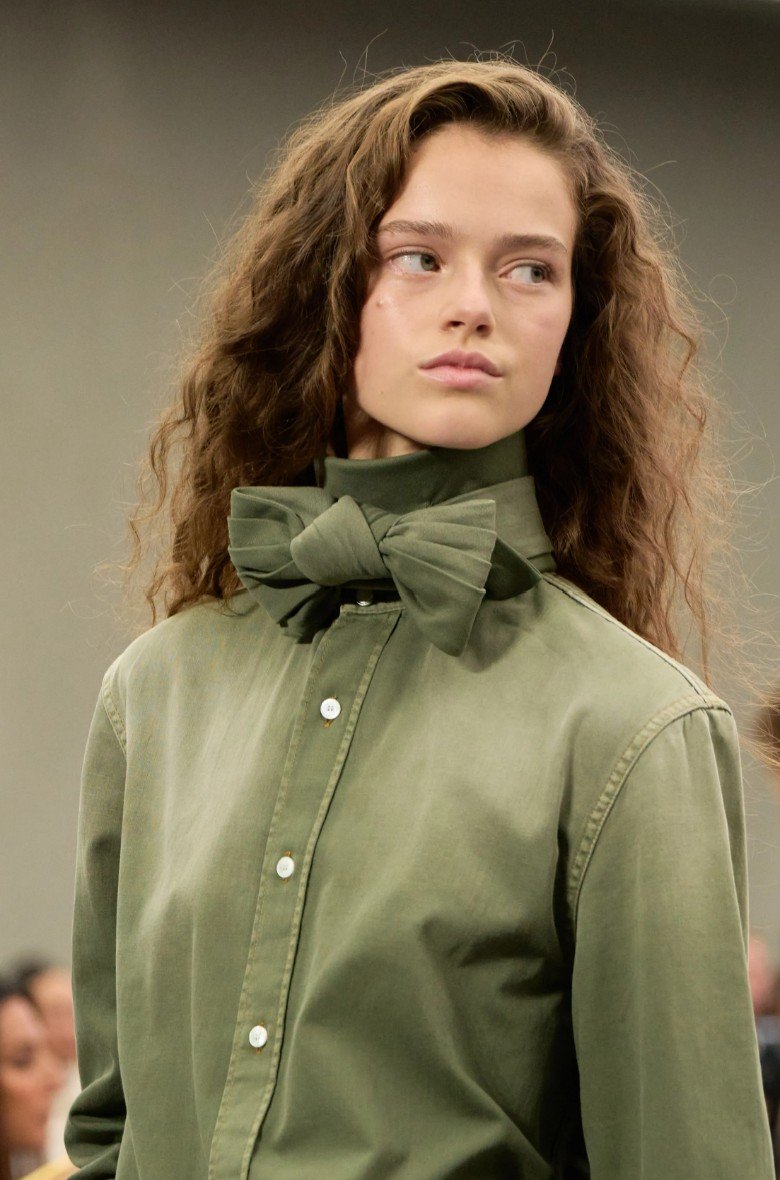
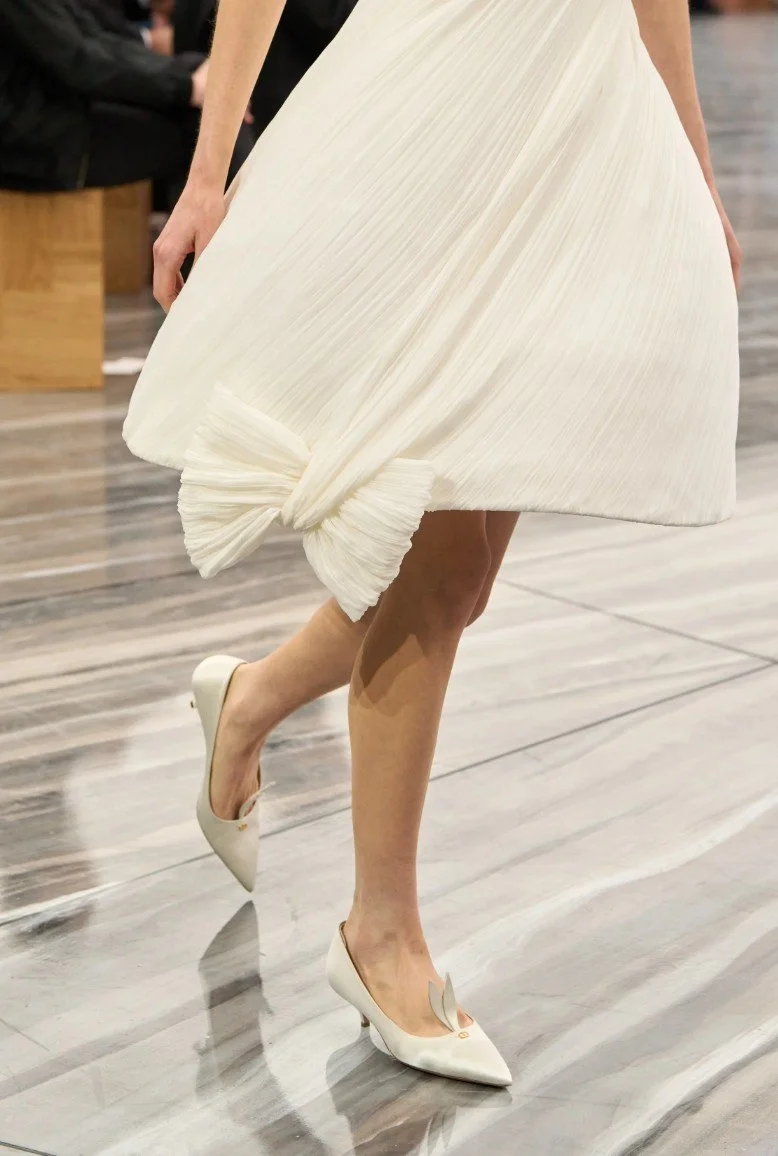
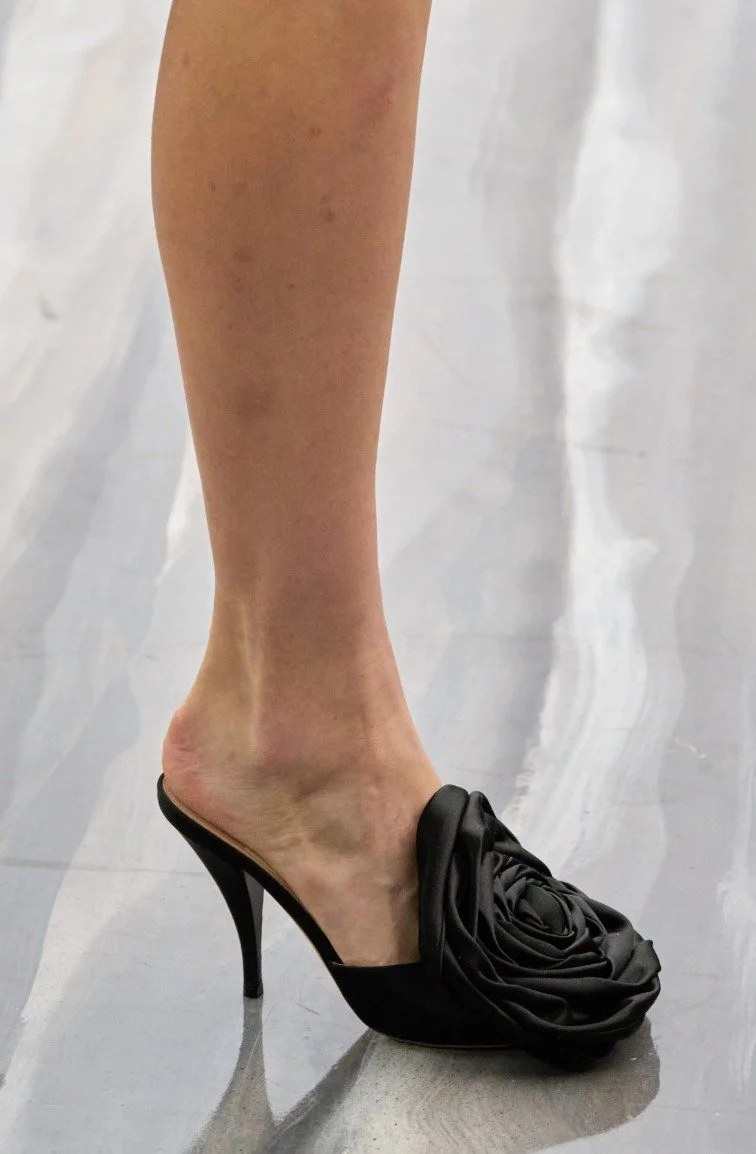
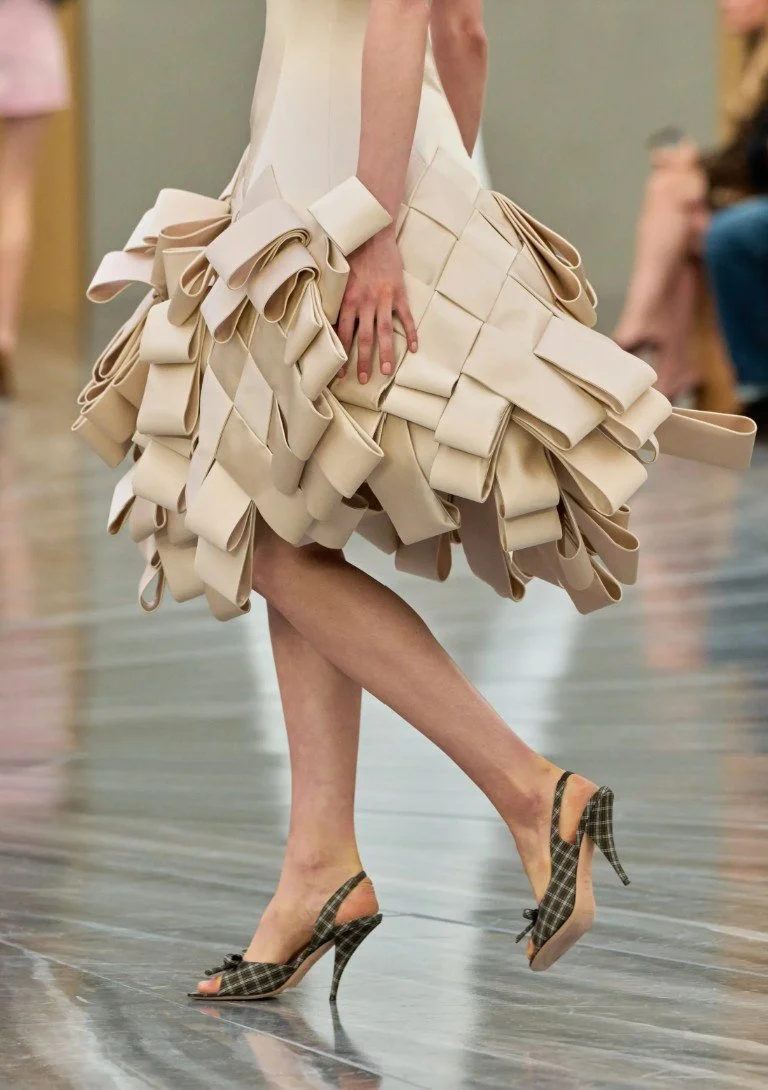
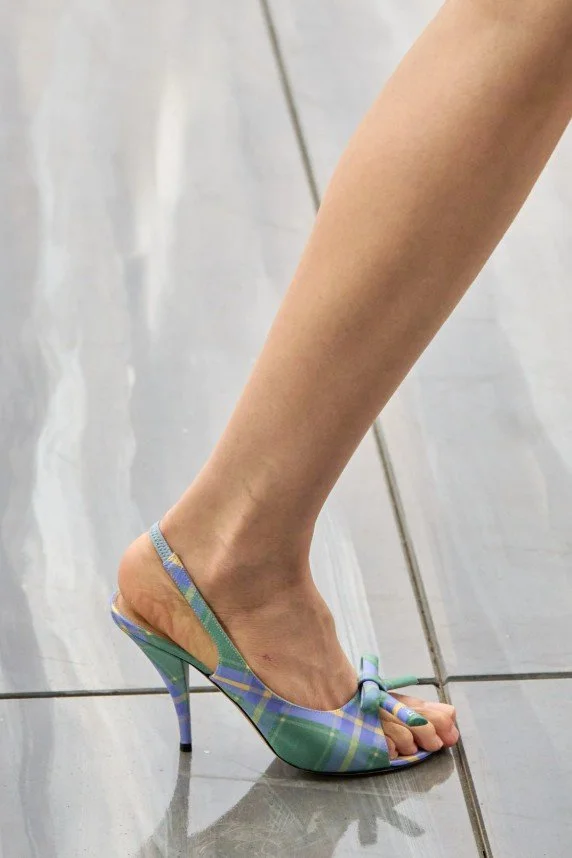
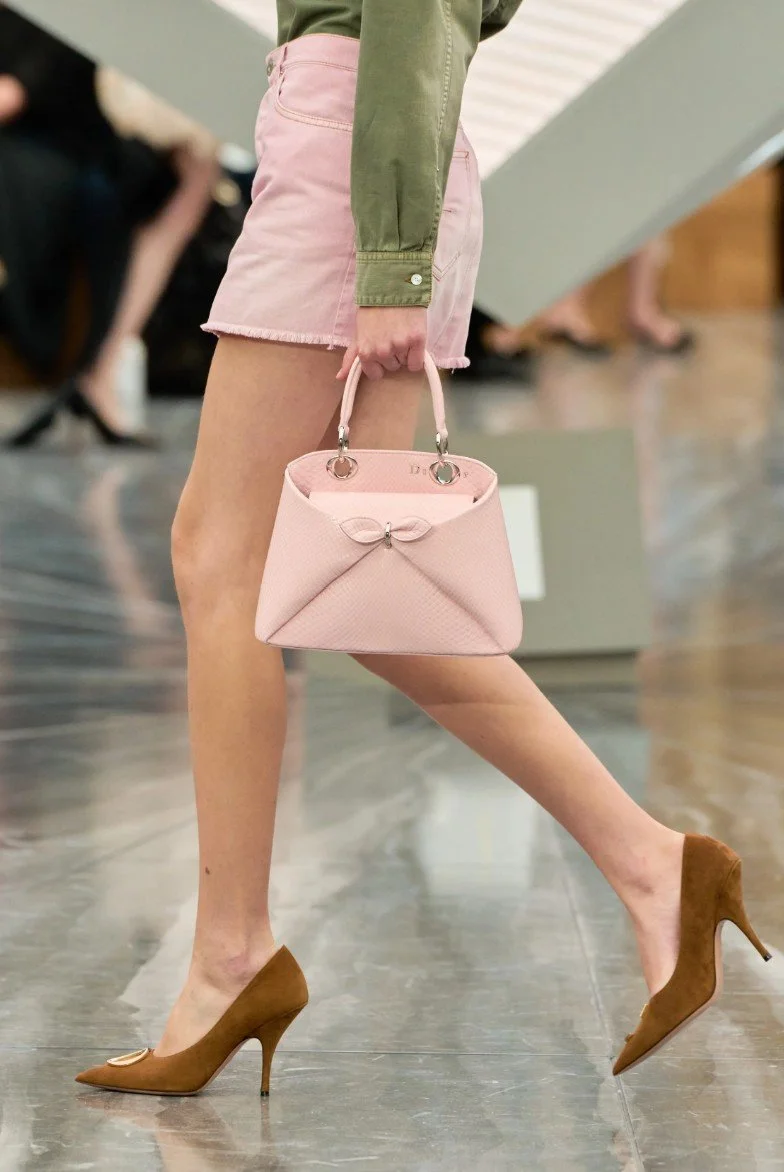
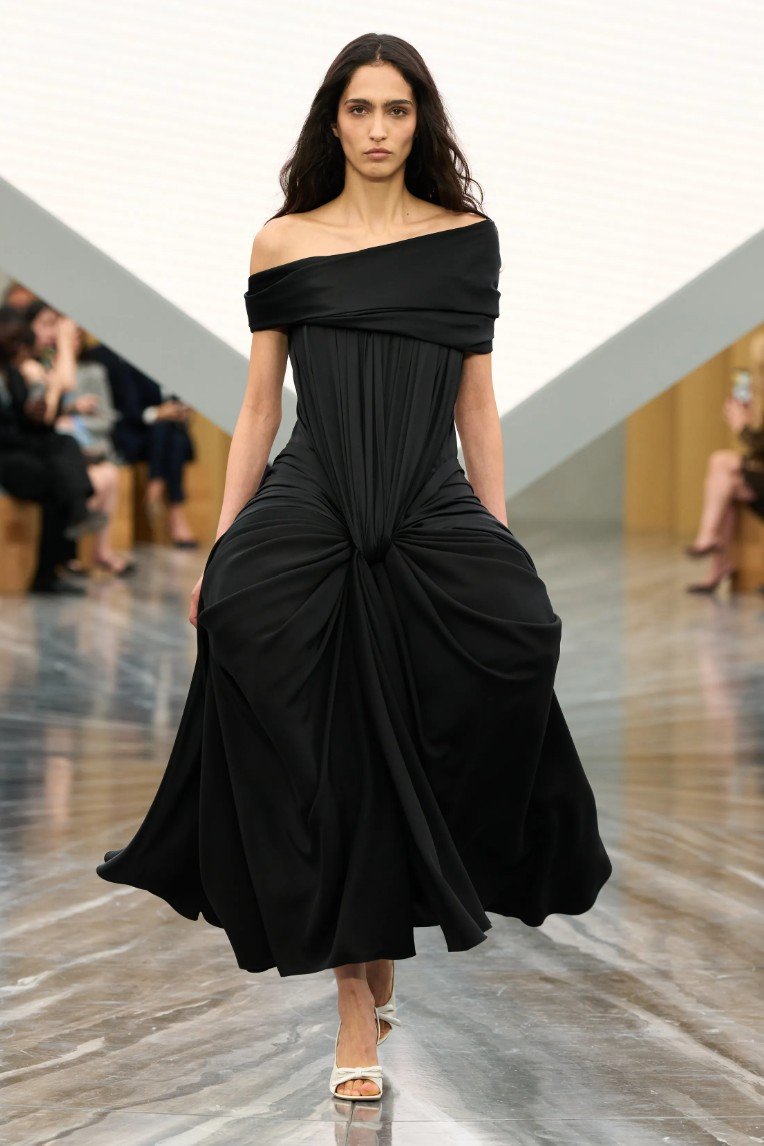
Bows threaded through the collection—cinched on bodices, skimming necklines, dancing across skirts—Anderson’s roguish signature running riot across Dior’s storied stage.
Celebrity guests and ambassadors, from Anya Taylor-Joy and Jennifer Lawrence to Taylor Russell, Jenna Ortega, and Greta Lee, were live-streamed in transit, an Anderson flourish carried over from Loewe that made even the ride part of the performance.
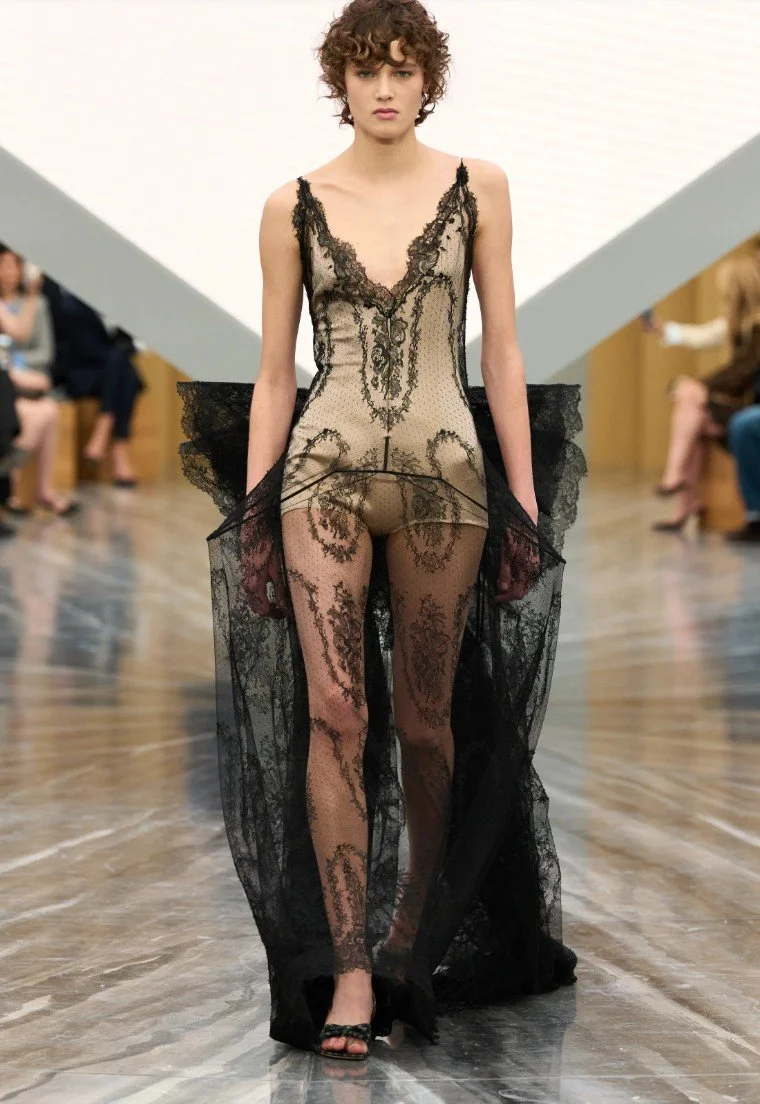
And then, quiet. Byron’s “She Walks in Beauty” closed the show, words folding into fabric, past colliding with present in poetic symmetry. The standing ovation that followed was apocalyptic, necessary, and more than deserved.