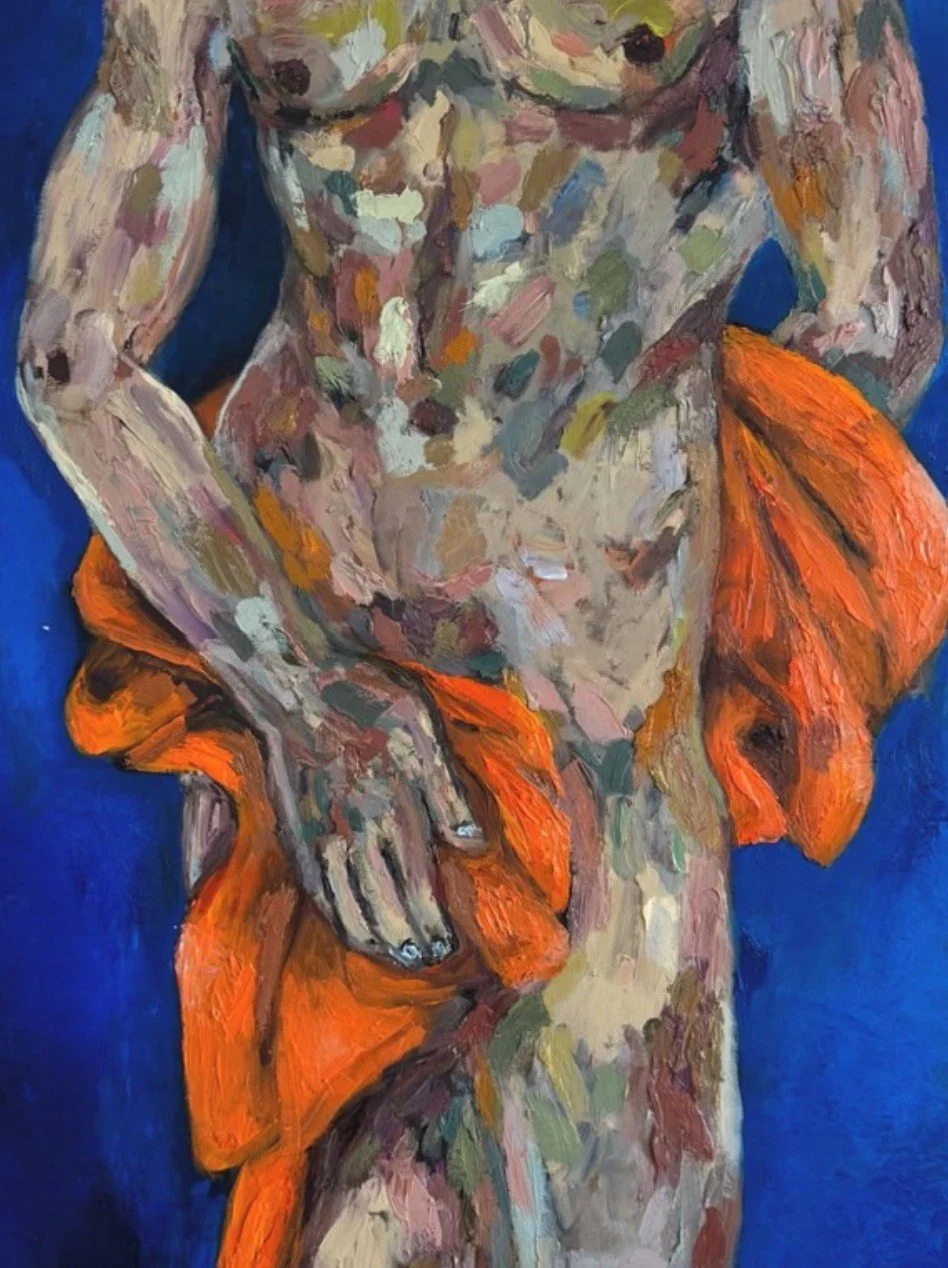
Meet Carlos Bellido Flores, East London’s Boldest Brush
From church icons to bold oils, the East London painter makes color feel divine. Vaughan Ollier sits down with Carlos Bellido Flores to uncover the living, breathing world of his paint.
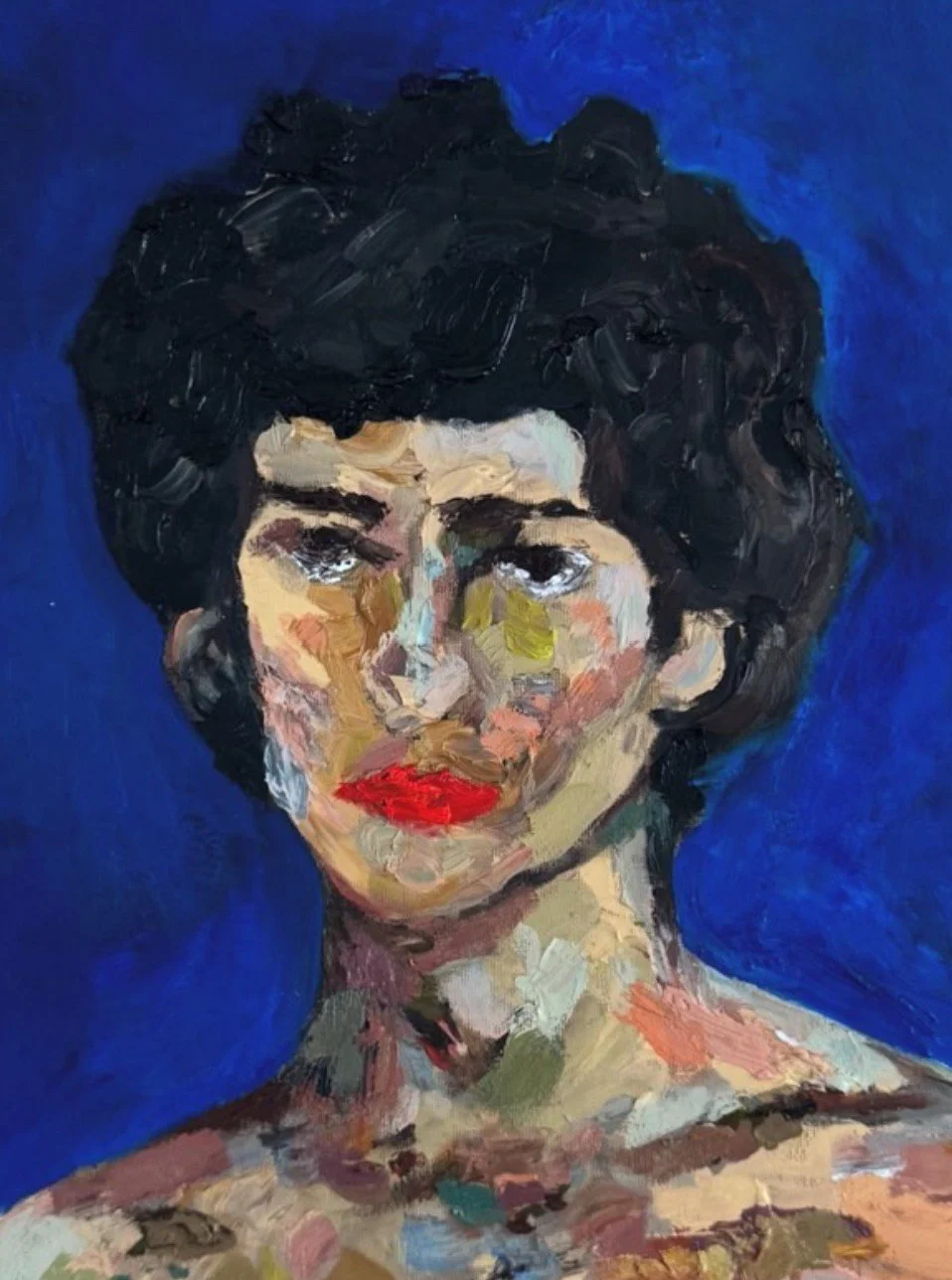
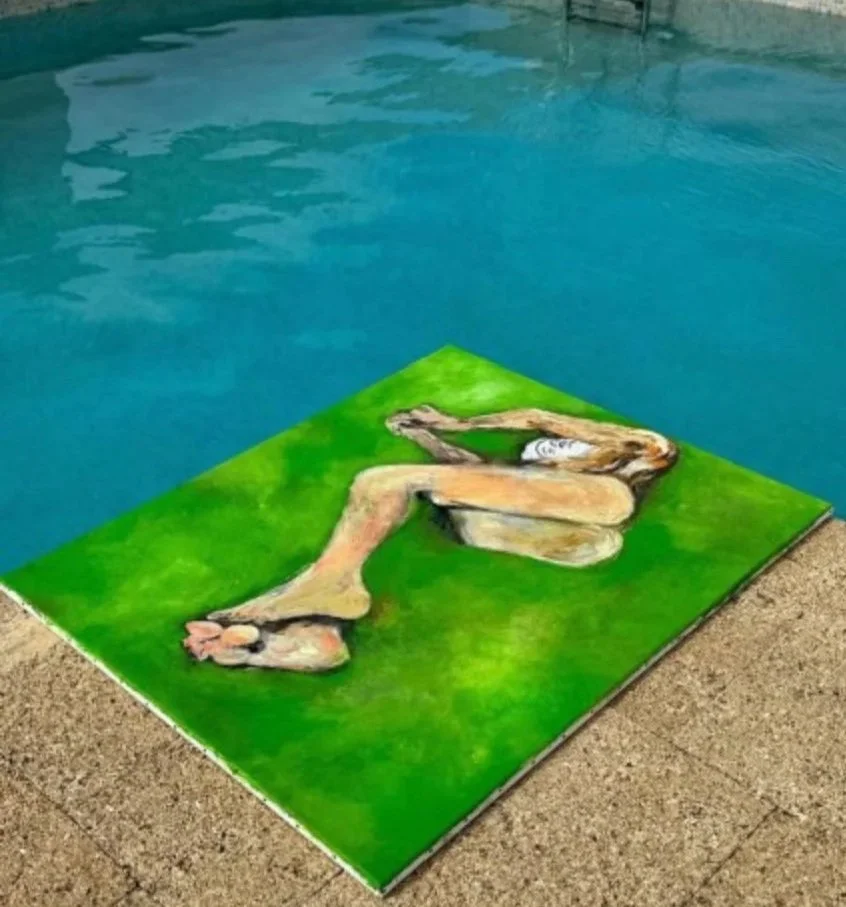
Rich with color, mood, and passion, stepping into Carlos Bellido Flores’ East London studio feels like crossing into another world—or a film set built entirely from paint. Expressionist bodies stack, press, and dissolve into one another across his canvases in visceral harmony, while the air itself hangs thick with oil and turpentine. It’s a fearless playground of texture and emotion. At the center stands Carlos: uncompromising, romantic, and utterly painterly—a force impossible to ignore.
Here, I step inside the studio—and the mind—of Carlos Bellido Flores.

What first inspired you to paint?
I’ve never really thought about when it began, because painting has always been there—my way of expressing thoughts and stories. My earliest exposure wasn’t the gallery world, but the church.
Why church, and why oils?
I grew up surrounded by images of saints, altarpieces, and religious works, and that visual language shaped everything I do today. Those Old Master paintings I saw as a child set the tone for my practice. One thing led to another: from church to museums as an adult, where I realized there was more to see, but I still trace the connection between that first introduction to the medium and how I’ve developed it into something more contemporary. Even my digital and film works are inspired by Old Master oil paintings. It’s the blend of color and the textures you get with oils—almost impossible to imitate in any other medium.
Are there certain colors you’re drawn to? I see lots of reds and deep blues in your work… why?
I’ve always loved primary colors. Even though I often mix to create new shades, I purposely leave the brightness of the original pigments visible. Maybe it’s Pop art, or maybe it’s just that they feel honest to me. I don’t want to fight against them just to appear “original.”
It seems you’re inspired by people and portraiture.
For me, it comes from cinema. Films, narratives, faces—the way a person can carry an entire story in a single look. That’s what I’m chasing on canvas.
Your impasto technique feels almost sculptural. Why did you embrace that style?
The three-dimensionality. That thickness of oil brushed onto canvas is something you can’t imitate. It makes the painting alive, tactile—something you can almost touch and feel breathing back at you.
Who inspires you most today?
It’s always shifting: directors, writers, painters—Pasolini, Velázquez, Cassavetes, Camus, Bresson, Almodóvar, Tarkovsky. The list is endless. I look everywhere for influence.
How did the Royal College of Art shape you?
The tutors were incredible—Dick Jewell especially. But it was also the other students, the community. You’d see things you’d never imagined before. That environment of intensity and diversity was everything. I was very lucky to be part of a year where I could witness such a range of new forms I had never seen before.
And if you weren’t an artist?
I’d still be an artist. There’s no other answer.