The AD guide to “In Minor Keys” — the pavilions that matter, the palazzos worth finding, and where to eat like you actually live here.
by Aleksandra Dinic · May 2026 · 12 min read
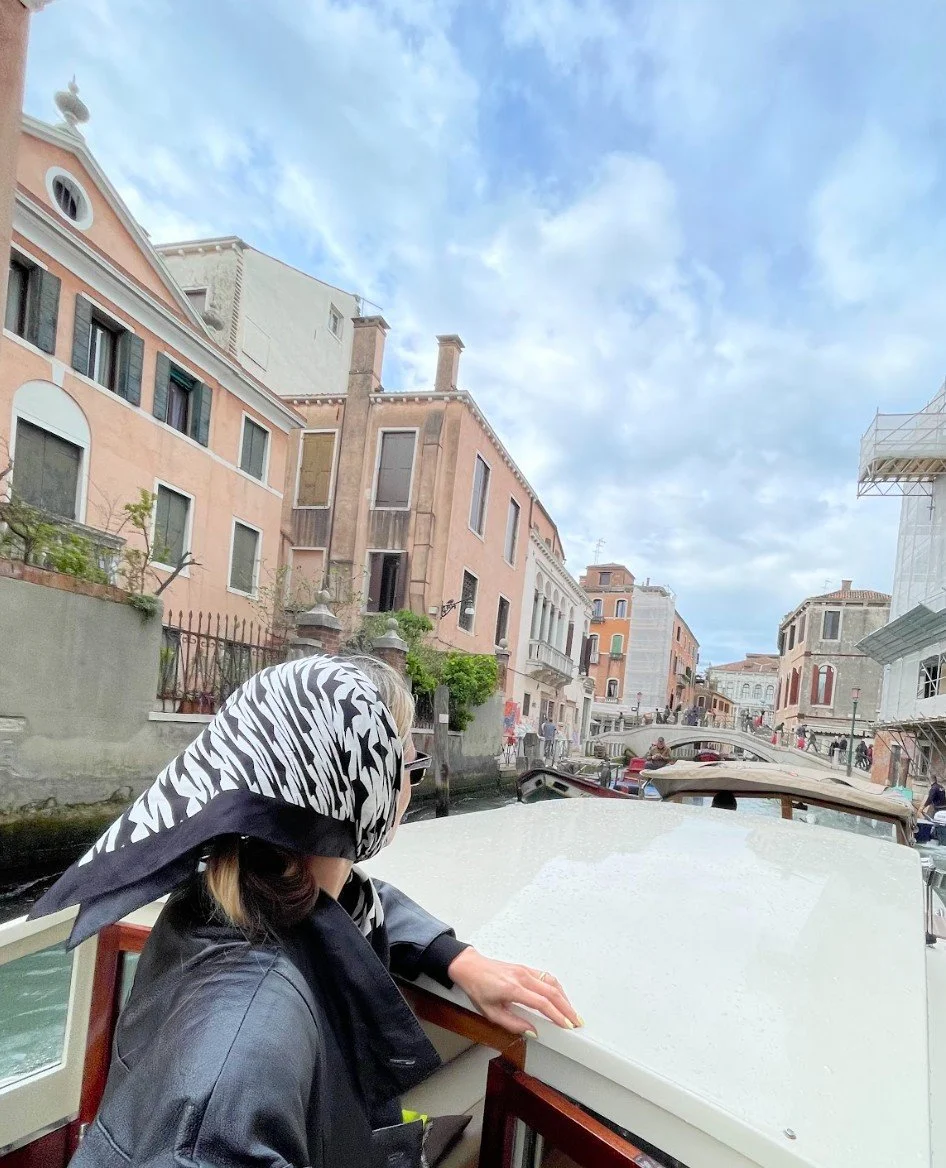
The 61st Venice Biennale opens May 9 and runs through November 22. The theme is “In Minor Keys”— conceived by Koyo Kouoh, who died unexpectedly in May 2025 before she could see it realized. A curatorial team she assembled is carrying it through. The exhibition includes 111 artists across the Giardini and Arsenale, plus 31 collateral events scattered across the city's palazzos, foundations and churches.
This is the AD guide to what is actually worth your time.
One logistical note before anything else: start at the Giardini in the morning when the crowds are thin. Save the Arsenale for the afternoon — the long brick halls are physically demanding and the works require sustained attention. Wear shoes that work on cobblestones, or at least have a pair of comfortable flats/sneakers in your tote. Vaporetto Line 1 runs the Grand Canal and stops near both venues.
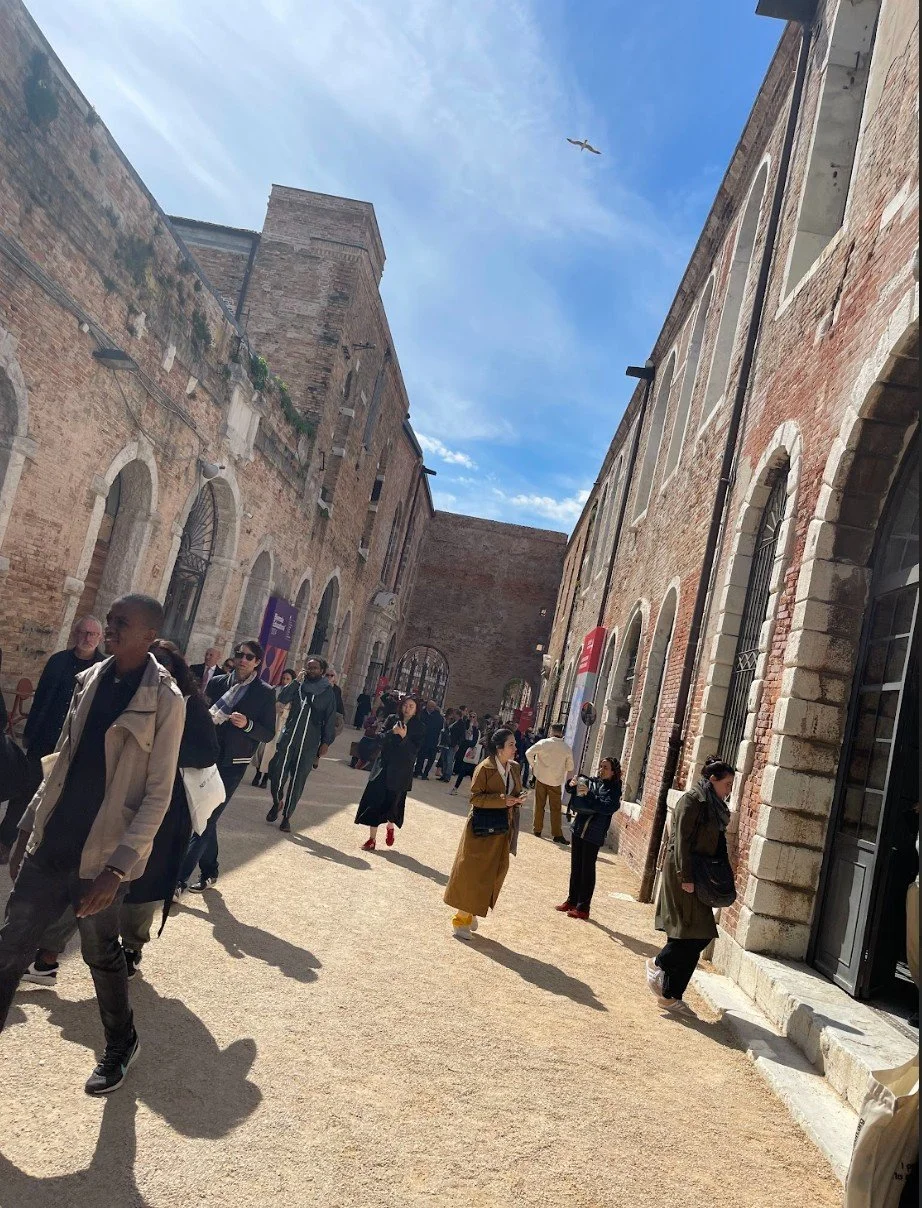
Arsenale
The Main Exhibition — In Minor Keys
Kouoh's argument was for intimacy over spectacle — art that activates the senses and demands a slower kind of attention. Her curatorial framework: Shrines, Procession, Rest, Schools — organizes the show not around geography or medium but around Afro-Atlantic traditions of movement, gathering and repair. At the center: dedications to Senegalese artist and poet Issa Samb (1945–2017) and American artist Beverly Buchanan (1940–2015). Artist-led organizations from Dakar, Lagos and Nairobi sit alongside individual voices. The framework insists that collective learning is as valid as the solo object.
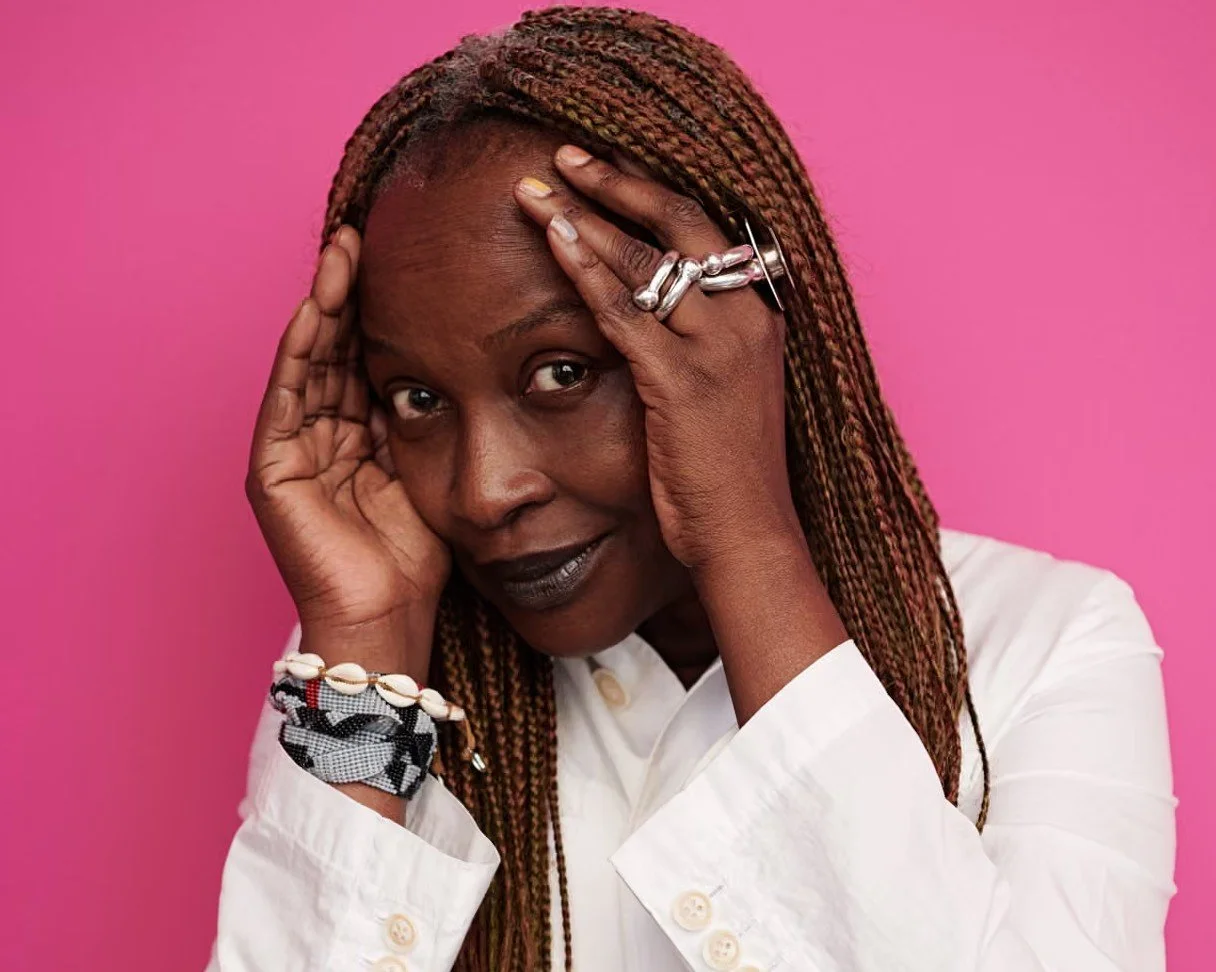
Koyo Kouoh’s died unexpectedly before she could see her vision realized.
Given the political noise surrounding this edition — the Russia pavilion, the EU funding threat, the Israel question — Kouoh's insistence on the minor key feels both poignant and quietly defiant. 111 participants. More living artists than any recent edition.
The Biennale Drama
Every edition has its politics. This one has more than most. South Africa's pavilion stands empty after its culture minister cancelled Gabrielle Goliath's performance — a tribute to a Palestinian poet killed in an Israeli airstrike — calling it "too divisive." Goliath is proceeding independently at a church in Venice. Russia returns after two editions absent, over sustained objections from European lawmakers and Ukraine. Nearly 200 Biennale participants signed an open letter calling for the exclusion of Russia, Israel and the US. Israel participates anyway. The US pavilion selection was overseen by the State Department rather than arts bodies, with guidelines rewritten to prioritise "American values and policies." Alma Allen's own galleries dropped him after he accepted.
Koyo Kouoh titled the exhibition ”In Minor Keys” — art that demands slowness, attention, intimacy. The irony is not lost. The loudest noise at this Biennale is happening outside the rooms. What's inside them is asking you to listen differently.
Pavilions Worth Your Time
Vatican - The Holy See — The Ear is the Eye of the Soul
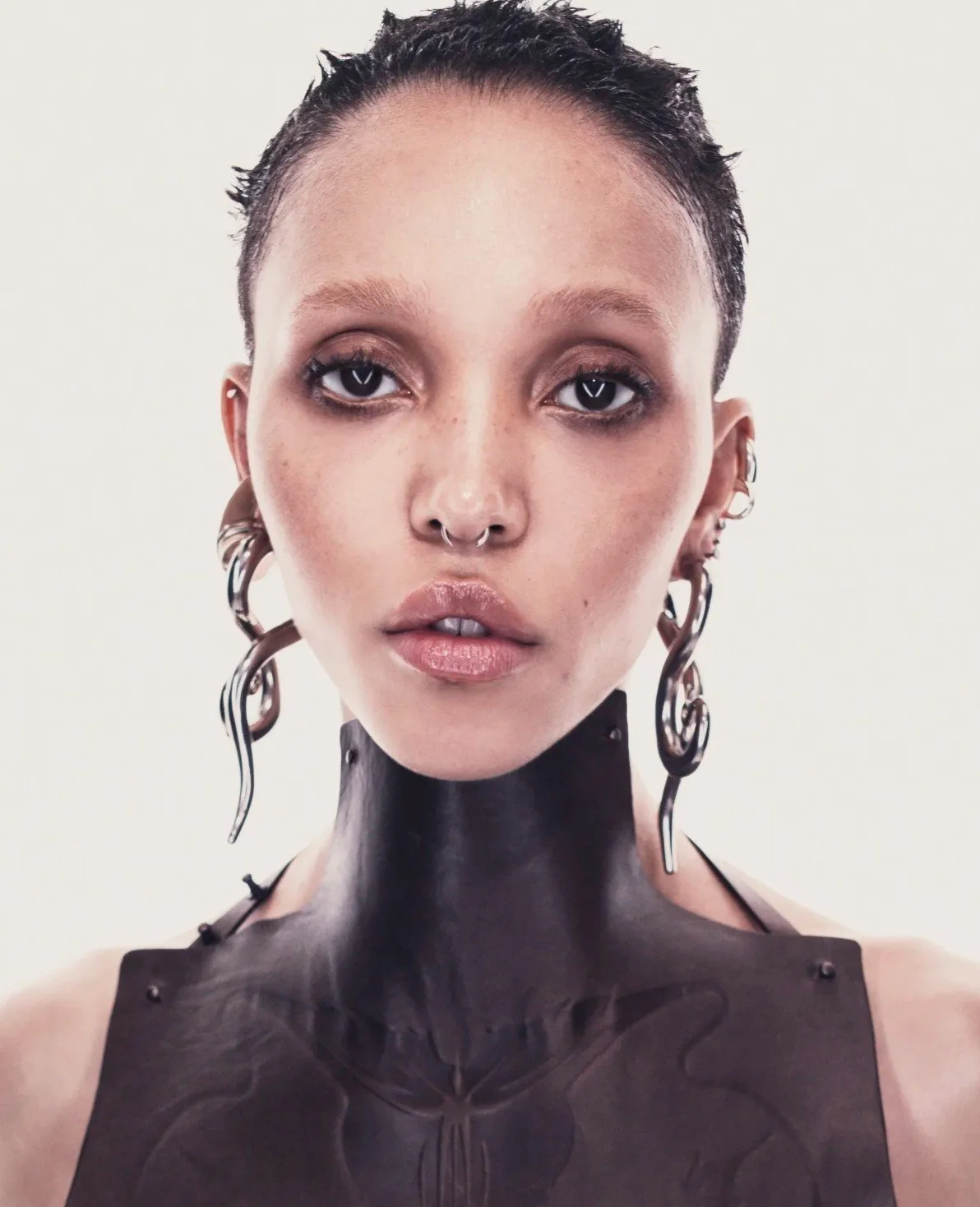
FKA Twigs contributing new sound work to the Holy See pavilion at Venice Biennale 2026.
Mystical Garden of the Discalced Carmelites, Cannaregio + Complesso di Santa Maria Ausiliatrice, Castello Brian Eno, FKA Twigs, Jim Jarmusch, Patti Smith, Terry Riley, Meredith Monk — all making new work in response to a 12th-century medieval abbess, poet and composer named Hildegard of Bingen. Curated by Hans Ulrich Obrist and Ben Vickers. The works play through headphones. The garden listens back. The most quietly radical experience at this Biennale — and the one most people won't find.
Greece — Escape Room · Andreas Angelidakis · Giardini
An immersive installation drawing on Plato's cave allegory — visitors enter a mirror set to Year Zero, 1934, the year Hitler and Mussolini met in Venice and the Nazis began persecuting homosexuals. Uncomfortable. Essential.
Kazakhstan — Qoñyr: The Archive of Silence
Museo Storico Navale, Castello Qoñyr is a Kazakh word for the resonance of the earth — the colour brown, the density of silence, a state where meaning is born through sensation rather than declaration. Spread across six halls of the Museo Storico Navale, the pavilion offers an immersive sound landscape where the distant echo of horses' hooves moves through the space. One of the most unexpected sensory experiences of the edition.
Estonia — Merike Estna · The House of Leaking Sky
Calle S. Domenico Estna lives in Venice for the entire duration of the Biennale, painting live inside the exhibition space. 22 monumental canvases will be created over the course of the show — including what may become the largest painting produced during the 2026 edition. Hand-painted ceramic floor tiles cover the ground. The tools of production are part of the work. Painting as social and performative act, not static object.
Germany — Sung Tieu and Henrike Naumann · Giardini
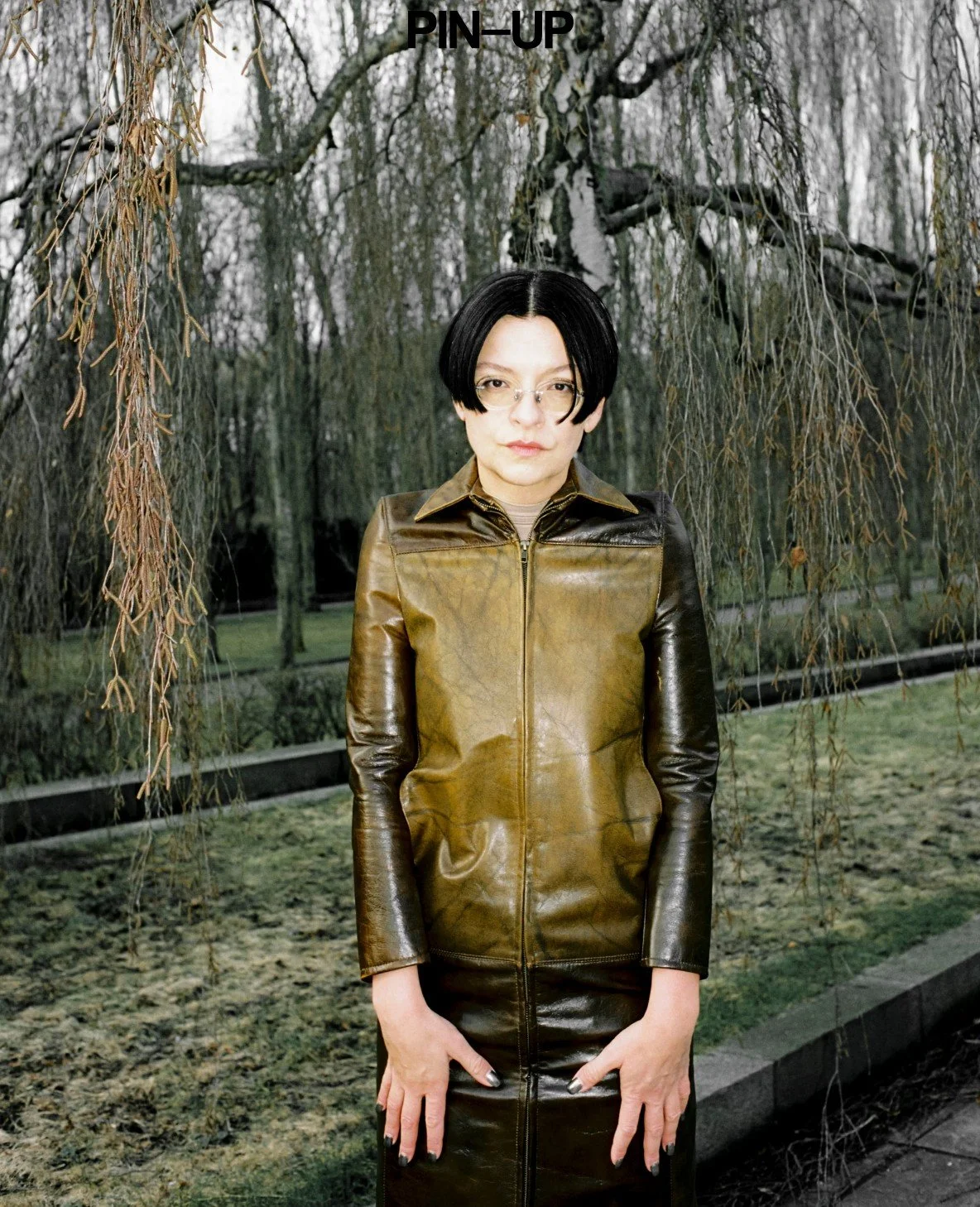
The German pavilion will realize Henrike Naumann’s vision posthumously alongside Sung Tieu.
Both artists examine political and historical systems through immersive, research-based installations. Naumann, who died suddenly in February 2026 at 41, was celebrated for her investigations into social ruptures and radicalization through furniture and design. The German pavilion will realize her vision posthumously alongside Sung Tieu. One of the most charged rooms at this Biennale.
France — Yto Barrada · Comme Saturne · Giardini
One of the most compelling selections of this edition — Barrada's first national pavilion despite appearing in two main exhibitions. Her work is typically spare, material and conceptually precise. Curated by Myriam Ben Salah. Don't miss it.
USA — Alma Allen · Giardini
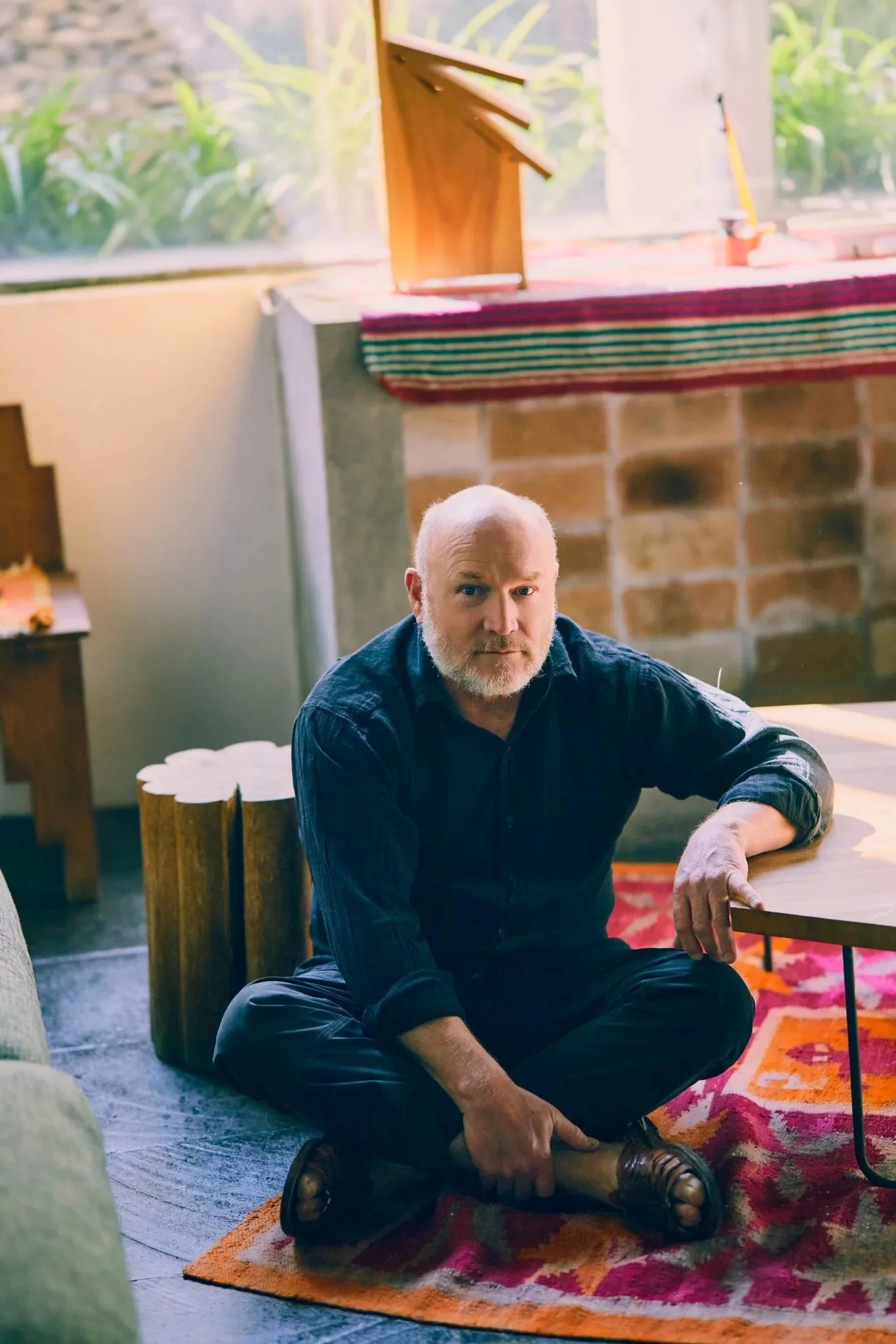
Alma Allen. Photo: Pepe Molina, courtesy The Slowdown.
Allen's sculptural practice — monumental, organically formed, materials-obsessed — is a genuine departure from recent American pavilion selections. Worth the queue. In a rare interview for the podcast “Time Sensitive,” recorded at his home in Mexico City, Allen said he needed no time to deliberate when invited to represent the US — faced with the opportunity to communicate with viewers on such a grand scale, he was "not going to turn down something so interesting." The exhibition, titled “Call Me the Breeze,” fills the pavilion and its courtyard with old and new work — deliberately ambiguous, deliberately open, which in the current political climate reads as its own kind of statement.
Qatar — Rirkrit Tiravanija, Sophia Al Maria, Tarek Atoui, Alia Farid, Fadi Kattan · Untitled (a gathering of remarkable people) · Giardini
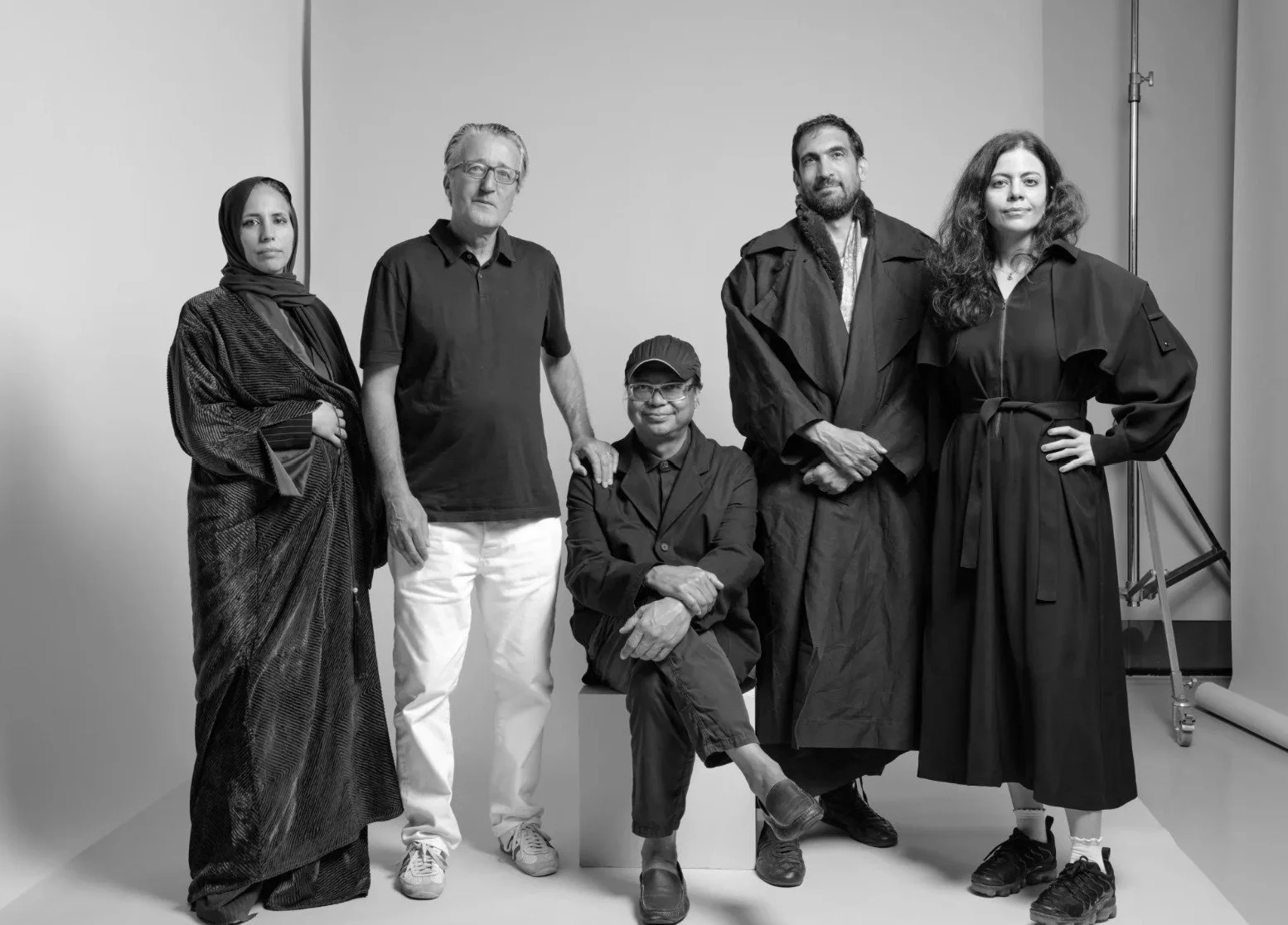
Qatar arrives at the Biennale for the first time: Sophia Al-Maria, Tom Eccles, Rirkrit Tiravanija, Tarek Atoui, and Ruba Katrib. Photo: © Brigitte Lacombe.
Qatar arrives at the Biennale for the first time with five artists — Rirkrit Tiravanija, Sophia Al Maria, Tarek Atoui, Alia Farid and Fadi Kattan — in a room curated by Tom Eccles and Ruba Katrib. Tiravanija, whose major retrospective at MoMA PS1 two years ago reaffirmed his place as one of the most influential artists of his generation, anchors a pavilion that is being watched as closely as any permanent Giardini presence.
Beyond the Giardini — Palazzos and Foundations
Fondazione Dries Van Noten — Palazzo Pisani Moretta · San Polo Opens April 25
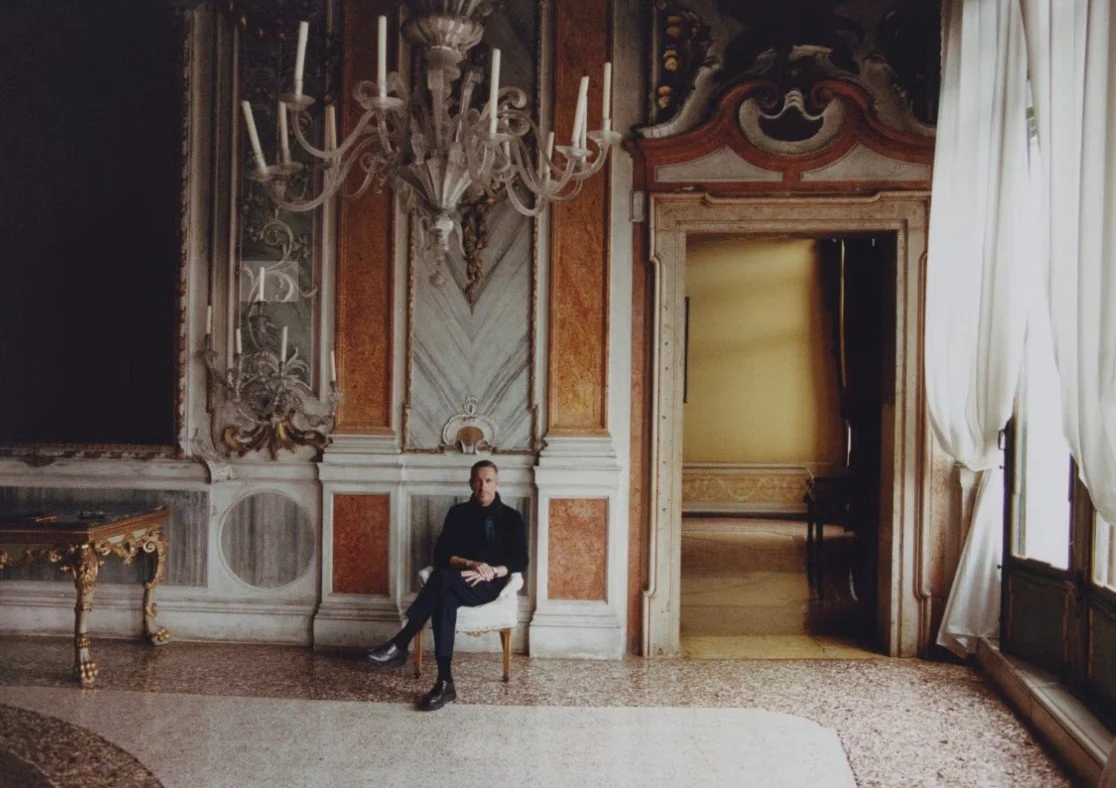
Spectacular: Dries Van Noten and his inaugural show “The Only True Protest Is Beauty” .
200 works across 20 rooms of a 15th-century palazzo on the Grand Canal. The inaugural show is titled “The Only True Protest is Beauty.” If you read Letter No. 12, you already know why this matters. Go before the crowds arrive.
Anish Kapoor — Palazzo Manfrin · Fondamenta Venier, Cannaregio · May 5 – August 9
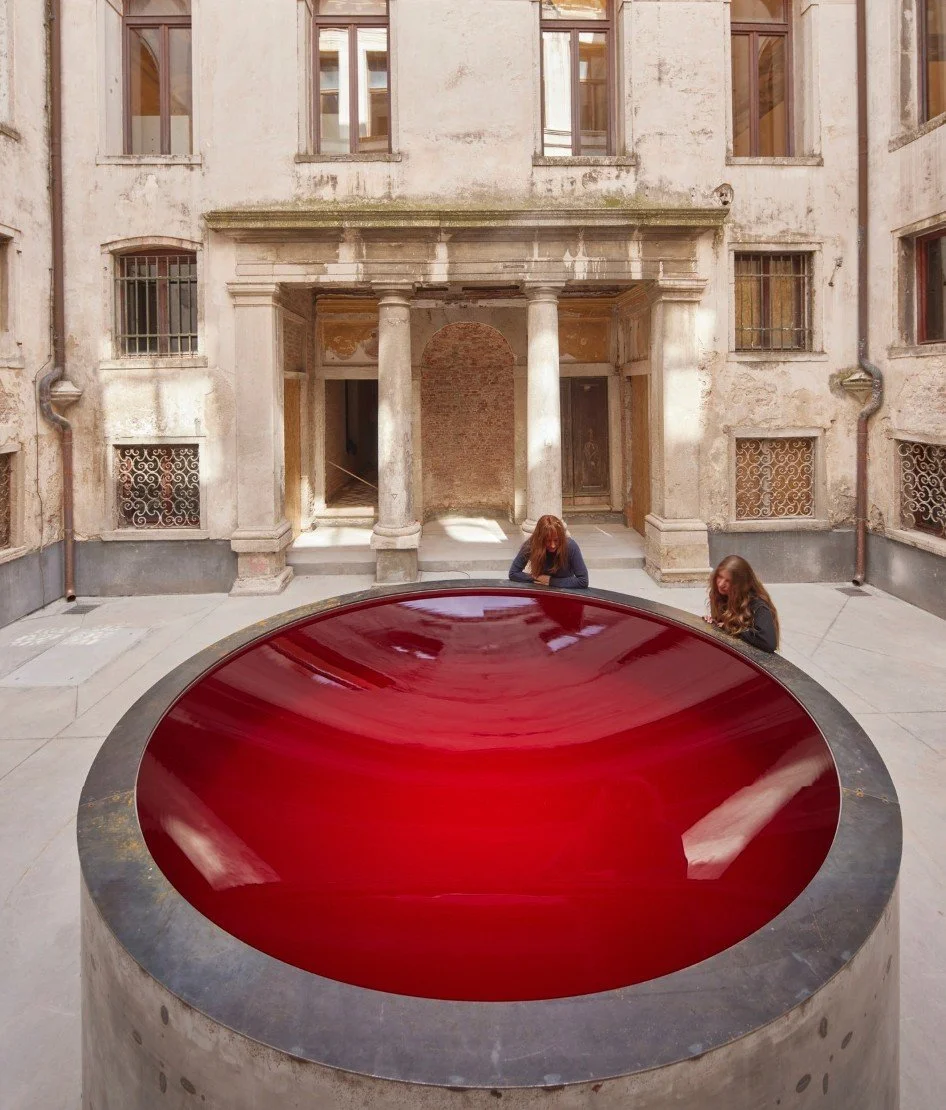
Kapoor at Palazzo Manfrin — 50 years of unrealized architecture and void sculptures in a 16th-century palazzo opening to the public for the second time.
Kapoor's first major Venice exhibition since 2022, bringing together large-scale installations, architectural models and mirror-polished stainless-steel sculptures spanning five decades inside the 16th-century palazzo that houses his foundation. Monumental pieces including At the Edge of the World (1998) and Descent into Limbo (1992) alongside 50–70 architectural models — some realised, others still unbuilt. Among Kapoor's most ambitious unrealised projects are plans for a work in outer space. The palazzo opens to the public for only the second time. Go early in the week before the queues form.
Marina Abramović — Gallerie dell'Accademia · Opens May 6
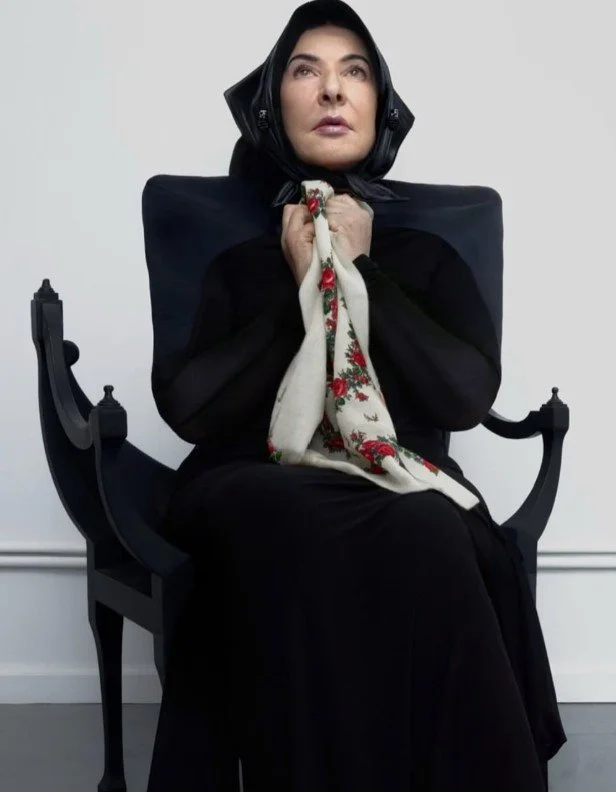
Marina Abramović at Gallerie dell'Accademia — the only living female artist to receive a dedicated major exhibition inside the institution. Transforming Energy opens May 6.
Transforming Energy — the only living female artist to receive a dedicated major exhibition at the Accademia, with her work woven throughout the museum's permanent collection for the first time. Book in advance.
Arthur Jafa x Richard Prince — Fondazione Prada
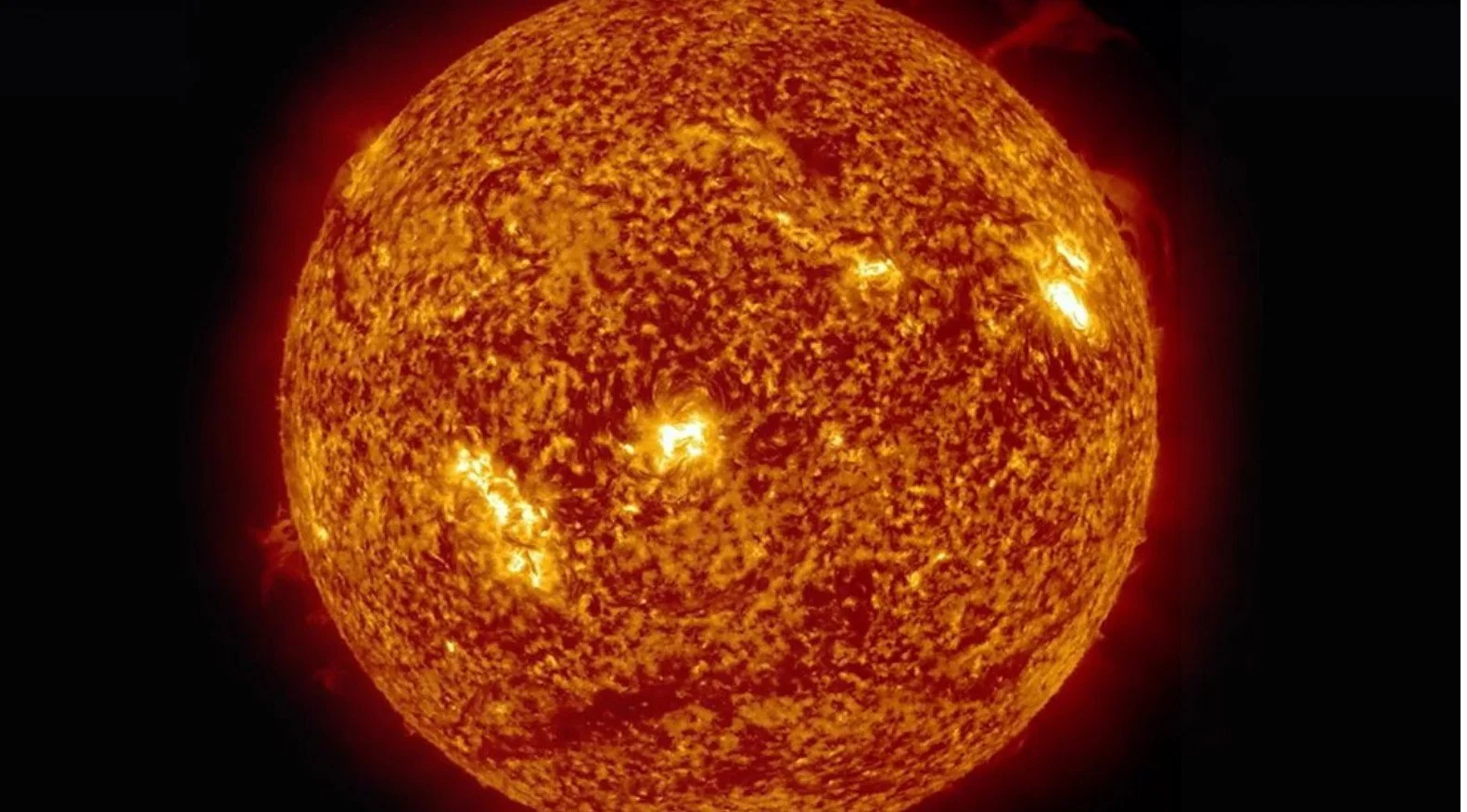
Arthur Jafa“Love Is the Message, the Message Is Death” (2017).
Two American image scavengers in the same room. Jafa has spent his career examining Black American identity — his film “Love Is the Message, the Message Is Death” (2017) remains one of the most powerful works made in the last decade. Prince has excavated the unvarnished underbelly of white America. Together they made a zine, shared images with each other, and produced new work from opposite ends of the same country. The show is curated by Nancy Spector. It is the most American thing at the Biennale — which at this particular edition is either the point or the provocation.
Lorna Simpson — Punta della Dogana Through November 22
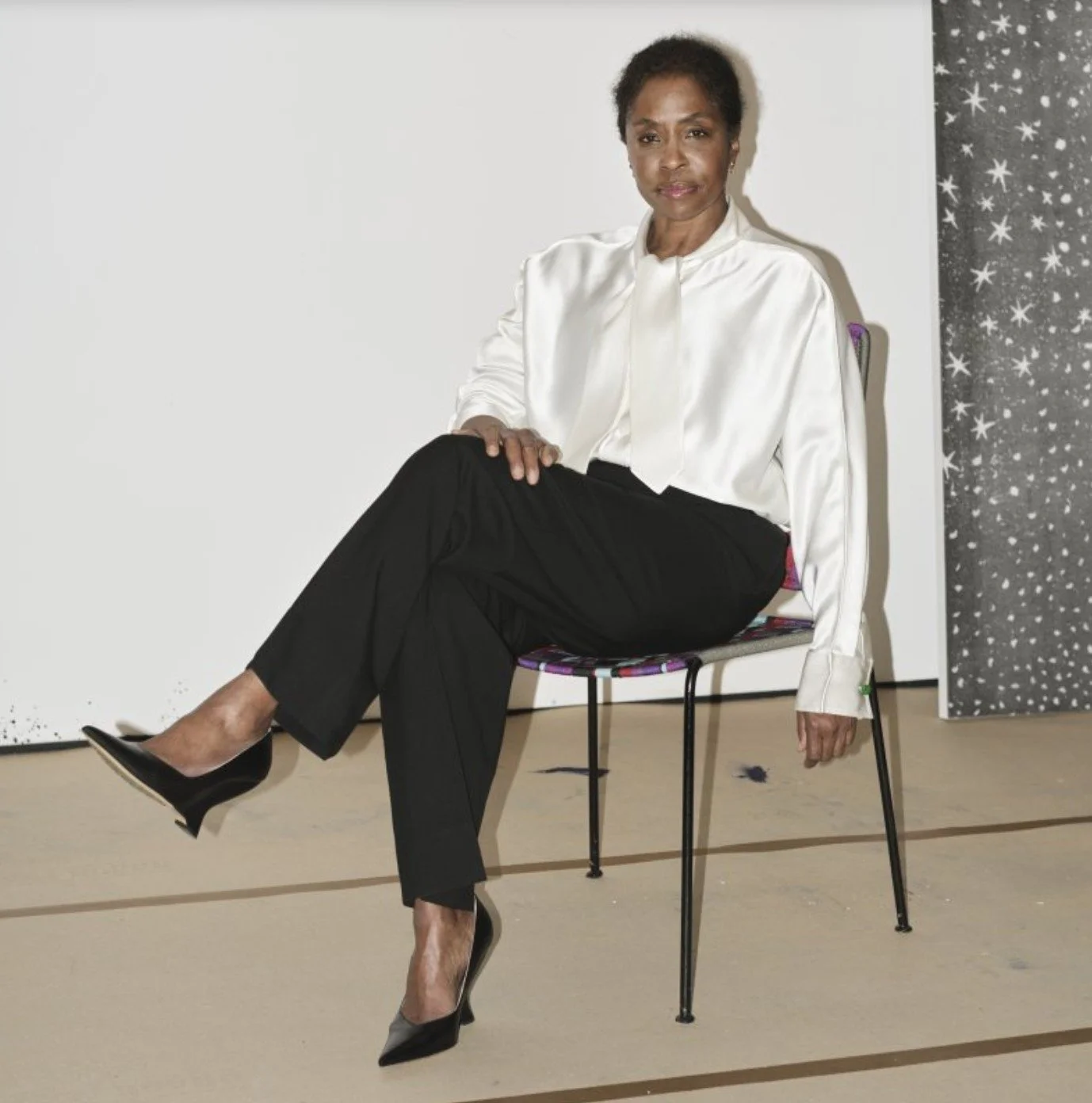
Lorna Simpson
The largest European exhibition Simpson has ever had — a survey spanning collages, video, installations and sculptures, some returning from her 2015 Biennale debut alongside new works made especially for the Punta della Dogana's unique space. The building alone is worth the visit. The show makes it essential.
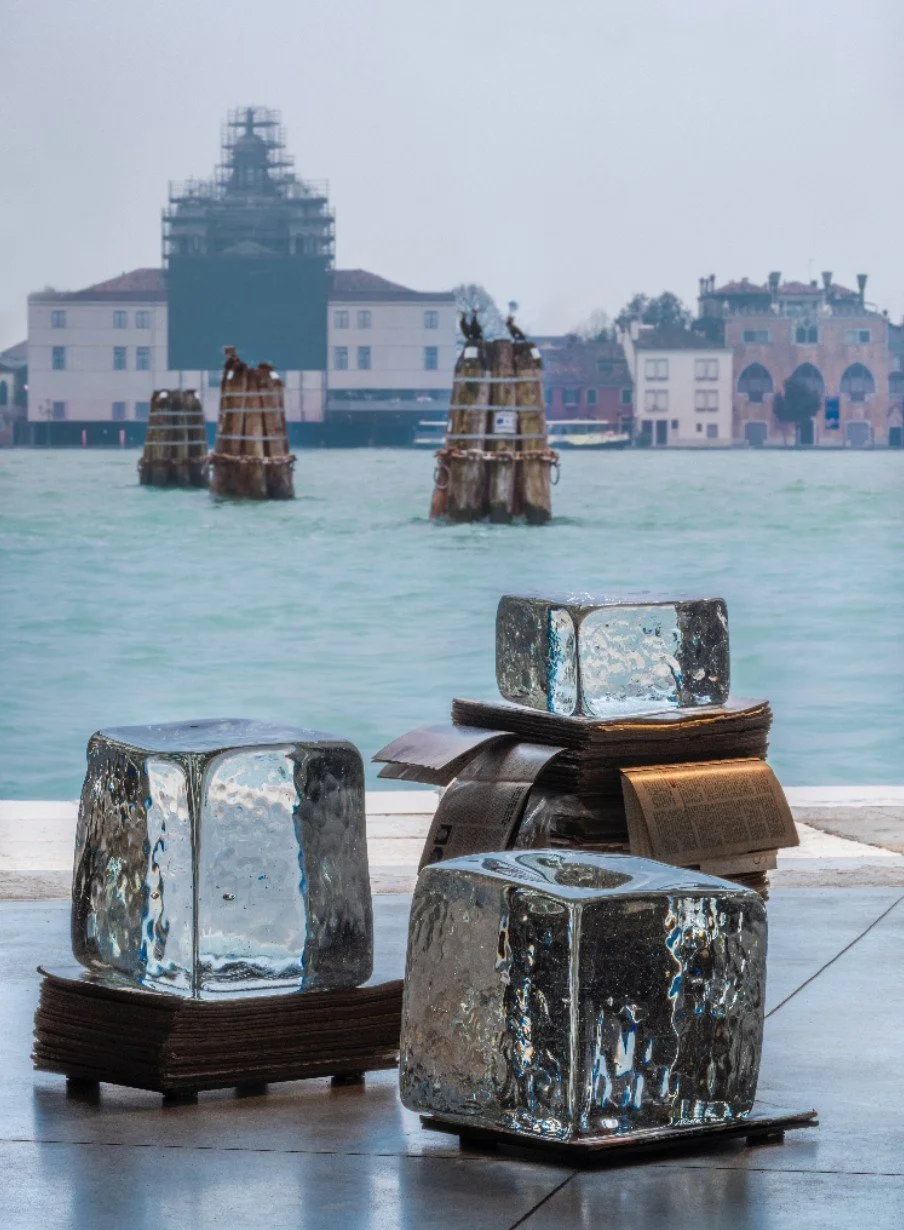
Lorna Simpson - Tired by Fire 2017
Matthew Wong Foundation — Palazzo Tiepolo Passi · Opens May 6
The foundation's inaugural exhibition unveils 35 previously unseen or rarely viewed works by the late Chinese-Canadian painter. One of the most beautiful buildings on the Grand Canal. The combination of venue and subject is reason enough to go.
Jenny Saville — Ca' Pesaro · March 28 – November 22
Venice's first major Saville exhibition. The enormous nudes that made her name during the YBA era alongside never-before-seen works made for the final room. Big, visceral, uncomfortably close. The body in all its grotesquery — which is to say, in all its truth.
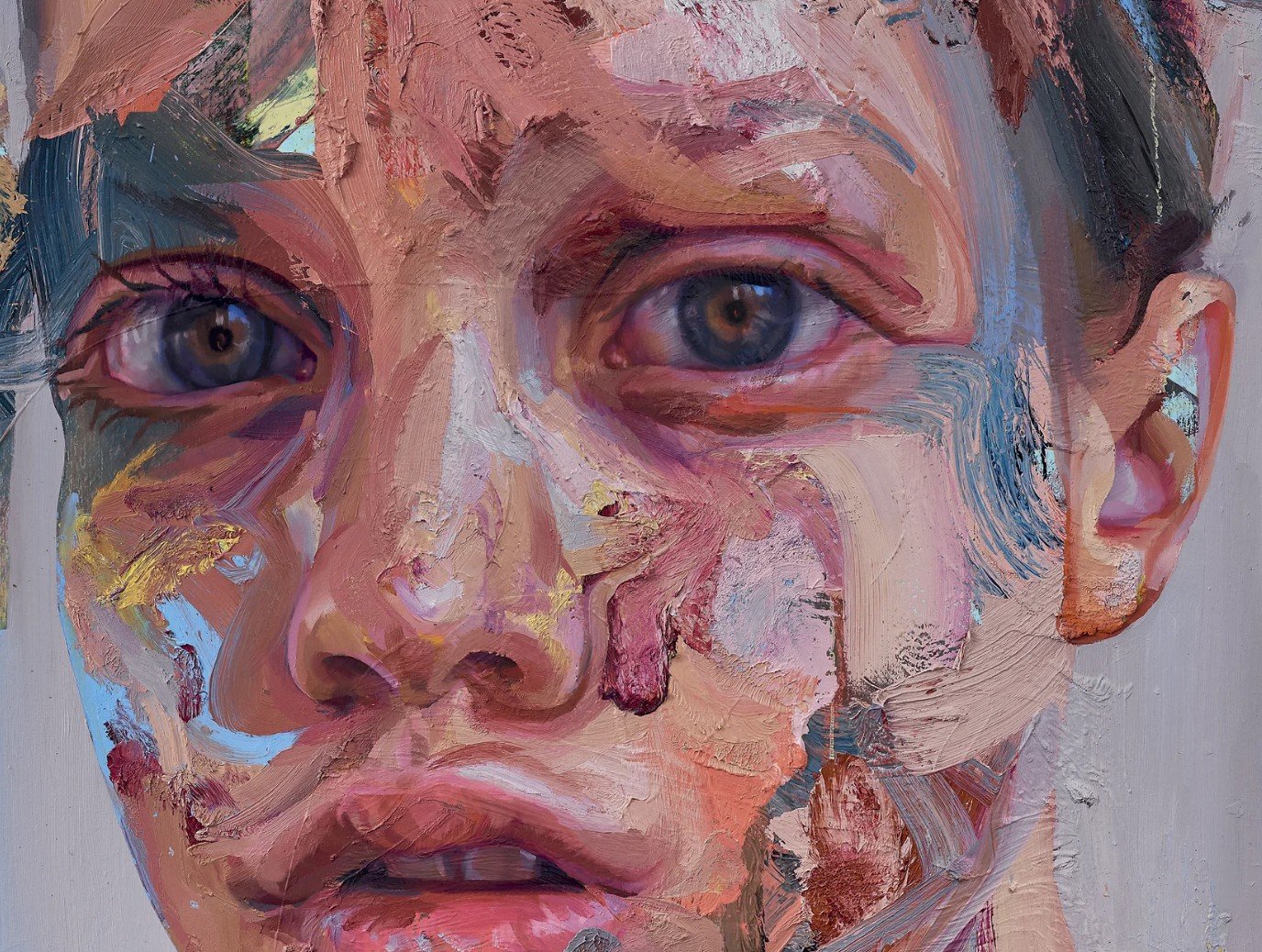
Striking: Venice's first major Saville exhibition.
Hernan Bas — Ca' Pesaro · From May 7
Miami-based figurative painter depicting tourists in scenarios both imagined and real, drawing inspiration from Venice itself. Self-aware, funny, slightly uncomfortable. Very good.
Strange Rules — Palazzo Diedo, Berggruen Arts & Culture · May 4 – November 22
Curated by Mat Dryhurst, Holly Herndon and Hans Ulrich Obrist, Strange Rules introduces the concept of Protocol Art — work that engages with the underlying rules dictating how culture is produced, distributed and perceived in a digital age. Avery Singer is among the participants, which given the curatorial team alone makes this one of the most conceptually sharp shows outside the main exhibition.
Lee Ufan — SMAC Venice, St. Mark's Square · May 9 – November 22
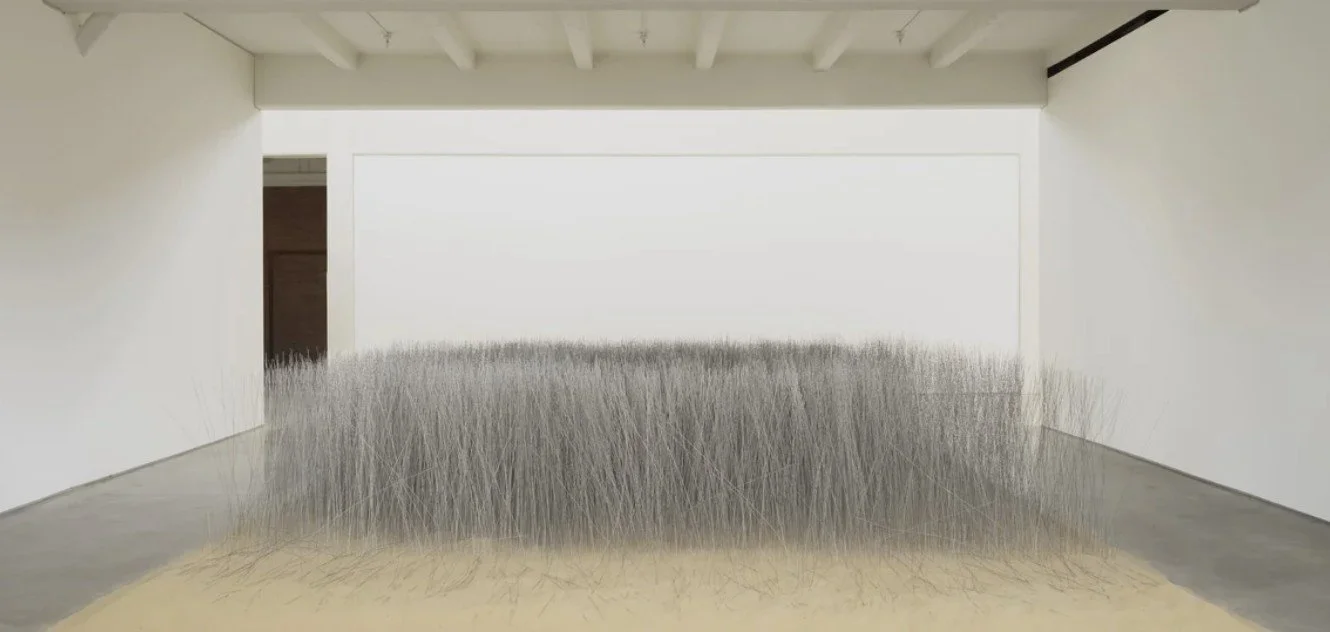
Lee Ufan at 90. Iron rods in sand, as delicate as sea algae. Seven decades of restraint as a discipline. SMAC Venice, from May 9.
Ninety years old. Seven decades of practice. The South Korean master of Mono-ha across eight galleries. The centerpiece: iron rods nestled in sand, as delicate as sea algae despite their weight. New paintings with thick mineral bands of colour close the show. Restraint as a lifelong discipline.
Repatriates Collective — Ocean Space, San Lorenzo · March 28 – October 11
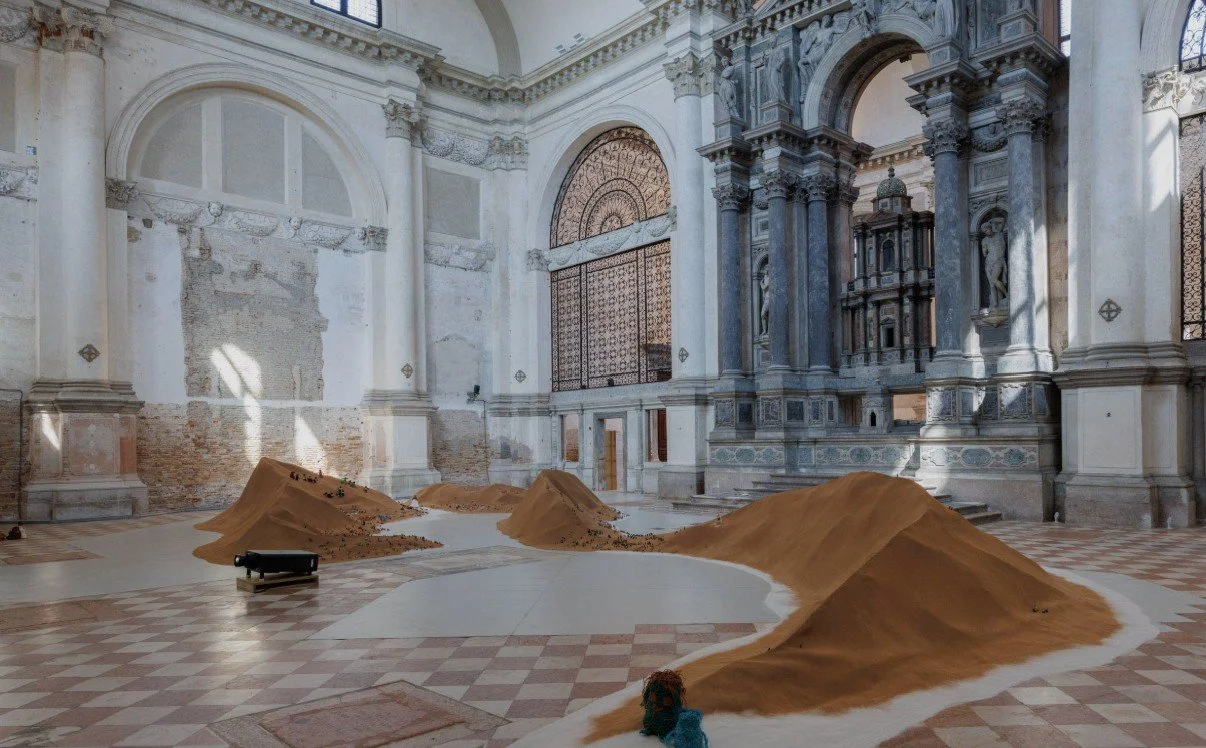
Repatriates Collective at Ocean Space. Sand, shell dolls, Indigenous ritual — in a deconsecrated church under the Biennale's arches. Tide of Returns runs through October 11.
“Tide of Returns.“ Mounds of sand snake through the deconsecrated San Lorenzo church, dotted with Dadikwakwa-kwa shell dolls — figures central to Indigenous ritual in the Gulf of Carpentaria. The Benin bronzes and Elgin marbles make the news. Smaller symbols of belonging rarely do. This show corrects that.
Peggy Guggenheim in London: The Making of a Collector — Peggy Guggenheim Collection · April 25 – October 19
The Guggenheim traces Peggy's formative years in London and her gallery Guggenheim Jeune (1938–39) — the platform that introduced abstraction and Surrealism to a British public that wasn't entirely ready for it. Kandinsky, Mondrian, Henry Moore and Sophie Taeuber-Arp alongside archival material: the origin story of one of the greatest collector's eyes of the 20th century, told in the building she left to Venice when she died.
Where to Eat — Old School to New
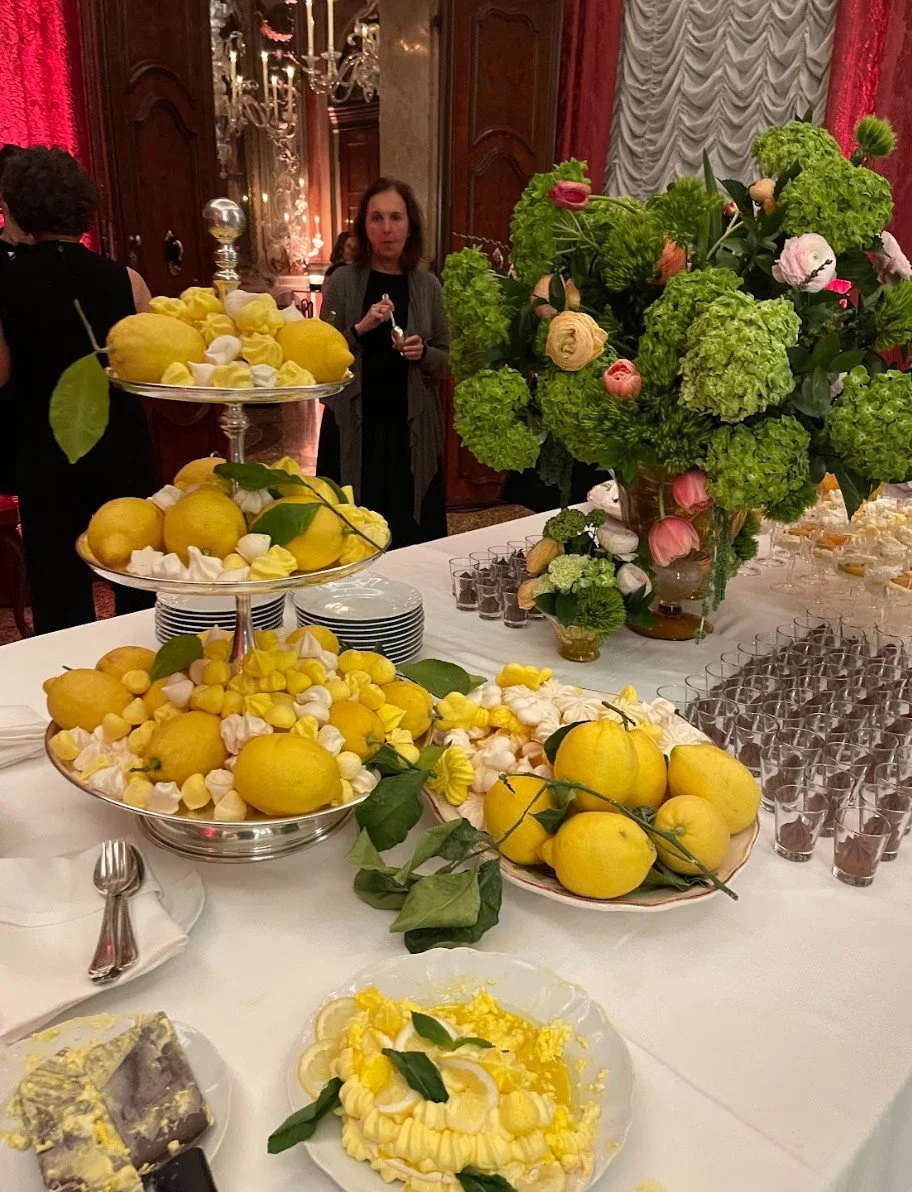
Venice does not do things quietly. Even the dessert table is an installation. PACE gallery dinner party during Venice Biennale 2024.
The non-negotiables
Harry's Bar — San Marco, Calle Vallaresso 1323 Opened 1931. Declared a national landmark in 2001. Every writer, artist and collector who has ever passed through Venice has sat here. You go not for the food but for the feeling of sitting inside a room that has absorbed a century of art world conversation.
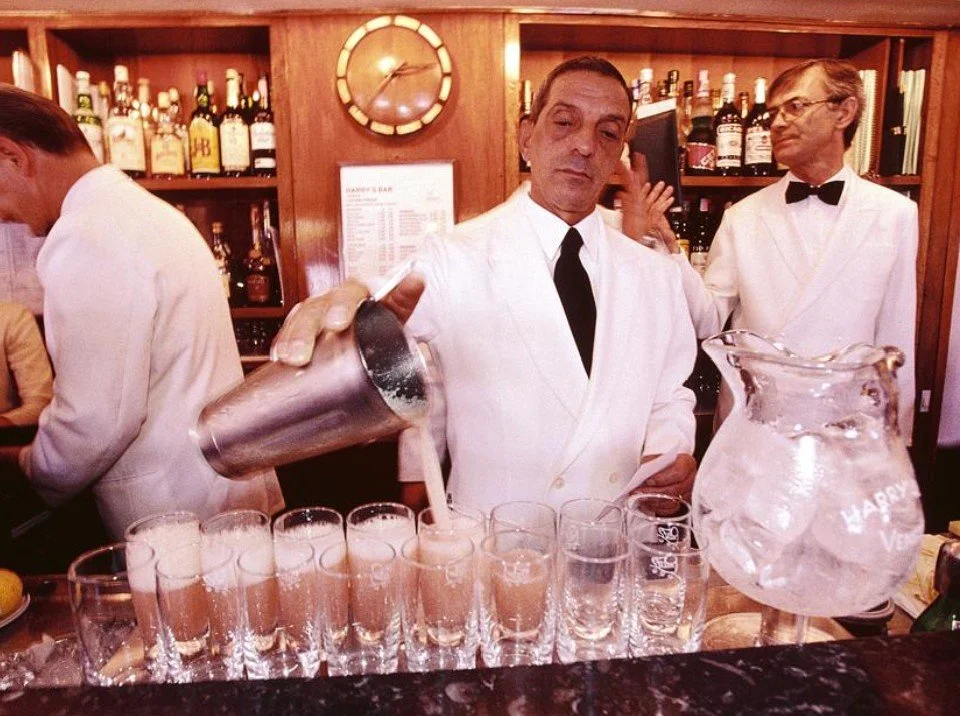
Harry's Bar. Opened 1931. Declared a national landmark. Every writer, artist and collector who has passed through Venice has sat here. You go for the feeling, not the food.
Palazzo Pisani — Santo Stefano, The bar and garden of Palazzo Pisani is one of the most beautiful aperitivo spots in Venice — a courtyard that feels genuinely private even when it isn't. Order a Negroni, sit in the garden, and decompress between exhibitions. One of the rare Venice spots where the setting does not overshadow the drink.
Da Ivo — Calle dei Fuseri, San Marco Florentine-Venetian cooking in a candlelit room that feels unchanged since the 1970s — which is not a criticism. Truffles, bistecca, handmade pasta. The kind of dinner you have when the day at the Biennale was genuinely overwhelming and you need something grounding and excellent. Regulars include everyone from gallery directors to heads of state. Book ahead.
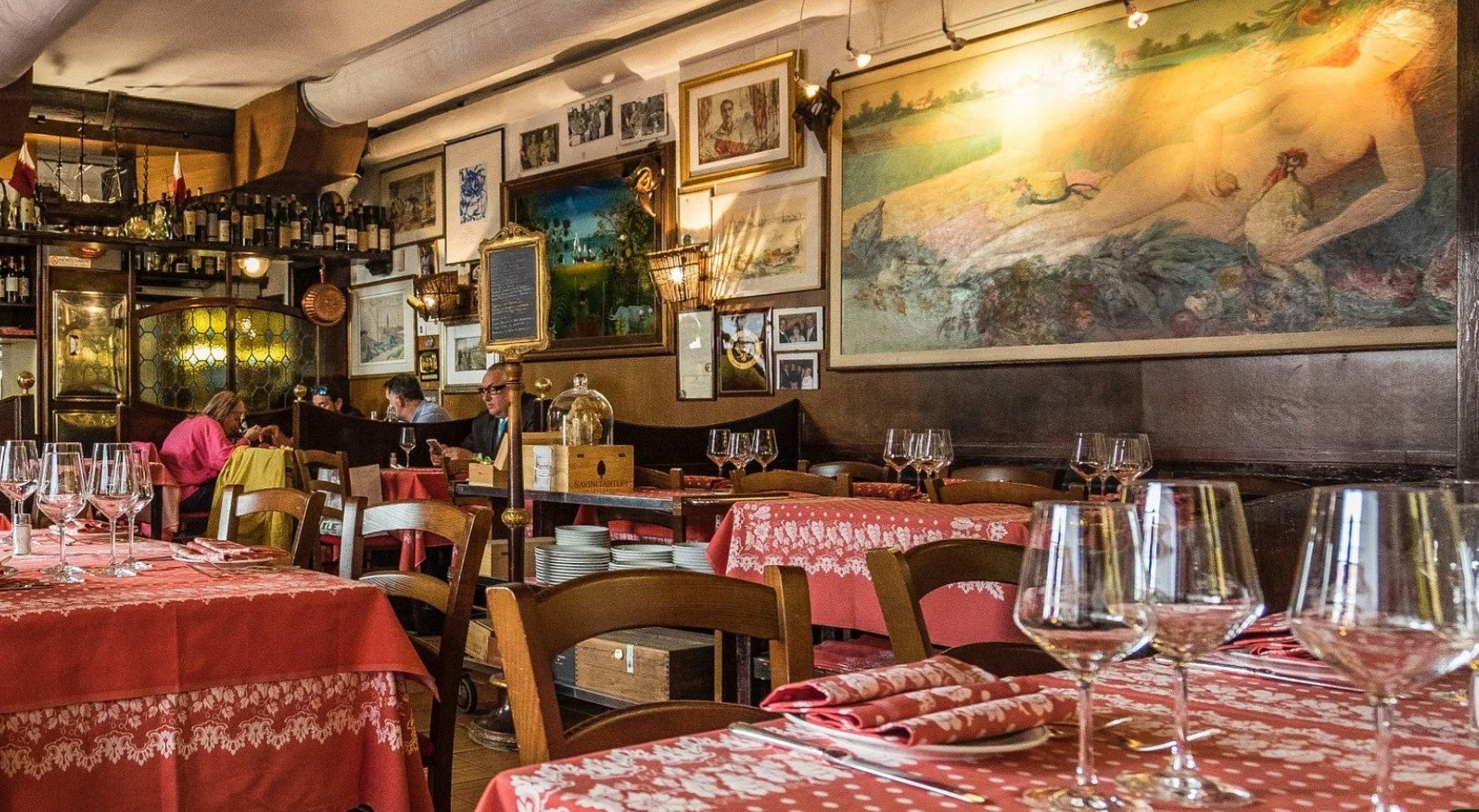
Da Ivo restaurant
Nevodi — Cannaregio Straightforward, honest Venetian seafood in a neighbourhood that tourists rarely reach. No performance, no menu designed for visitors — just the kind of cooking that reminds you why you came to Venice in the first place. Go for lunch.
Corte Sconta — Calle del Pestrin, Castello A hidden courtyard restaurant that has been an art world secret for decades — literally tucked behind an unmarked door, which is exactly the point. The menu is entirely seafood, the pasta is handmade, and the garden terrace in May is one of the best places to eat in Venice. Book well ahead and don't tell everyone.
Antiche Carampane — San Polo 1911 Tucked down a tiny lane, the seafood menu changes daily depending on the catch from the Rialto Market. Order the cannolicchi if they have them, the moeche if it's spring, the octopus with artichokes always. Closed Sunday and Monday. Book ahead.
Al Covo — Castello Quietly confident, well removed from the tourist trail. Seasonal, seafood-driven, handled with real care. The wine cellar has recently expanded with excellent natural bottles. The service is warm and knowledgeable.
Alla Vedova — Cannaregio The locals' secret. Cicchetti and house red wine standing at the bar. It will cost you almost nothing and taste like everything. Go at aperitivo hour.
Newer and more interesting
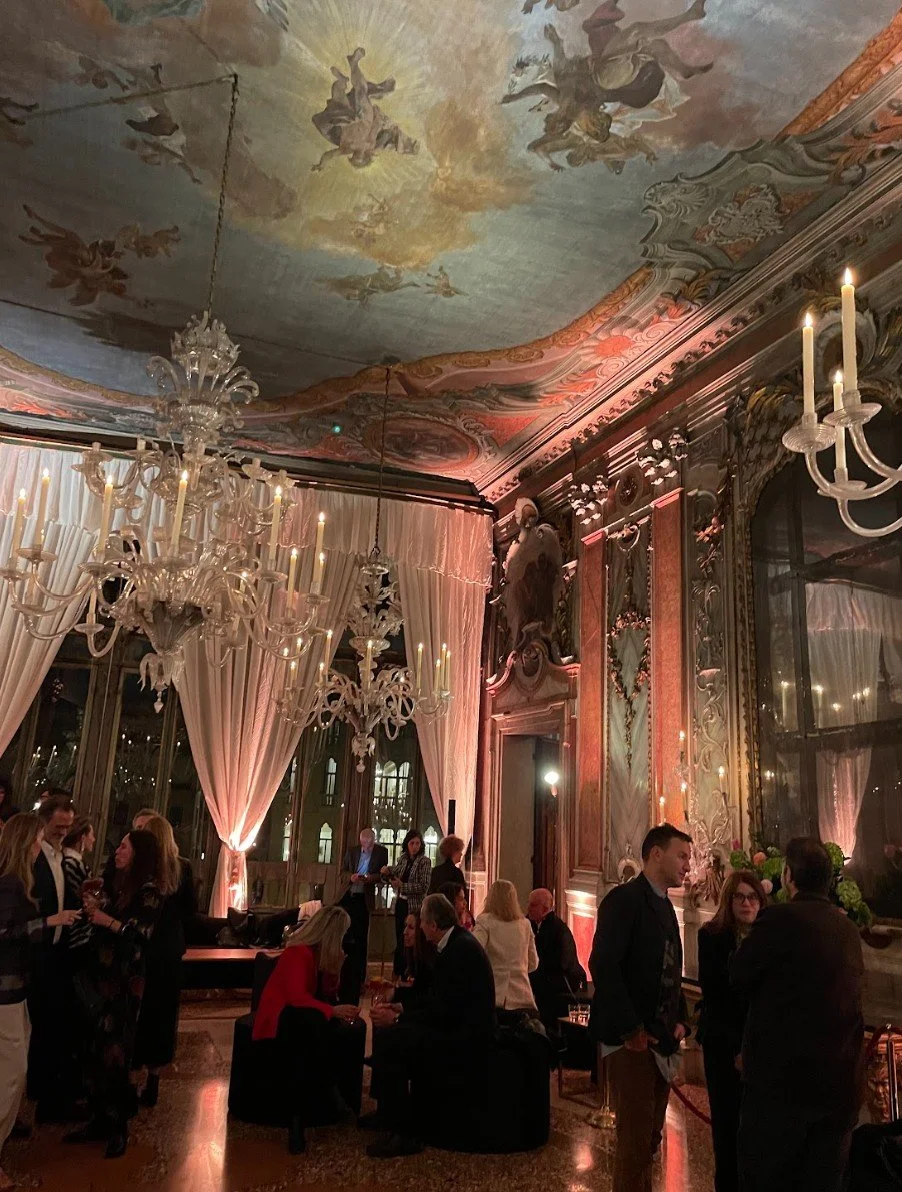
The palazzos are the other exhibition. PACE gallery party - Venice Biennale 2024
Trattoria del Local — Fondamenta Briati, Dorsoduro One of the newer entries to the serious Venice dining conversation. Seasonal, local, natural wine list that changes constantly. The crowd is young and in the know — chefs, gallerists, the people who are actually making things happen during Biennale week rather than just attending parties.
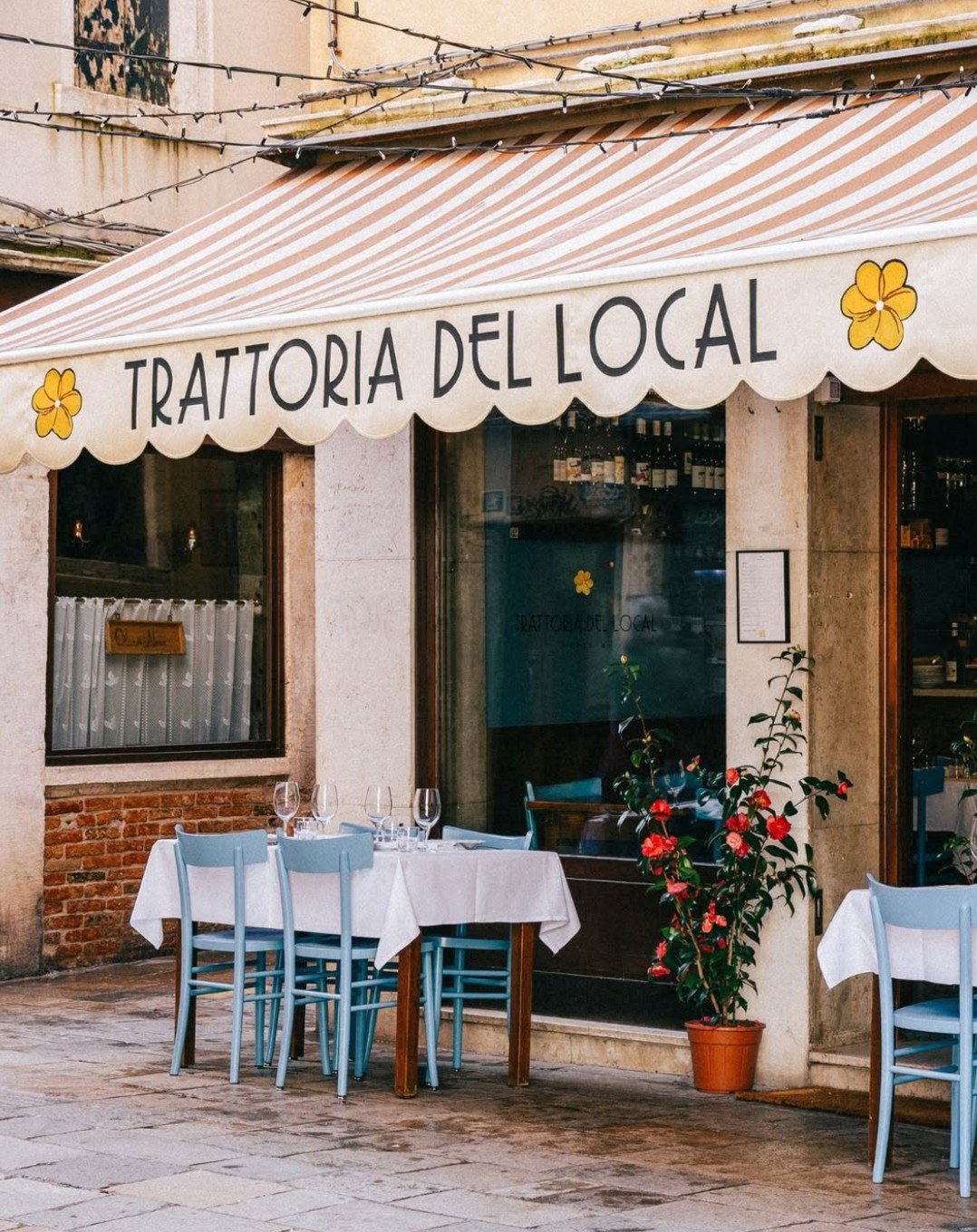
Tratoria Del Local
Venissa — Mazzorbo island Chefs Chiara Pavan and Francesco Brutto — cucina ambientale, Green Michelin Star, rare Dorona grape wine from the lagoon island vineyard. Take the vaporetto to Mazzorbo. Book weeks ahead.
Estro — Dorsoduro Natural wine bar. One of the best wine lists in the city. The crowd is young, the room is small, the bottles are serious. Go for the wine and stay for the plates.
Vino Vero — Cannaregio Not many tourists find it. Natural wines, small producers. An art world insider favourite during Biennale week for exactly that reason.
Ristorante Glam at Palazzo Venart — Santa Croce Venetian cooking with Ligurian influence, private courtyard, Grand Canal views. The eleven-course menu is worth the occasion.
For gelato, one answer only
Gelateria Nico — Zattere Order the gianduiotto — chocolate hazelnut gelato in a glass with fresh whipped cream — and sit on the floating terrace looking at the Giudecca Canal. Non-negotiable.
Practical notes
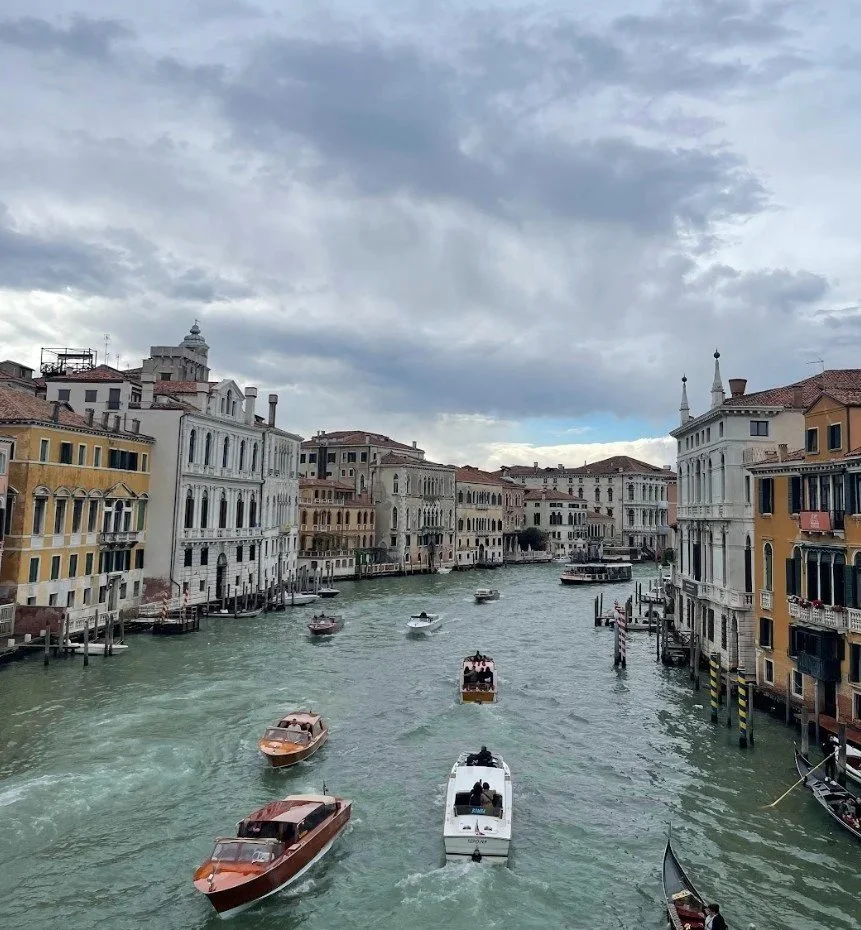
The Biennale opens to the public May 9. Preview days May 6–8 are press and professionals only. Book tickets online before you arrive. The Arsenale is a 20-minute walk from the Giardini. Getting around Venice is half the experience. The vaporetto is fast, reliable and will take you everywhere — but if the budget allows, take a water taxi at least once. There is no other feeling in the world quite like arriving somewhere important at speed across the lagoon with your hair doing whatever it wants. Bond girl on a mission is not an exaggeration.
Venice enforces an access fee for day-trippers on the busiest days in May — staying overnight exempts you.
Anarchy Daily · anarchydaily.com · critical intelligence, not hype 
Aleksandra Dinic is the founder and editor of Anarchy Daily. She covers contemporary art, culture, tech and the ideas underneath.