A body-first furniture range that reclaims domestic space and turns performance into architecture.
by ALEKSANDRA DINIC
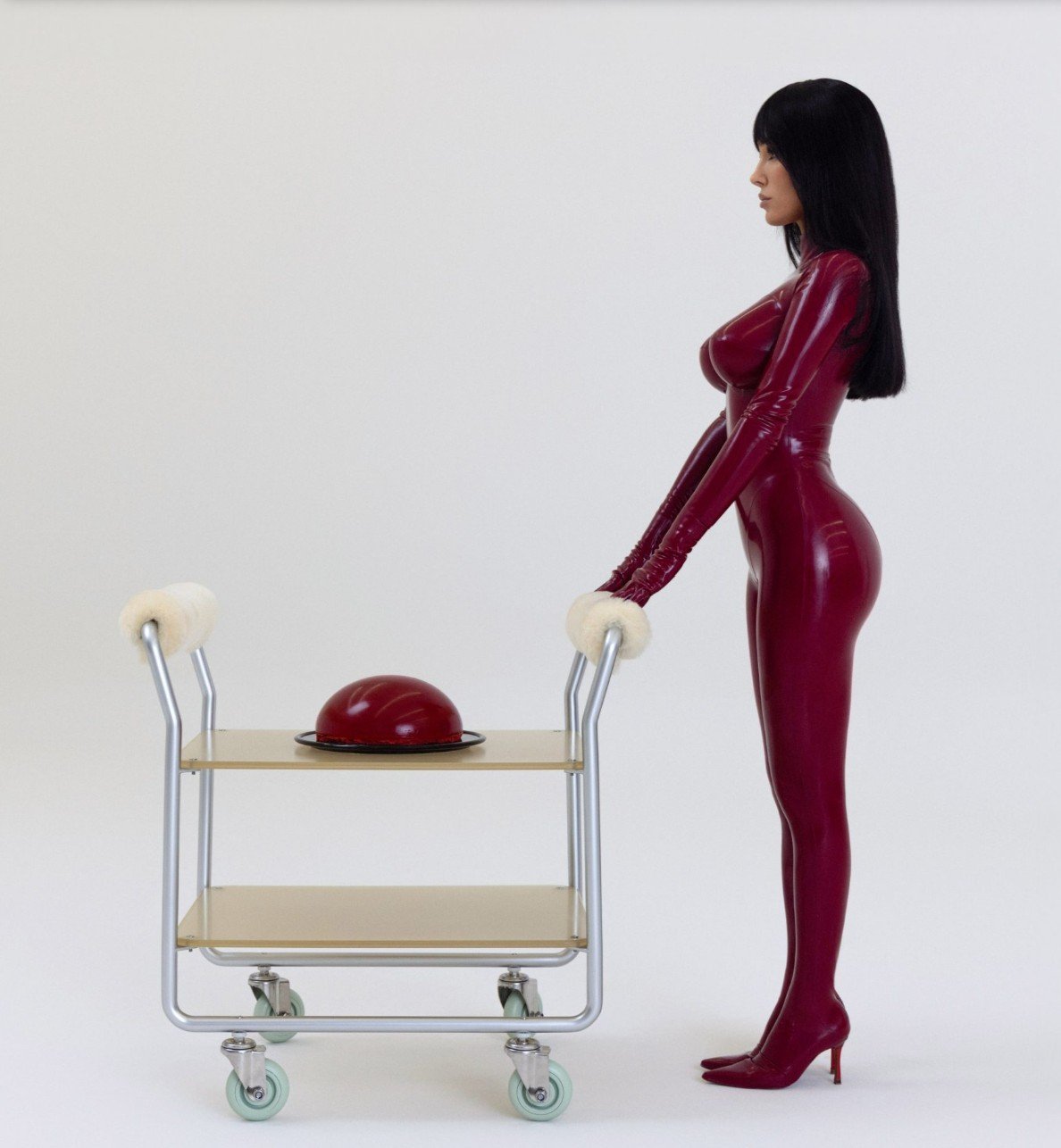
Bianca Censori pushing her cake in BIO POP. Images by Noah Dillon
Bio Pop is a reminder that the body never left the room — it’s right here, pressing back, reshaping space, insisting on its right to exist.
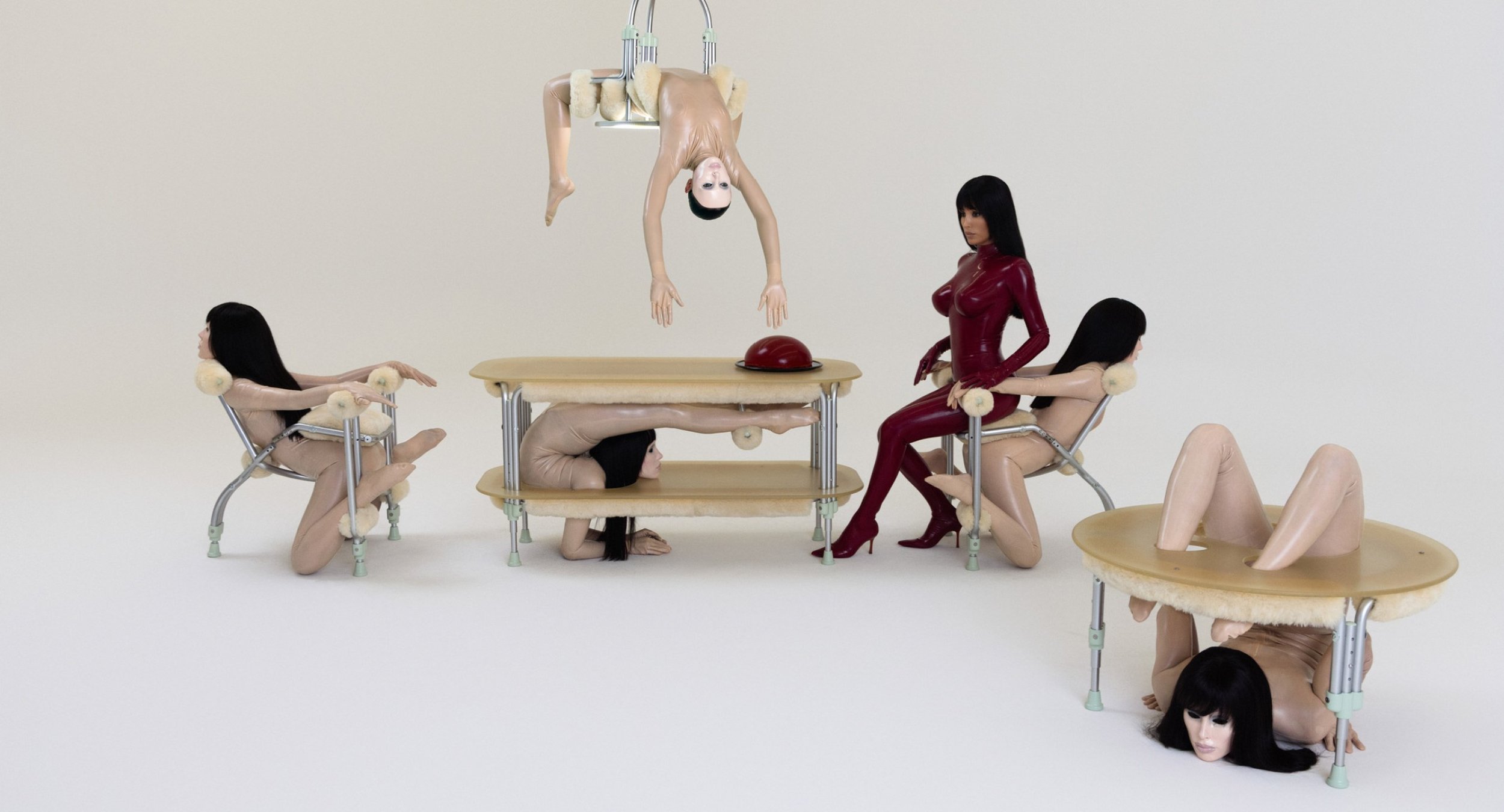
In a culture obsessed with clean lines, ultra-smooth edges and outlandish ideologies, Bianca Censori designs décor and ornaments you can actually appreciate. Her brand new collection, entitled Bio Pop, doesn’t sit quietly in the corner — it leans in, breathes out, and dares you to touch it like some sort of avant-garde organism wrapped in bondage garb. Technically, it’s an art installation fashioned as furniture. Human furniture, that is. But it embodies ample attitude with an impressive architectural and polemical heft. It is also fun and fresh.
Images by Noah Dillon
There’s something charged in this 14-minute happening in Seoul, South Korea, a performance spectacle that jarred viewers and triggered a brutally honest dialogue about the meaning of theatricality, art and social consciousness. It marks the start of a surreal journey in which Bianca Censori, the beautiful, bodacious style icon hailing from Australia, explores femininity, fashion, and bucketloads of social issues.
Bio Pop doesn’t sit quietly in the corner — it leans in, breathes out, and dares you to touch it like an avant‑garde organism wrapped in bondage garb.
This work deftly takes you from outside to inside to someplace metaphysical, sexual and ideological. Each piece looks pristine and pressurised, like it’s been moulded by skin and contours — curves softening into dips, surfaces bulging where hands might’ve lingered, an erotic energy percolating from within. The exhibition is suffused with symbolism and provocation in an awesome and cerebral way.
Images by Noah Dillon
This work drags you from outside to inside to someplace metaphysical, sexual and ideological.
Bianca’s art is spiked with all the themes and motifs that make for compelling discourse: the self, the id, connection, personal space, place, control, repression, rage, love, loss and resistance. Fashion and design are prominent as well, obviously. Like Cindy Sherman, Bianca’s work is freaky, disturbing, but ultimately stimulating, entertaining and liberating.
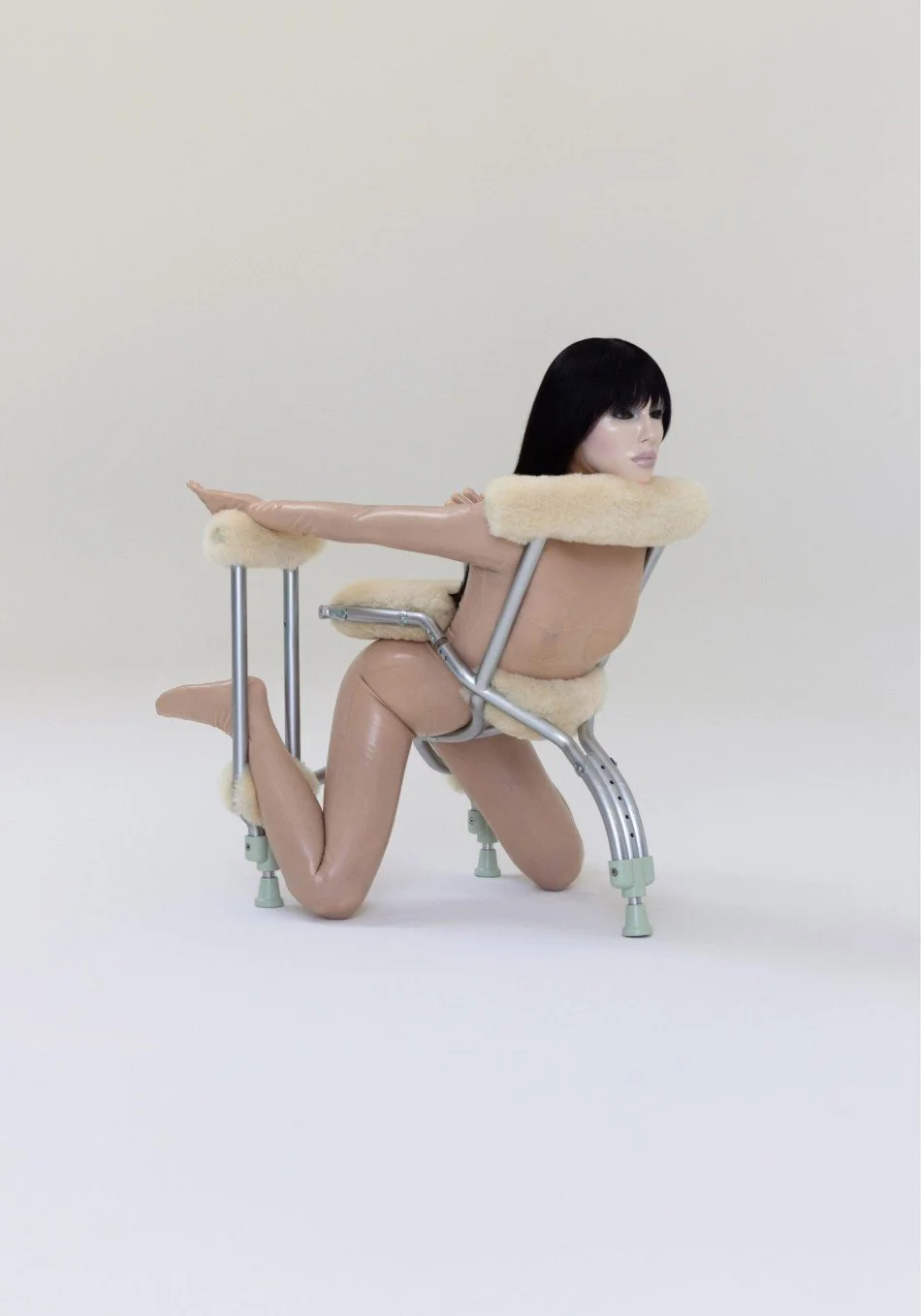
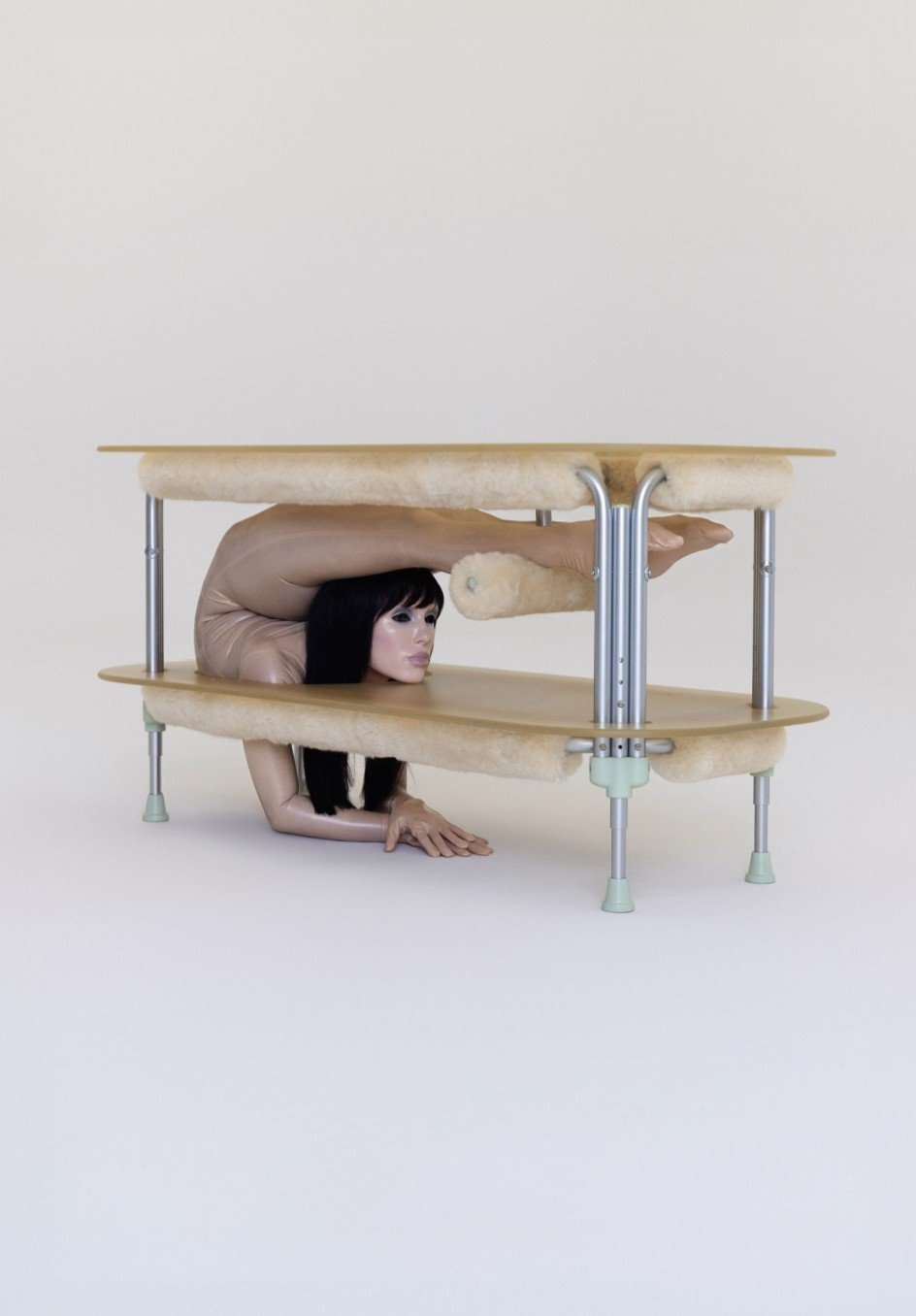
Outside the art world she will be labelled a nut and a naïve muse, subordinating herself to her super-famous, perpetually creative husband, Ye. But in her super-protean Bio Pop there is something ontological, lustrous and very cool. She gets inside other people’s skins and psyches with visual blasts of contorted latex dolls fetishised as objet d’art. They hint at hips, at weight, at bodies that move through and against space-time. The result is psychic tension and a surreal, ethereal state of suspended animation.
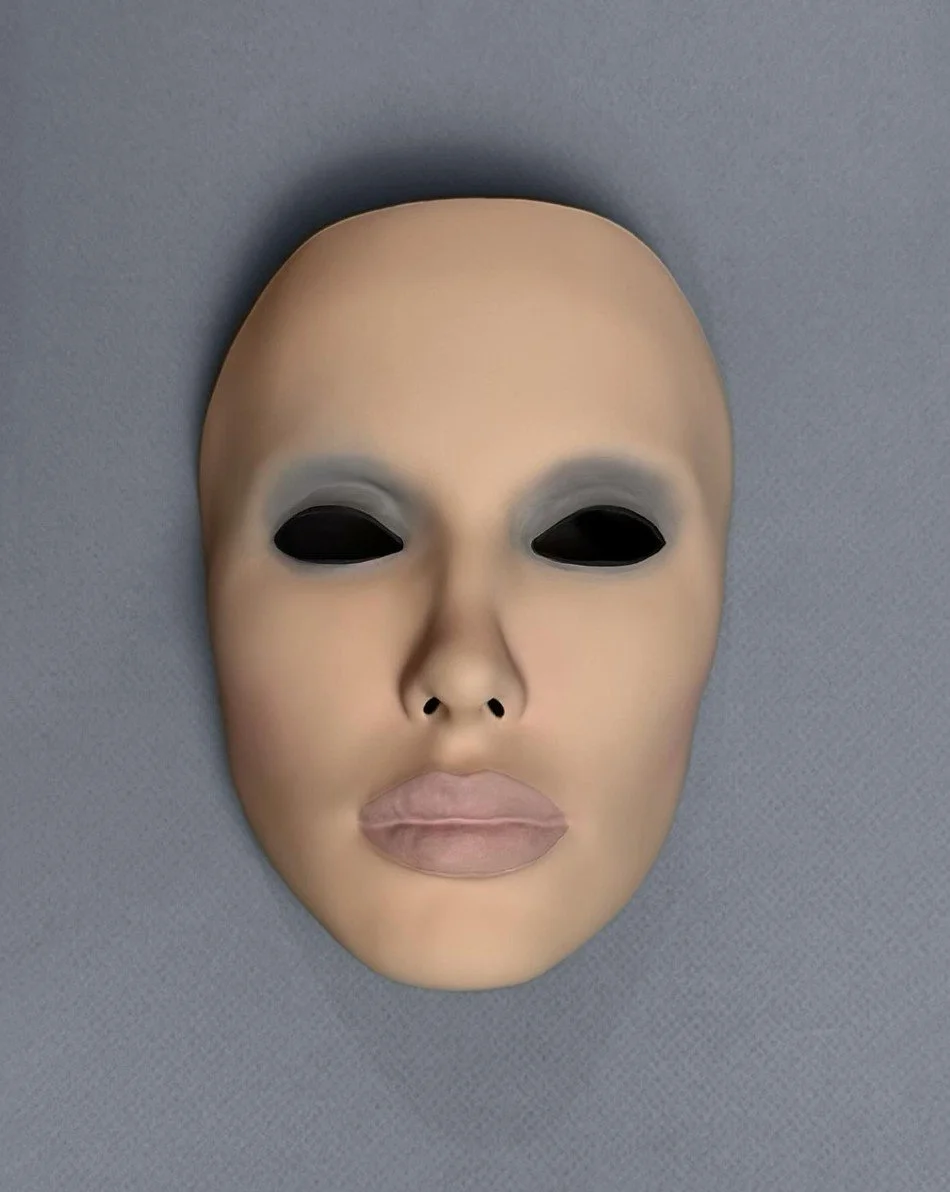
She gets inside other people’s skins and psyches with visual blasts of contorted latex dolls fetishised as objet d’art.
Images by Noah Dillon
Censori’s architectural training gives her work a kind of spatial swagger. Her proportions don’t aim to blend — they interrupt and mystify. Sit down and your body has to negotiate with oppressive shape and form, not collapse into it. There’s comfort, but only if you accept the terms of constraint. It’s less lounge, more encounter and interrogation.
Sit down and your body has to negotiate with the shape, not collapse into it — it’s less lounge, more encounter and interrogation.
While many design concepts hide behind neutral palettes and ‘safe’ form factors, Bio Pop cuts straight into the nerve, fashioning itself as radically anti-orthodox. It is bold but not kitsch, pop-coded but weirdly pure. The tension — that hybrid mix of sensual and sculptural, soft and territorial — feels thrillingly alternative.
And that’s the point. At a time when interiors are curated to be frictionless, filtered, forgettable, Bianca makes furniture that refuses perfection. Her pieces demand interaction and an embrace of the subversive. They don’t want to stage a hyper-filtered lifestyle; they want to stage you, and every version of you in the most realistic sense possible.
They don’t want to stage a hyper‑filtered lifestyle; they want to stage you, and every version of you.
The home is where everything begins: existence, memory, narrative, conformity and group-think. “The cake, baked in performance and carried to the table, is not nourishment but offering. It embodies the tension of the kitchen as origin, labor, and ritual: a gesture of domestic service reframed as spectacle,” reads one statement in Bianca’s notes.
Like Marina Abramović stripped of curated theatrics, Bianca channels presence through pure form. No manifesto, just surfaces and silhouettes that speak for themselves. She’s building her own language of intimacy: tactile, architectural, fiercely sincere. Her literal refusal of a conventional artist’s voice — Censori has been communicating with the press through a double — only makes her proposition more compelling.
It throws into relief the volume and noise of earlier gestures that focused on screaming freedom rather than quietly reconstructing it. By embracing constraint, she redefines freedom for a new and fresh aesthetic. “The kitchen becomes an altar, the cake a symbolic relic, and the furniture the first shrine in a cycle that will expand into reliquaries, confessions, sacrifices, and rebirth.”
Images by Noah Dillon
Bio Pop is a reminder that the body never left the room — it’s right here, pressing back, reshaping space, insisting on its right to exist.
Bio Pop is neither nostalgic nor ironic. It is raw yet refined, polished and rough at the same time. It’s also an important reminder that the body never really left the room. It’s right here, pressing back, reshaping space, resisting and insisting on its right to exist. And in that insistence, Bianca Censori becomes something more than a designer-muse — she renders herself a nervy, savvy and inspirational artist with an axe to grind.
Images courtesy of Bianca Censori