Tracey Emin's retrospective "A Second Life" at Tate Modern (27 February – 31 August 2026) surveys 40 years of practice — from Turner Prize-nominated "My Bed" (1998) through post-cancer survival work including stoma self-portraits and large-scale oil paintings. Produced in partnership with Gucci, the show frames itself as a celebration of confession, survival and living — though what's most striking is how much more serious the work has become, not softer, as culture has finally caught up with it.
Art · 5 min read
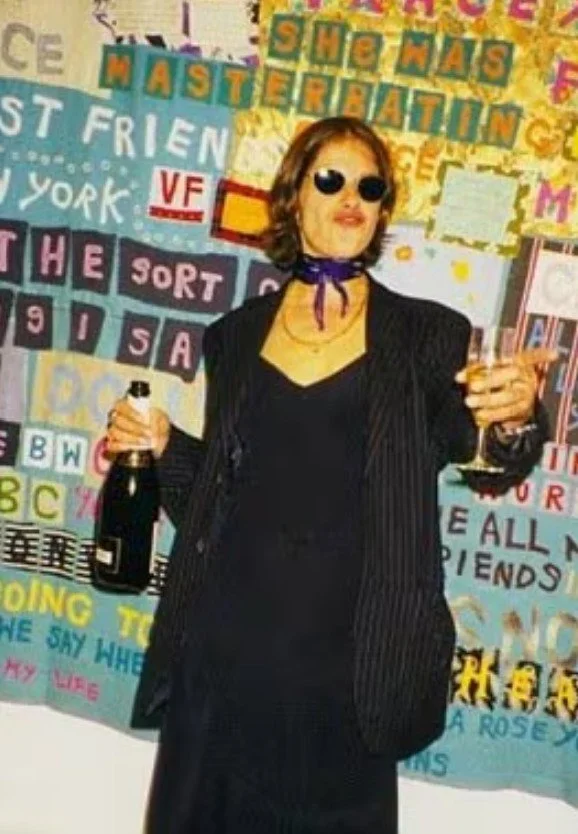
Tracey Emin, 1997.
She was catapulted into the public eye in the 1990s with iconic works like her Turner Prize-nominated "My Bed," which sparked fierce critical and public debate, challenging what art could be. The Guardian called it tortured nonsense. A housewife drove 200 miles to attack it with cleaning supplies. Britain did what Britain does with things it doesn't understand — it tried to tidy them away. It failed. And now "My Bed" sits at the centre of the largest retrospective of Emin's career at Tate Modern, and people look at it, as curator Maria Balshaw puts it, with tenderness rather than shock.
That shift, from outrage to tenderness, is the most interesting thing about "A Second Life." Not because it diminishes the work. But because it asks what happens to radical art when the culture finally catches up with it.
The answer, in Emin's case, is: the work gets more serious. Not softer. More serious.
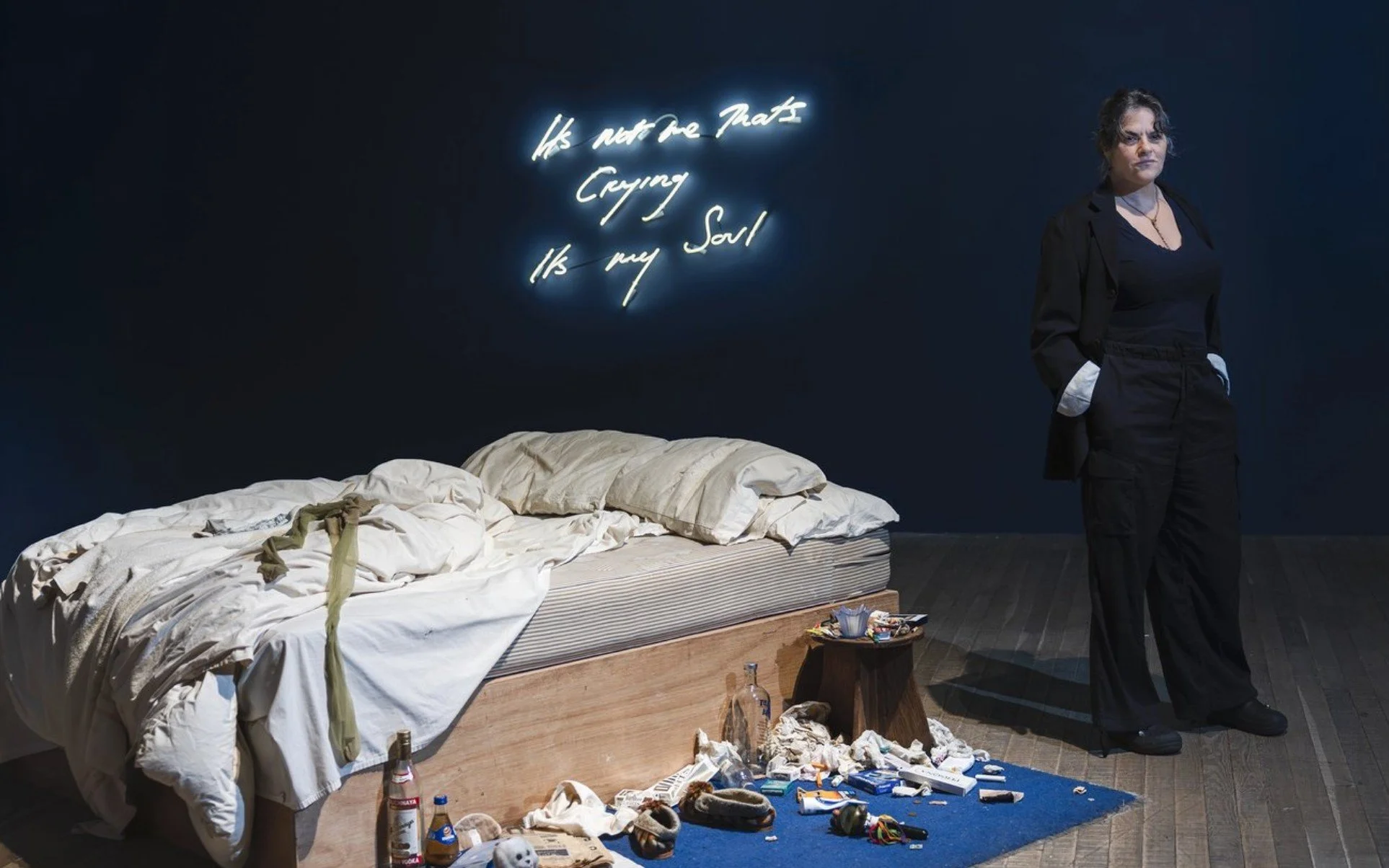
My Bed returns to Tate Modern — this time with neon.
"A Second Life" spans more than 40 years of practice — painting, sculpture, video, textile, neon, installation — tracing key life events from her early years in Margate to her recent experiences of illness and survival. Her journey is neither linear nor comfortable. "Why I Never Became a Dancer" (1995), deliberately placed near the start of the exhibition, opens with affectionate shots of Margate that jarringly cut to Emin's narration of sexual abuse and misogyny. "Exorcism of the Last Painting I Ever Made" (1996) — a massive white box where Emin painted non-stop for three weeks, referencing Schiele, Picasso, Mondrian, Klein — collapsed the boundary between private catharsis and public spectacle, establishing radical self-exposure as the defining facet of her practice. Then "My Bed" (1998). Then the quilts, the neons, the bronzes. The walls throughout are painted petrol blue, the same shade Francis Bacon used for his oppressive interiors. The comparison is not accidental. Emin has always been a more rigorous painter than her celebrity allowed people to notice.
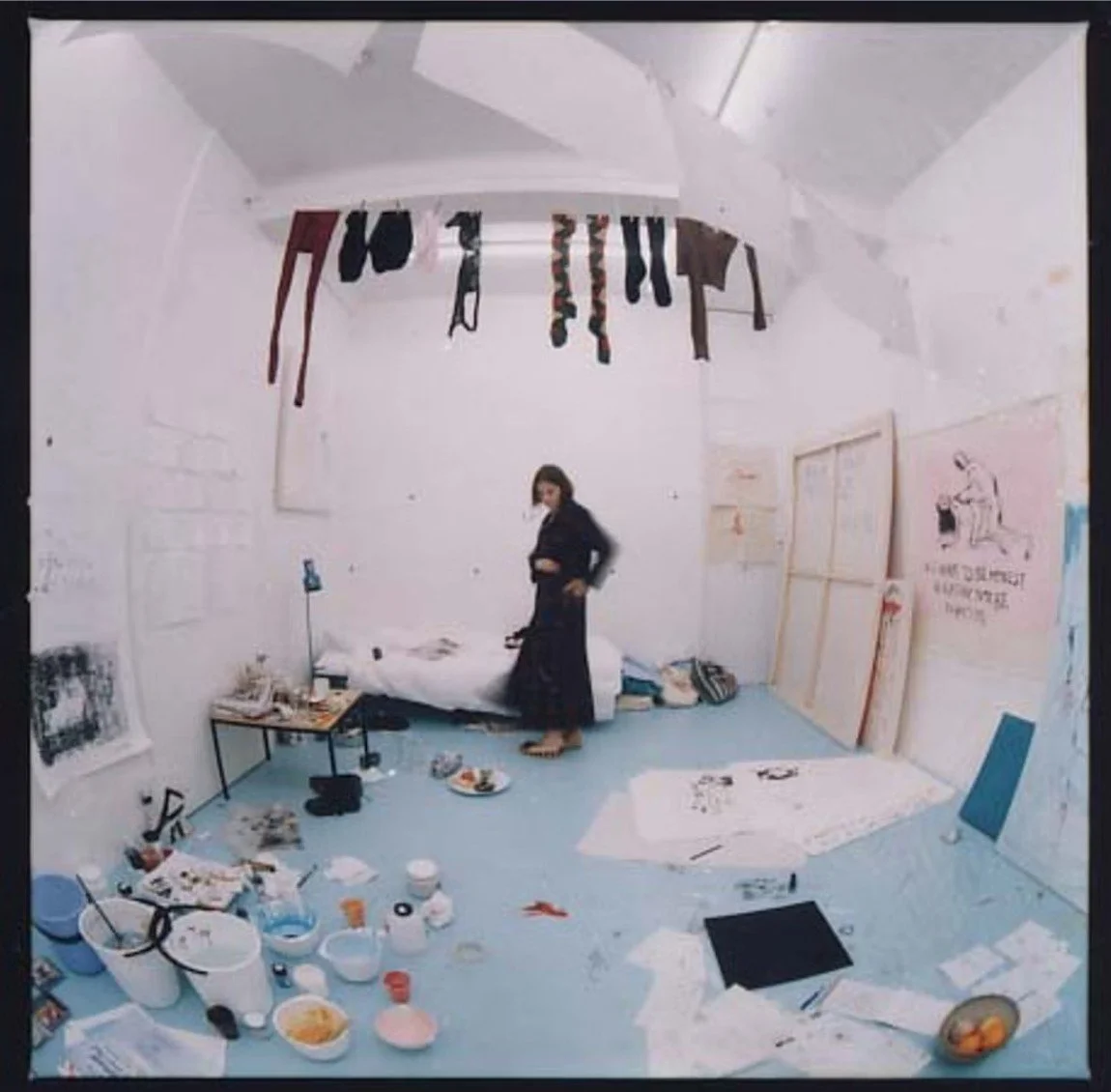
Life Model Goes Mad, 1996. The studio as self-portrait.
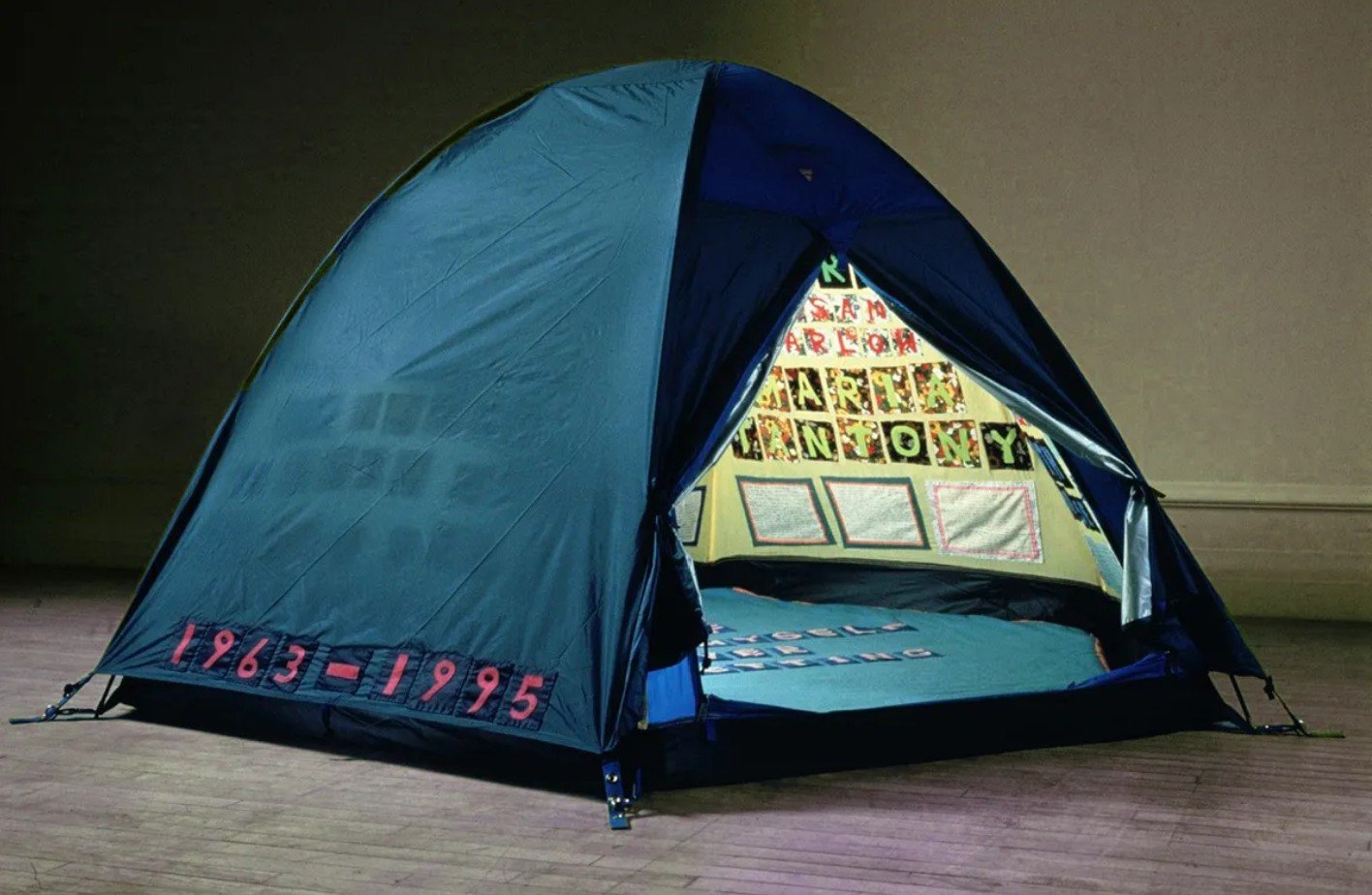
Tracey Emin's tent Everyone I Have Ever Slept With.
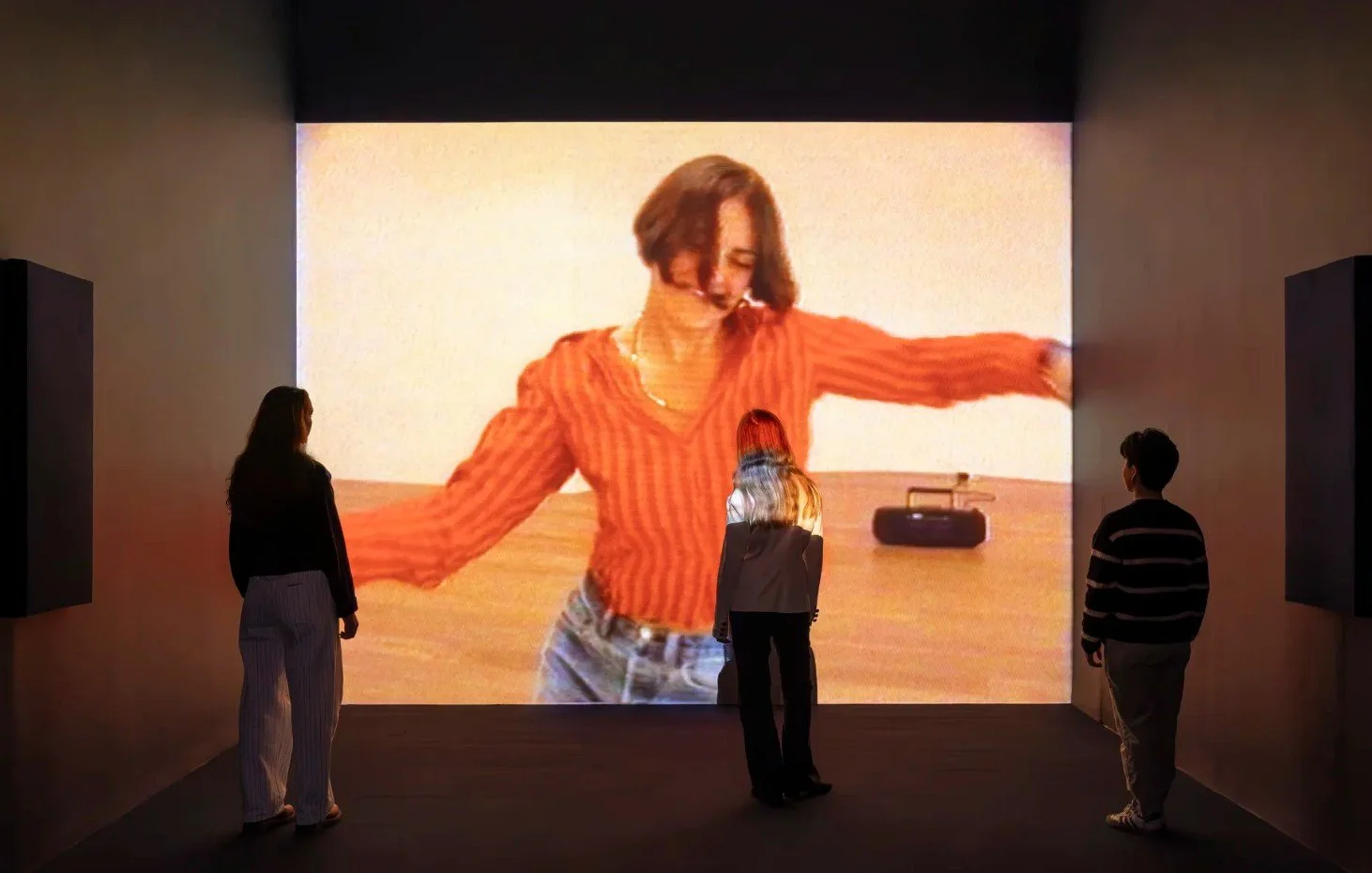
Why I Never Became a Dancer, 1995. Six minutes and forty seconds of reclamation.
Following her 2020 diagnosis and surgery for bladder cancer, Emin's work took on a renewed focus on survival and the body. Self-portraits run throughout the show, from early Polaroids to photographs of her stoma — all sides of life present, unfiltered. The result is a visceral, honest encounter with a great living artist at full force.
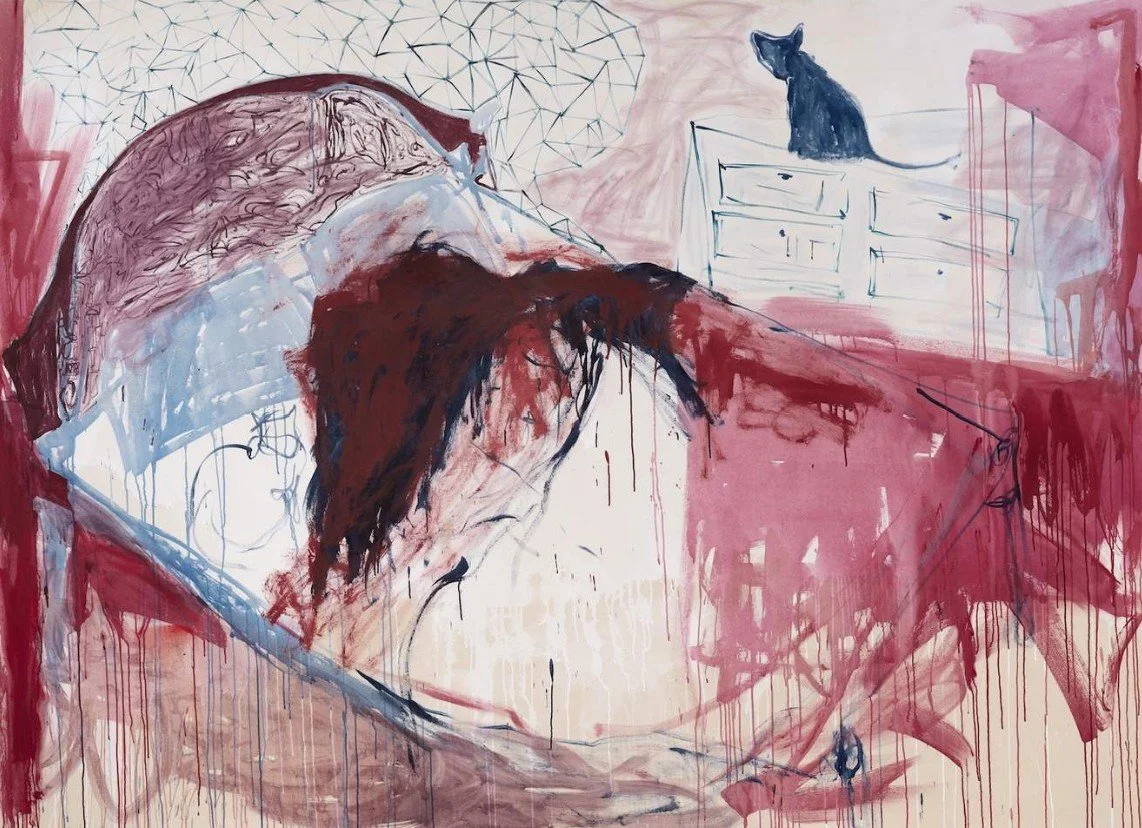
The End Of Love
The exhibition culminates in large-scale paintings of transcendent, almost spiritual intensity. Her oil storms of ghostly forms reveal the invisible emotional weight of everlasting devotion — between two people, into the afterlife and beyond. Something about these paintings makes them feel real and illusory at the same time: bold color, waggish weirdness, outstanding ad hoc artplay that intermingles the sexless human body, imaginary landscapes, wild elements and the artist's own inner life. Pain and heartbreak are still present, but shot through with a ferocious determination to live in the present. Outside the museum, the monumental bronze "I Followed You to the End" (2024) commands the landscape — a foretaste of the anguished bodies within.

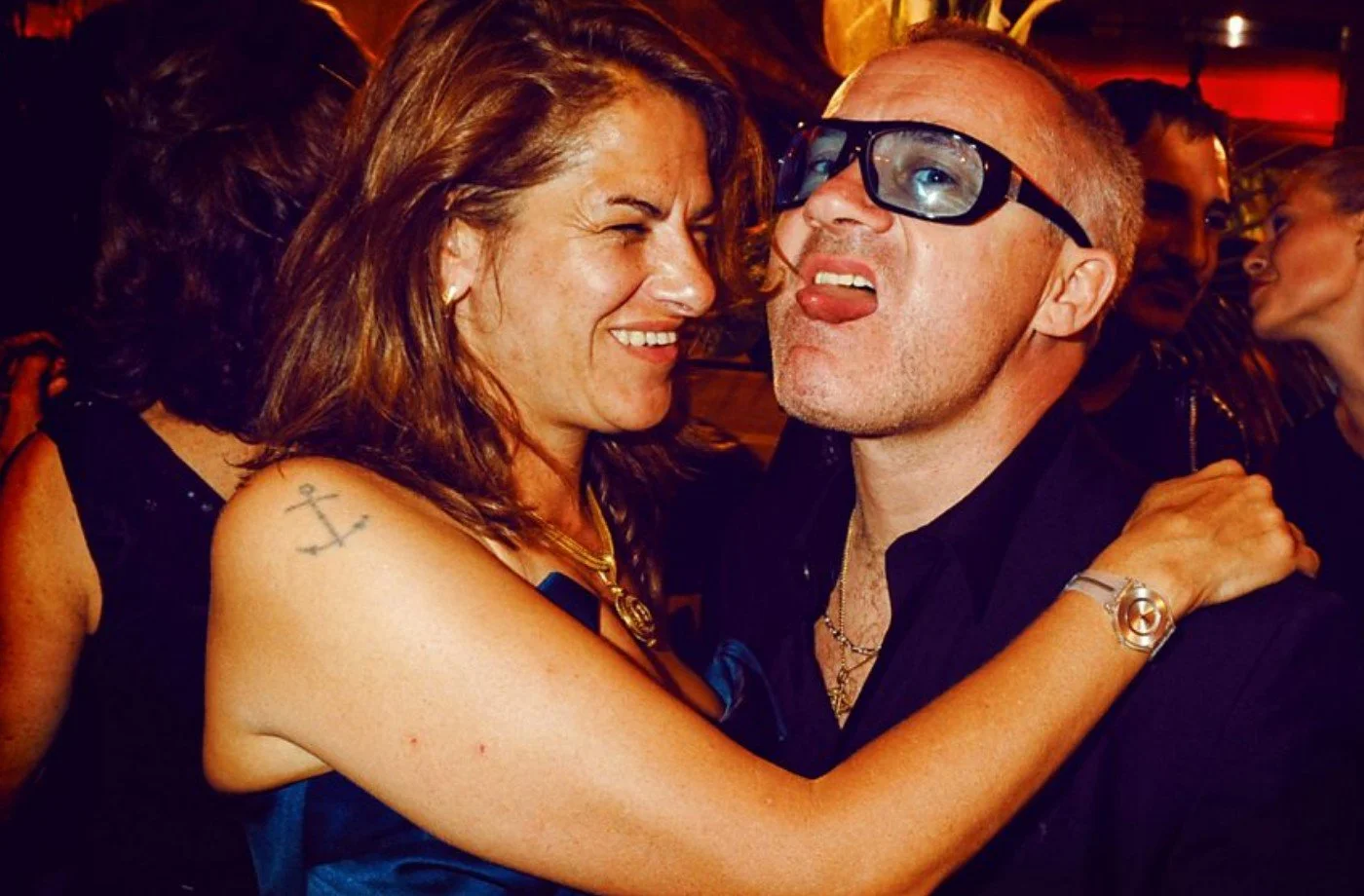
Emin and Bowie, mid-1990s.
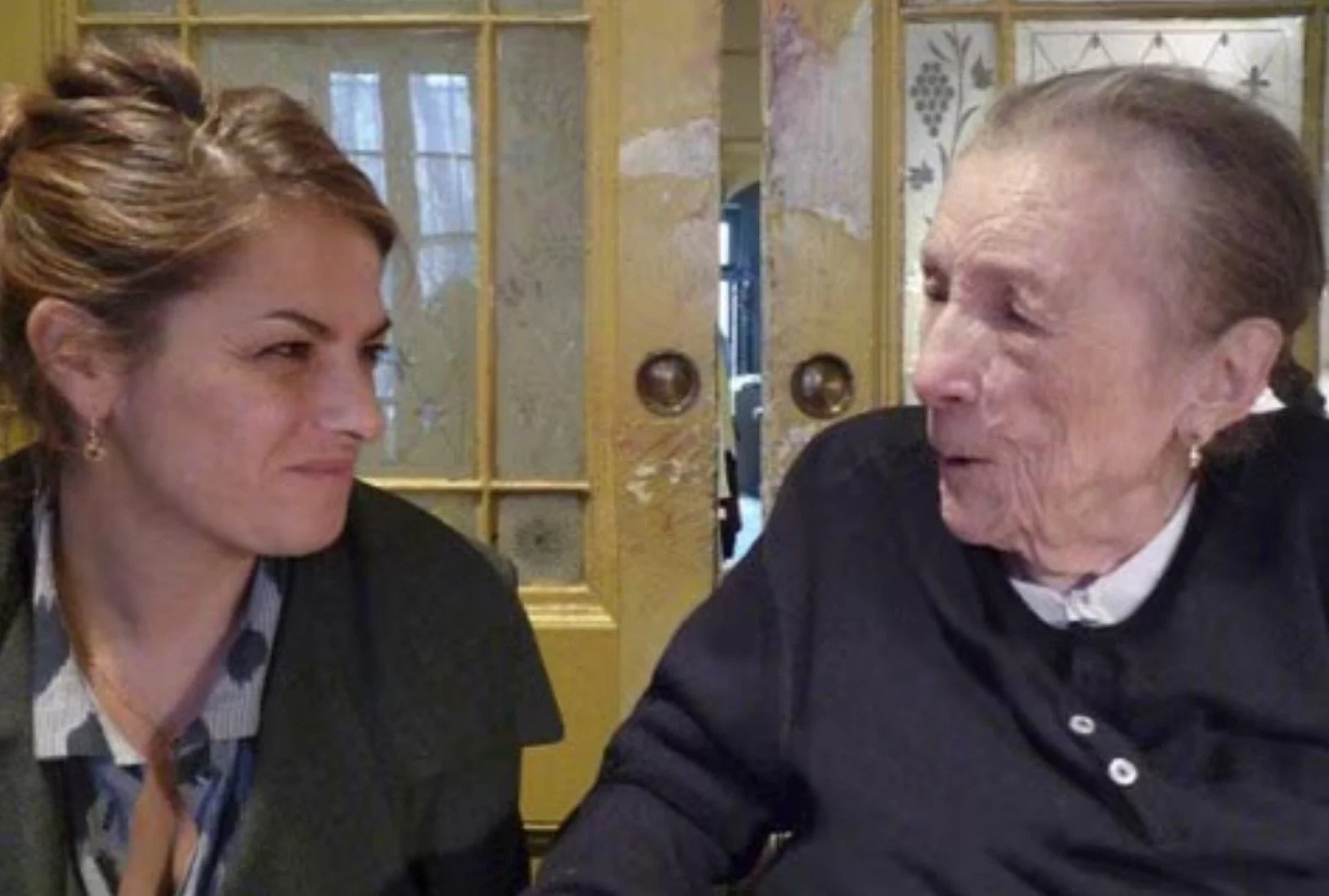
Tracey Emin and Louise Bourgeois.
Emin's work always arrives with intensity, unasked questions and irresolvable contradictions. Here is the one at the heart of "A Second Life" — and Emin knows it, which is why the show is worth seeing. The exhibition is in partnership with Gucci. The working-class girl from Margate, who made her name dragging her own wreckage into a gallery and daring you to call it art, is now sponsored by one of the great luxury houses and celebrated in one of the great institutions. That is not a betrayal. That is not compromise. That is the irresolvable contradiction at the core of all serious art in a capitalist system. Warhol knew it. Murakami knew it. Koons built an empire on it. The question has never been whether art and capital are in bed together. They always are. The question is whether the work survives the arrangement with its nerve intact.
Emin's does. "Art is a vocation in life," she told the BBC last year. "It's something you feel you have to do, and you can't stop yourself from doing it." That's not the language of a national treasure. That's the language of someone who was never going to stop, regardless of what the institution decided to do with her. The Tate can call her Britain's greatest living female artist. The Gucci partnership can put her in a luxury frame. The retrospective can give her 40 years of wall space and a monumental bronze outside the door.
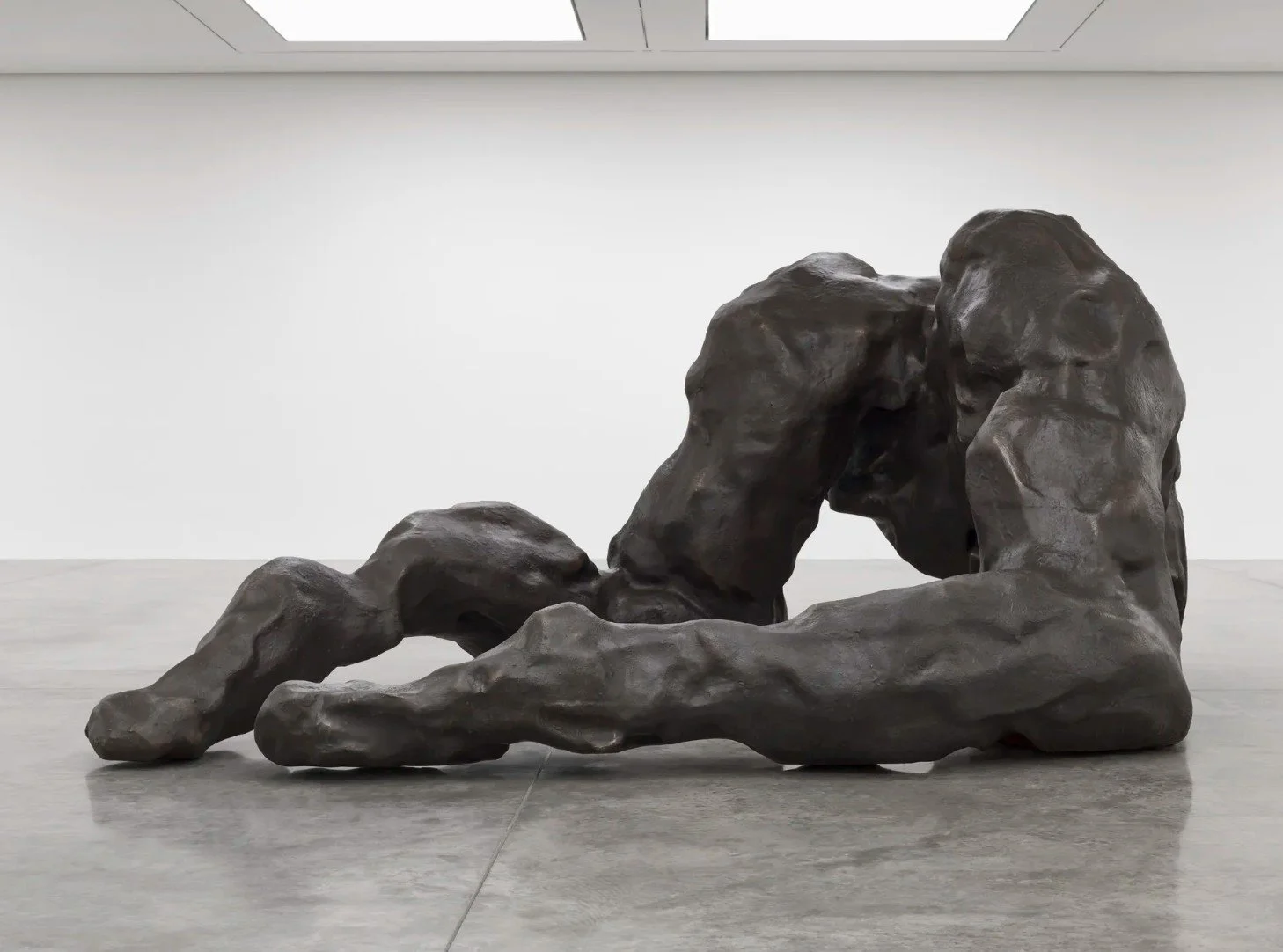
Bronze and body — Emin's sculpture at the Tate retrospective.
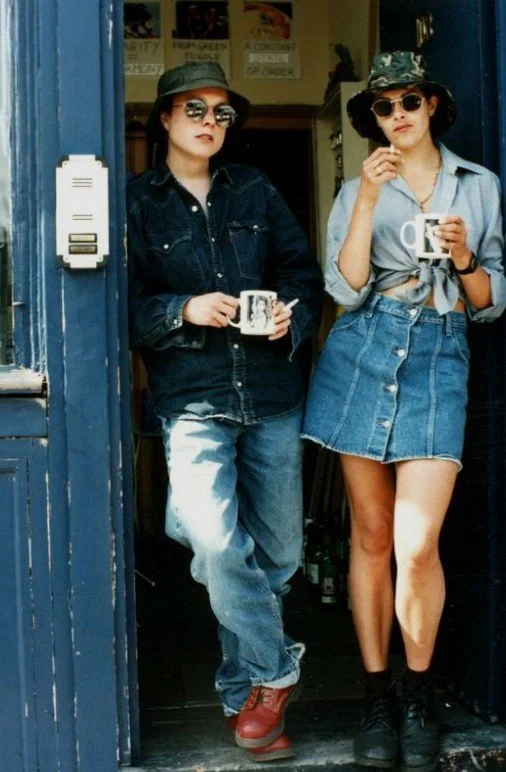
Emin and Lucas outside The Shop, Bethnal Green, early 1990s.
None of it filters the raw stoma photographs. None of it makes "The Bed." The work is still there — unmanageable, undomesticated, alive. The institution built the room around it. The room doesn't contain it. But the room witnesses the change: in how we perceive women's bodies, freedoms, and the stories different eras allow them to tell.
Emin lived and continues to live her art fearlessly, recklessly, and undeniably honestly. That's what it means to be a national treasure who was never behind the glass.